


A role for benzamil-sensitive proteins of the central nervous system in the pathogenesis of salt-dependent hypertension
- PMID: 18387084
- PMCID: PMC2693203
- DOI: 10.1111/j.1440-1681.2008.04929.x
A role for benzamil-sensitive proteins of the central nervous system in the pathogenesis of salt-dependent hypertension
Abstract
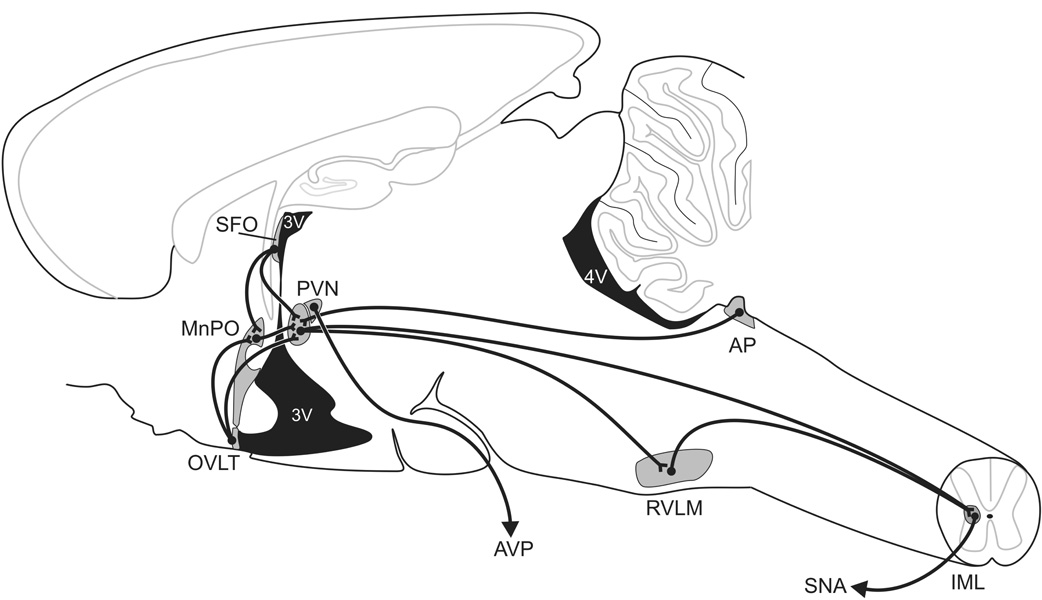
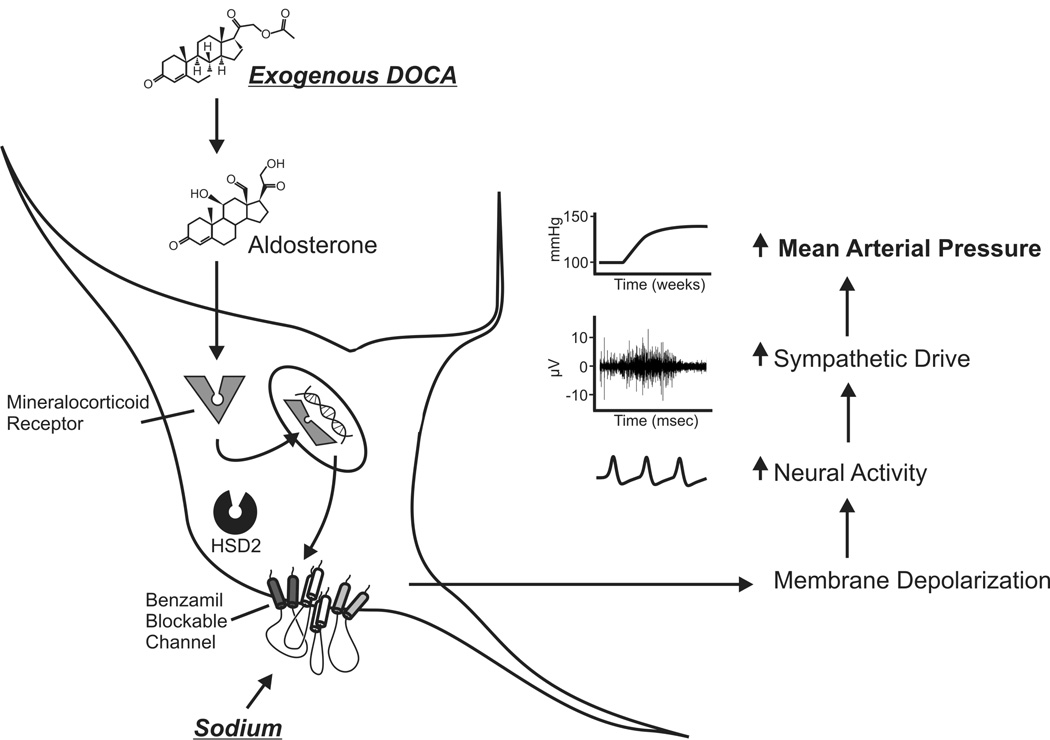
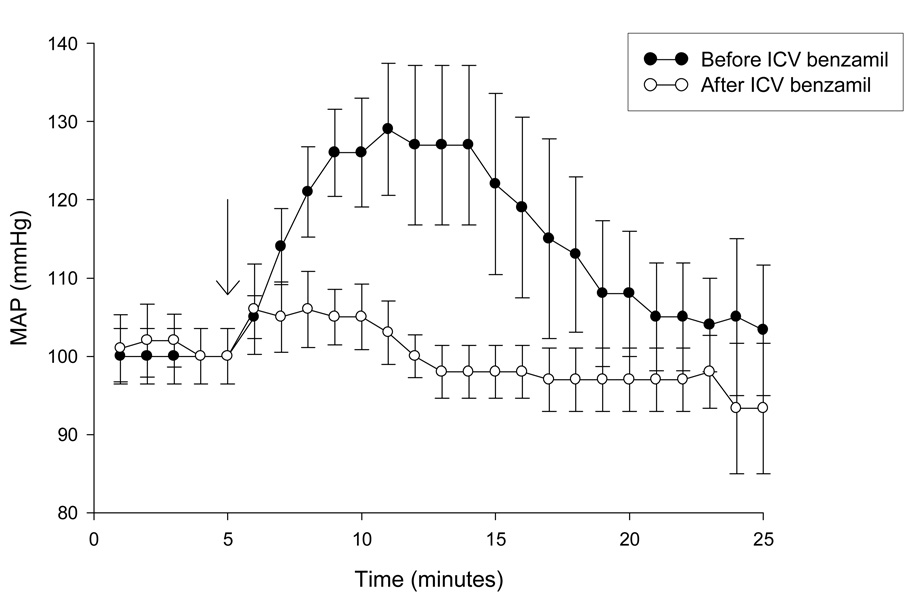
1. Although increasing evidence suggests that salt-sensitive hypertension is a disorder of the central nervous system (CNS), little is known about the critical proteins (e.g. ion channels or exchangers) that play a role in the pathogenesis of the disease. 2. Central pathways involved in the regulation of arterial pressure have been investigated. In addition, systems such as the renin-angiotensin-aldosterone axis, initially characterized in the periphery, are present in the CNS and seem to play a role in the regulation of arterial pressure. 3. Central administration of amiloride, or its analogue benzamil hydrochloride, has been shown to attenuate several forms of salt-sensitive hypertension. In addition, intracerebroventricular (i.c.v.) benzamil effectively blocks pressor responses to acute osmotic stimuli, such as i.c.v. hypertonic saline. Amiloride or its analogues have been shown to interact with the brain renin-angiotensin-aldosterone system (RAAS) and to effect the expression of endogenous ouabain-like compounds. Alterations of brain RAAS function and/or endobain expression could play a role in the interaction between amiloride compounds and arterial pressure. Peripheral treatments with benzamil, even at higher doses than those given centrally, have little or no effect on arterial pressure. These data provide strong evidence that benzamil-sensitive proteins (BSPs) of the CNS play a role in cardiovascular responsiveness to sodium. 4. Mineralocorticoids have been linked to human hypertension; many patients with essential hypertension respond well to pharmacological agents antagonizing the mineralocorticoid receptor and certain genetic forms of hypertension are caused by chronically elevated levels of aldosterone. The deoxycorticosterone acetate (DOCA)-salt model of hypertension is a benzamil-sensitive model that incorporates several factors implicated in the aetiology of human disease, including mineralocorticoid action and increased dietary sodium. The DOCA-salt model is ideal for investigating the role of BSPs in the pathogenesis of hypertension, because mineralocorticoid action has been shown to modulate the activity of at least one benzamil-sensitive protein, namely the epithelial sodium channel. 5. Characterizing the BSPs involved in the pathogenesis of hypertension may provide a novel clinical target. Further studies are necessary to determine which BSPs are involved and where, in the nervous system, they are located.
Figures
References
-
- Wallin BG, Delius W, Hagbarth KE. Comparison of sympathetic nerve activity in normotensive and hypertensive subjects. Circ Res. 1973;33(1):9–21. - PubMed
-
- Miura Y, DeQuattro V. Biochemical evaluation of sympathetic nerve tone in essential hypertension. Jpn Circ J. 1975;39(5):583–589. - PubMed
-
- Weinberger MH, et al. Salt sensitivity, pulse pressure, and death in normal and hypertensive humans. Hypertension. 2001;37(part 2):429–432. - PubMed
-
- Kawasaki T, et al. The effect of high-sodium and low-sodium intakes on blood pressure and other related variables in human subjects with idiopathic hypertension. Am.J.Med. 1978;64:193–198. - PubMed
Publication types
MeSH terms
Substances
Grants and funding
LinkOut - more resources
Full Text Sources
Medical
