. 2008 May;16(5):879-85.
doi: 10.1038/mt.2008.49. Epub 2008 Mar 25.

Efficacy and safety of the oncolytic herpes simplex virus rRp450 alone and combined with cyclophosphamide

Affiliations

Efficacy and safety of the oncolytic herpes simplex virus rRp450 alone and combined with cyclophosphamide

Mark A Currier et al. Mol Ther. 2008 May.

Abstract

Oncolytic herpes simplex virus (oHSV) mutants are under development as anticancer therapeutics. One such vector, rRp450, is ICP6-deleted and expresses a prodrug enzyme for cyclophosphamide (CPA) (rat CYP2B1). Little is known about rRp450's toxicity profile, especially in combination with CPA. We tested rRp450/CPA for antitumor efficacy in an aggressive human xenograft sarcoma model, measured virus production in primary cells, and tested rRp450/CPA for safety in immunocompetent mice. CPA enhanced the antitumor efficacy of rRp450. Relative to wild-type HSV-1, rRp450 replication was attenuated approximately 10,000-fold in human primary hepatocytes, differentiated primary foreskin keratinocytes, and primary Schwann cells. In vivo, intravenous and intracranial (IC) rRp450 injection at the strength of 10(8) plaque-forming units (pfu) alone or followed 24 hours later by intraperitoneal (IP) CPA was well tolerated and had no significant effect clinically on blood counts or chemistries. By contrast, intravenous KOS was found to be uniformly neurotoxic at 10(5) and fatal at 10(6) pfu, and IC virus was fatal in most mice at 10(4) pfu. Low levels of virus DNA were detected in some organs following intravenous and IC virus injection, but were not significantly altered by CPA. HSV replication was not detected in reactivation studies of isolated organs. Our findings suggest rRp450/CPA is safe and warrants further study as a potential combination in anticancer therapeutics.


Figures
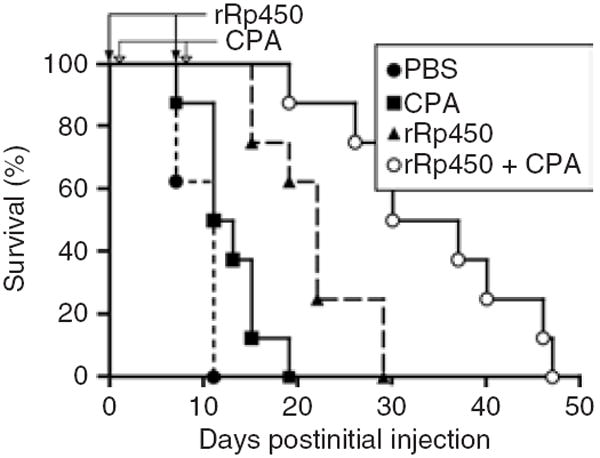
Figure 1
Figure 1. Antitumor effect of rRp450/cyclophosphamide (CPA)
Mice bearing Rh30 xenografts were given direct intratumoral injections of phosphate-buffered saline (PBS) (control), CPA alone, rRp450 alone, or rRp450 followed by CPA. The timings of virus (days 0 and 7) and CPA (days 1 and 8) administration are shown by the closed and open arrows, respectively.
Figure 2
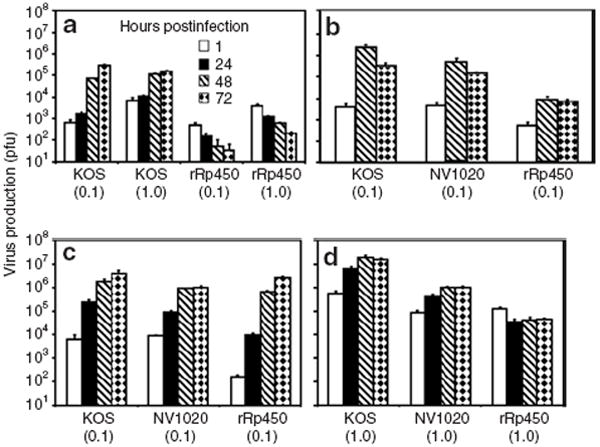
Figure 2. Herpes simplex virus production of oncolytic mutants in normal human cells
Using different multiplicities of infection (plaque-forming units/cell) as shown in parentheses, cell lysates were titered at times indicated following inoculation of cultures of (a) hepatocytes, (b) Schwann cells, (c) proliferating keratinocytes, and (d) differentiated keratinocytes. Bars indicate SDs of triplicate points. Similar data were obtained on a repeat experiment. SD is shown.
Figure 3
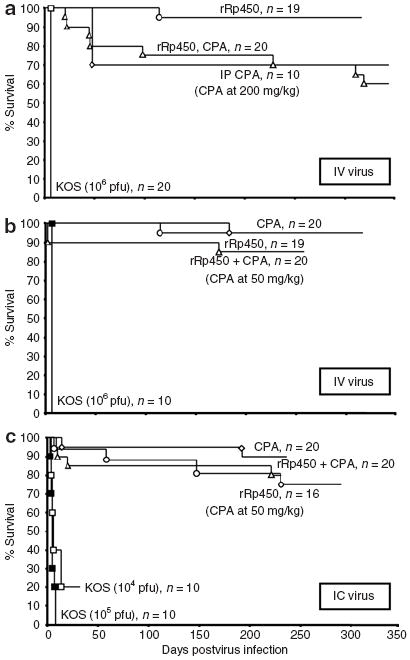
Figure 3. Effect of rRp450/cyclophosphamide (CPA) on long-term survival
Groups of mice were administered rRp450 at 108 plaque-forming units (pfu) or lower doses of wild-type KOS as indicated. Viruses were given (a) intravenous (IV) alone or followed 24 hours later by 200 mg/kg intraperitoneal (IP) CPA, (b) IV alone or followed 24 hours later by 50 mg/kg IP CPA, and (c) IC alone or followed 24 hours later by 50 mg/kg IP CPA.
Figure 4
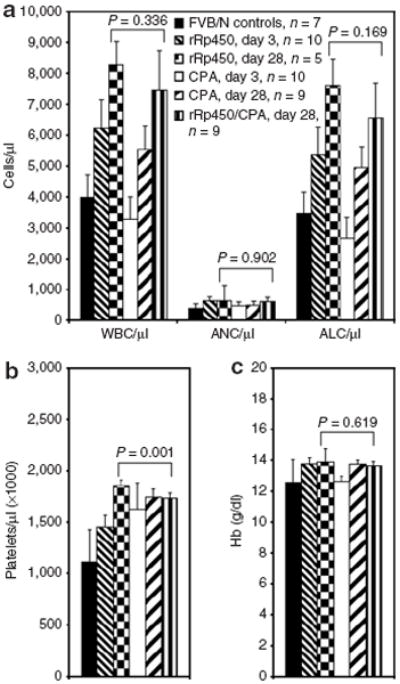
Figure 4. Effect of systemic rRp450 on bone marrow function
Animals were given 108 plaque-forming units (pfu) rRp450 intravenous alone or followed 24 hours later by cyclophosphamide (CPA) (50 mg/kg), and blood was collected at early (day 3) and late (day 28) time-points for (a) total white blood cell count (WBC) and differential including absolute neutrophil count (ANC) and absolute lymphocyte count (ALC), (b) platelet count, and (c) hemoglobin (Hb). Numbers of mice in each group are shown, as are SD within each group. SD is shown.
Figure 5
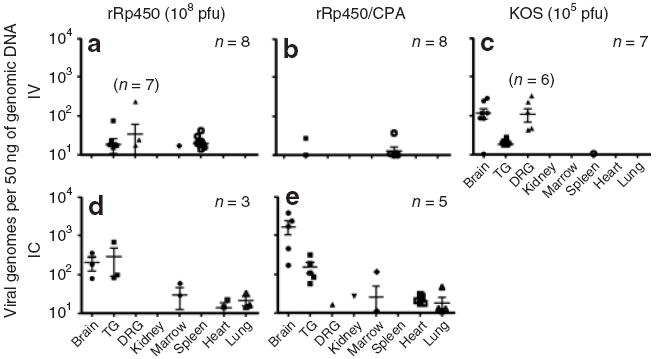
Figure 5. Long-term detection of herpes simplex virus (HSV) DNA in mouse organs following systemic virus
108 Plaque-forming units (pfu) rRp450 or 105 pfu KOS were given as indicated by (a–c) intravenous (IV) or (d,e) IC either as (a,c,d) a single injection alone or (b,e) followed 24 hours later by 50 mg/kg intraperitoneal cyclophosphamide (CPA). Quantitative PCR for HSV-1 genomes was performed on organs harvested >100 days following virus injections. Numbers in each group are indicated, with exceptions for a given organ shown in parentheses. Each data point represents a single organ and the bars indicate the average and SD of the positive samples for each group. DRG, dorsal root ganglion; TG, trigeminal ganglia.
Figure 6
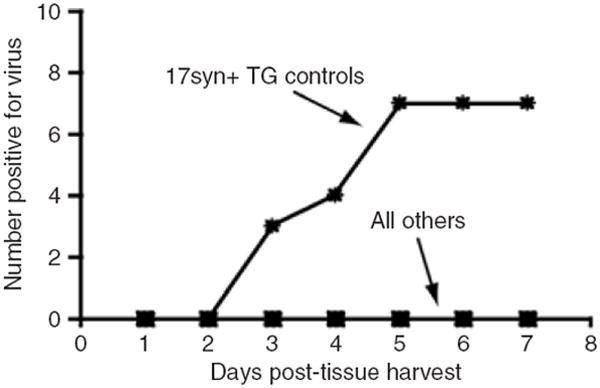
Figure 6. Reactivation of latent herpes simplex virus
Organs were harvested from mice >30 days after being given 108 rRp450 intravenous and explanted into cultures. Infectious virus production was detected in 7/8 trigeminal ganglia (TGs) harvested from four animals inoculated into the cornea with a wild-type virus (positive control), but not in organs from animals given systemic rRp450 and KOS (“all others” include TG, dorsal root ganglion, spleen, kidney, liver, adrenal).

References

    1. Maki RG. Role of chemotherapy in patients with soft tissue sarcomas. Expert Rev Anticancer Ther. 2004;4:229–236. - PubMed
    1. Matthay KK, Villablanca JG, Seeger RC, Stram DO, Harris RE, Ramsay NK, et al. Treatment of high-risk neuroblastoma with intensive chemotherapy, radiotherapy, autologous bone marrow transplantation, and 13-cis-retinoic acid. Children’s Cancer Group. N Engl J Med. 1999;341:1165–1173. - PubMed
    1. Wunder JS, Nielsen TO, Maki RG, O’Sullivan B, Alman BA. Opportunities for improving the therapeutic ratio for patients with sarcoma. Lancet Oncol. 2007;8:513–524. - PubMed
    1. Martuza RL. Conditionally replicating herpes vectors for cancer therapy. J Clin Invest. 2000;105:841–846. - PMC - PubMed
    1. Bennett JJ, Delman KA, Burt BM, Mariotti A, Malhotra S, Zager J, et al. Comparison of safety, delivery, and efficacy of two oncolytic herpes viruses (G207 and NV1020) for peritoneal cancer. Cancer Gene Ther. 2002;9:935–945. - PubMed

Publication types