The statistical neuroanatomy of frontal networks in the macaque
- PMID: 18389057
- PMCID: PMC2268011
- DOI: 10.1371/journal.pcbi.1000050
The statistical neuroanatomy of frontal networks in the macaque
Abstract
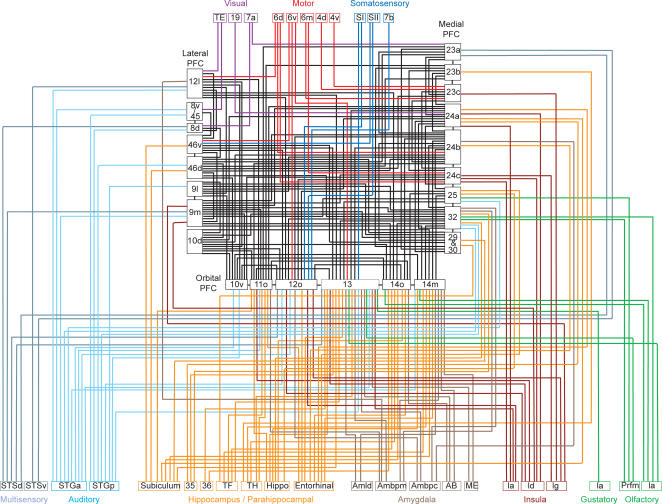
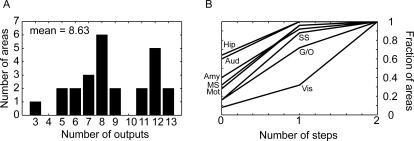
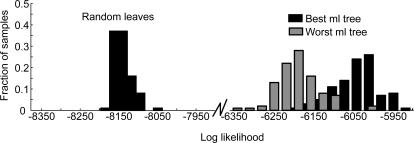
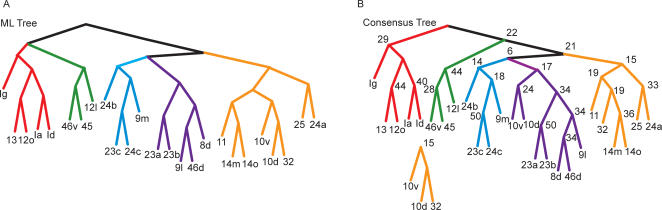
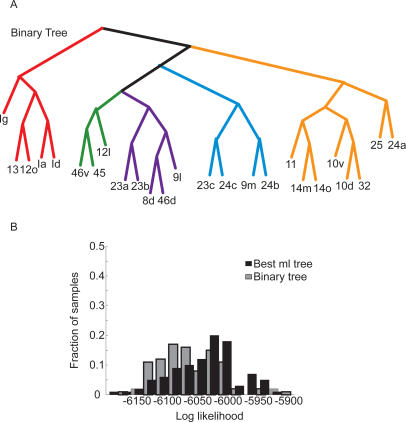
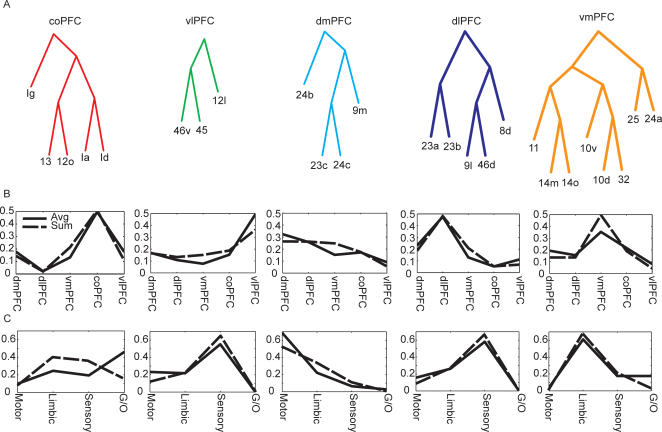
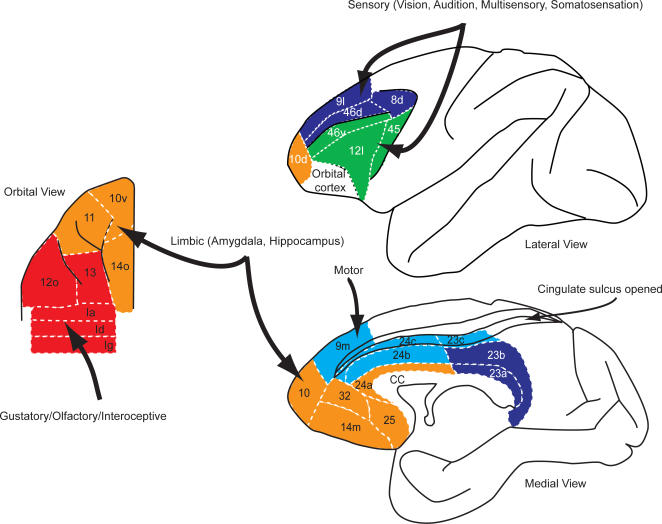
We were interested in gaining insight into the functional properties of frontal networks based upon their anatomical inputs. We took a neuroinformatics approach, carrying out maximum likelihood hierarchical cluster analysis on 25 frontal cortical areas based upon their anatomical connections, with 68 input areas representing exterosensory, chemosensory, motor, limbic, and other frontal inputs. The analysis revealed a set of statistically robust clusters. We used these clusters to divide the frontal areas into 5 groups, including ventral-lateral, ventral-medial, dorsal-medial, dorsal-lateral, and caudal-orbital groups. Each of these groups was defined by a unique set of inputs. This organization provides insight into the differential roles of each group of areas and suggests a gradient by which orbital and ventral-medial areas may be responsible for decision-making processes based on emotion and primary reinforcers, and lateral frontal areas are more involved in integrating affective and rational information into a common framework.
Conflict of interest statement
The authors have declared that no competing interests exist.
Figures
References
-
- Felleman DJ, Van Essen DC. Distributed hierarchical processing in the primate cerebral cortex. Cereb Cortex. 1991;1:1–47. - PubMed
-
- Passingham RE, Stephan KE, Kotter R. The anatomical basis of functional localization in the cortex. Nat Rev Neurosci. 2002;3:606–616. - PubMed
-
- Young MP. The organization of neural systems in the primate cerebral cortex. Proc Biol Sci. 1993;252:13–18. - PubMed
-
- Vezoli J, Falchier A, Jouve B, Knoblauch K, Young M, et al. Quantitative analysis of connectivity in the visual cortex: Extracting function from structure. Neuroscientist. 2004;10:476–482. - PubMed
MeSH terms
LinkOut - more resources
Full Text Sources