Effect of naltrexone and ondansetron on alcohol cue-induced activation of the ventral striatum in alcohol-dependent people
- PMID: 18391135
- PMCID: PMC2504413
- DOI: 10.1001/archpsyc.65.4.466
Effect of naltrexone and ondansetron on alcohol cue-induced activation of the ventral striatum in alcohol-dependent people
Abstract
Context: Medication for the treatment of alcoholism is currently not particularly robust. Neuroimaging techniques might predict which medications could be useful in the treatment of alcohol dependence.
Objective: To explore the effect of naltrexone, ondansetron hydrochloride, or the combination of these medications on cue-induced craving and ventral striatum activation.
Design: Functional brain imaging was conducted during alcohol cue presentation.
Setting: Participants were recruited from the general community following media advertisement. Experimental procedures were performed in the magnetic resonance imaging suite of a major training hospital and medical research institute.
Patients: Ninety non-treatment-seeking alcohol-dependent (by DSM-IV criteria) and 17 social drinking (< 14 drinks per week) paid volunteers recruited through advertisements at an academic center.
Interventions: A taste of alcohol and a series of alcohol-related pictures, neutral beverage pictures, and visual control images were provided to volunteers after 7 days of double-blind randomly assigned daily dosing with 50 mg of naltrexone (n = 23), 0.50 mg of ondansetron hydrochloride (n = 23), the combination of the 2 medications (n = 20), or matching placebos (n = 24).
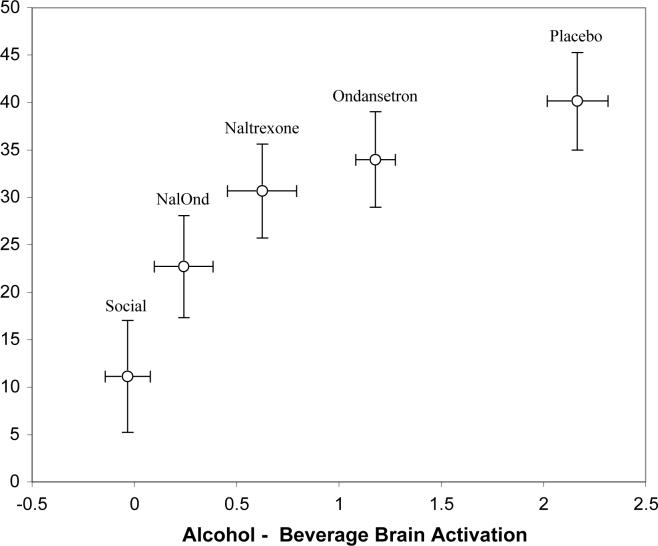
Main outcome measures: Difference in brain blood oxygen level-dependent magnetic resonance when viewing alcohol pictures vs neutral beverage pictures with a particular focus on ventral striatum activity comparison across medication groups. Self-ratings of alcohol craving.
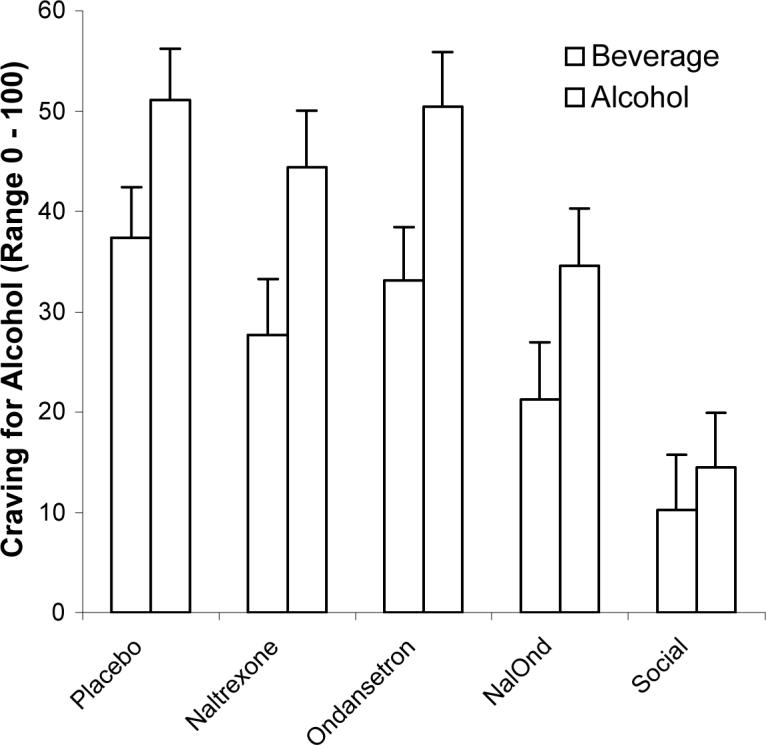
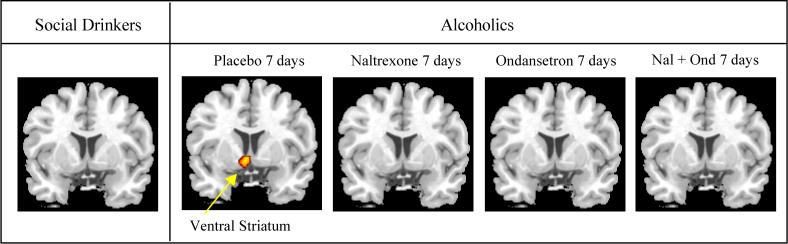
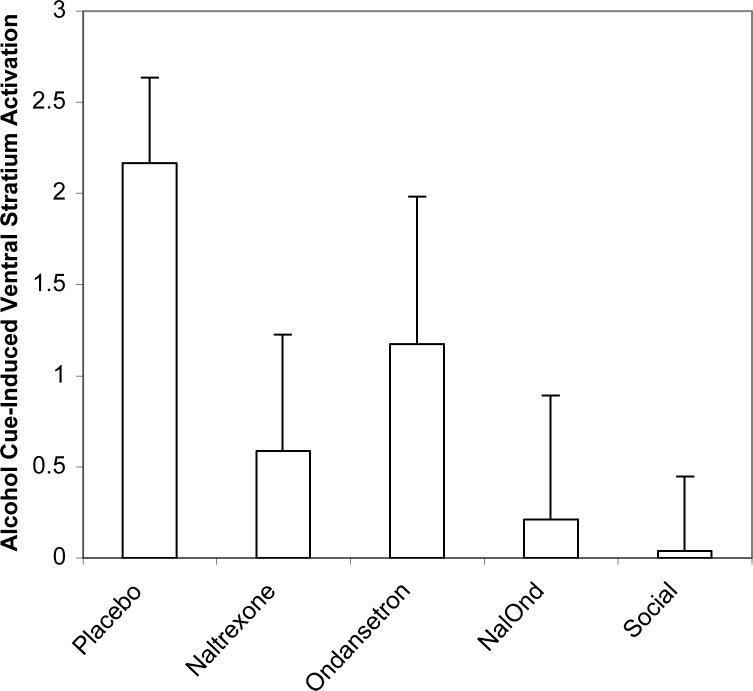
Results: The combination treatment decreased craving for alcohol. Naltrexone with (P = .02) or without (P = .049) ondansetron decreased alcohol cue-induced activation of the ventral striatum. Ondansetron by itself was similar to naltrexone and the combination in the overall analysis but intermediate in a region-specific analysis.
Conclusions: Consistent with animal data that suggest that both naltrexone and ondansetron reduce alcohol-stimulated dopamine output in the ventral striatum, the current study found evidence that these medications, alone or in combination, could decrease alcohol cue-induced activation of the ventral striatum, consistent with their putative treatment efficacy.
Figures
References
-
- Anton RF, Moak DH, Waid LR, Latham PK, Malcolm RJ, Dias JK. Naltrexone and cognitive behavioral therapy for the treatment of outpatient alcoholics. American Journal of Psychiatry. 1999;156(11):1758–1764. - PubMed
-
- O'Malley SS, Jaffe AJ, Chang G, Schottenfeld RS, Meyer RE. Rounsaville B Naltrexone and coping skills therapy for alcohol dependence. Archives of General Psychiatry. 1992;49:881–887. - PubMed
-
- Volpicelli JR, Alterman AI, Hayashida M, O'Brien CP. Naltrexone in the treatment of alcohol dependence. Archives of General Psychiatry. 1992;49:876–880. - PubMed
-
- Anton RF, Drobes DJ, Voronin K, Durazo-Avizu R, Moak D. Naltrexone effects on alcohol consumption in a clinical laboratory paradigm: temporal effects of drinking. Psychopharmacology. 2004;173(1−2):32–40. - PubMed
-
- Davidson D, Swift R, Fitz E. Naltrexone increases the latency to drink alcohol in social drinkers. Alcoholism: Clinical and Experimental Research. 1996;20:732–739. - PubMed