


Human-derived probiotic Lactobacillus reuteri demonstrate antimicrobial activities targeting diverse enteric bacterial pathogens
- PMID: 18396068
- PMCID: PMC2494590
- DOI: 10.1016/j.anaerobe.2008.02.001
Human-derived probiotic Lactobacillus reuteri demonstrate antimicrobial activities targeting diverse enteric bacterial pathogens
Abstract
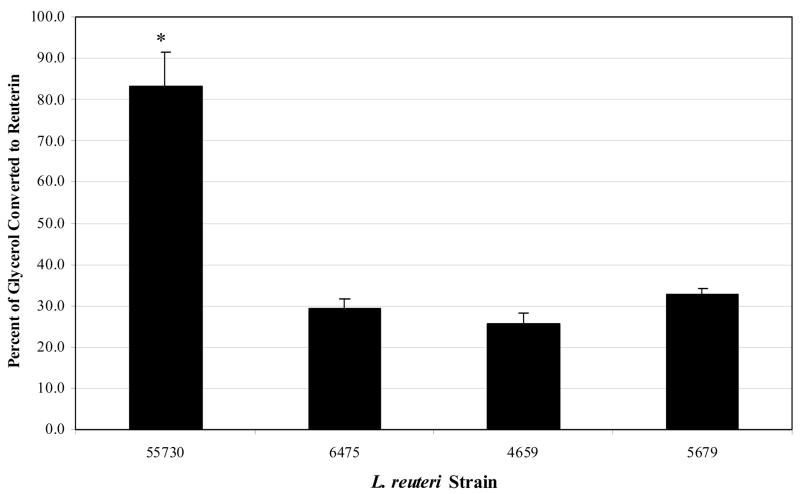
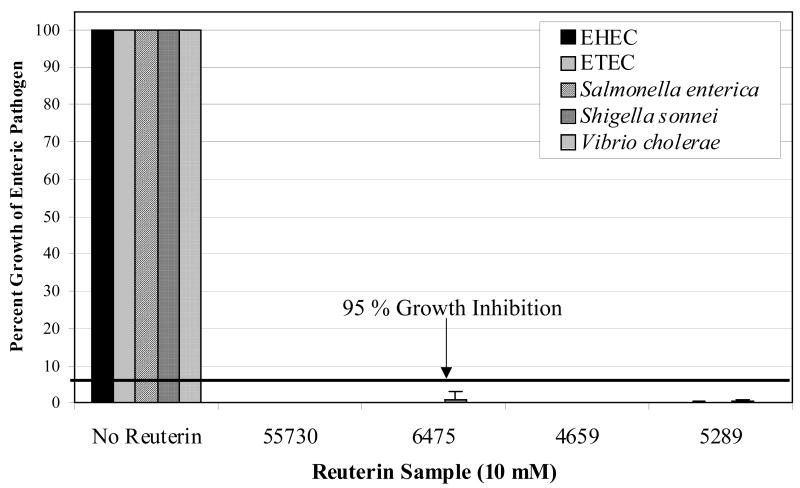
Lactobacillus reuteri is a commensal-derived anaerobic probiotic that resides in the human gastrointestinal tract. L. reuteri converts glycerol into a potent broad-spectrum antimicrobial compound, reuterin, which inhibits the growth of gram-positive and gram-negative bacteria. In this study, we compared four human-derived L. reuteri isolates (ATCC 55730, ATCC PTA 6475, ATCC PTA 4659 and ATCC PTA 5289) in their ability to produce reuterin and to inhibit the growth of different enteric pathogens in vitro. Reuterin was produced by each of the four L. reuteri strains and assessed for biological activity. The minimum inhibitory concentration (MIC) of reuterin derived from each strain was determined for the following enteric pathogens: enterohemorrhagic Escherichia coli, enterotoxigenic E. coli, Salmonella enterica, Shigella sonnei and Vibrio cholerae. We also analyzed the relative abilities of L. reuteri to inhibit enteric pathogens in a pathogen overlay assay. The magnitude of reuterin production did not directly correlate with the relative ability of L. reuteri to suppress the proliferation of enteric pathogens. Additional antimicrobial factors may be produced by L. reuteri, and multiple factors may act synergistically with reuterin to inhibit enteric pathogens.
Figures
References
-
- Klaenhammer TR. Genetics of bacteriocins produced by lactic acid bacteria. FEMS Microbiol Rev. 1993;12:39–85. - PubMed
-
- Servin AL. Antagonistic activities of lactobacilli and bifidobacteria against microbial pathogens. FEMS Microbiol Rev. 2004;28:405–440. - PubMed
-
- Reid G, Burton J. Use of Lactobacillus to prevent infection by pathogenic bacteria. Microbes Infect. 2002;4:319–324. - PubMed
-
- Casas IA, Dobrogosz WJ. Validation of the probiotic concept: Lactobacillus reuteri confers broad-spectrum protection against disease in humans and animals. Microbial Ecology in Health and Disease. 2000;12:257–285.
-
- Teitelbaum JE. Probiotics and the treatment of infectious diarrhea. Pediatr Infect Dis J. 2005;24:267–268. - PubMed
Publication types
MeSH terms
Substances
Grants and funding
LinkOut - more resources
Full Text Sources
Other Literature Sources
Medical
