


Susceptibility to gut leakiness: a possible mechanism for endotoxaemia in non-alcoholic steatohepatitis
- PMID: 18397235
- PMCID: PMC4303249
- DOI: 10.1111/j.1478-3231.2008.01723.x
Susceptibility to gut leakiness: a possible mechanism for endotoxaemia in non-alcoholic steatohepatitis
Abstract
Introduction: One of the proposed second hit mechanisms in the pathophysiology of non-alcoholic steatohepatitis (NASH) is hepatic oxidative stress triggered by elevated levels of endotoxin. We investigated one possible mechanism for the endotoxaemia--disruption of intestinal barrier integrity.
Methods: We enrolled 16 subjects with fatty liver (10 NASH; 6 steatosis) and 12 healthy subjects. Steatosis and NASH were diagnosed by liver biopsy using the Brunt criteria. Gastrointestinal permeability was measured using urinary excretion of 5-h lactulose/mannitol (L/M) ratio and 24-h sucralose. Permeability testing was repeated after aspirin challenge.
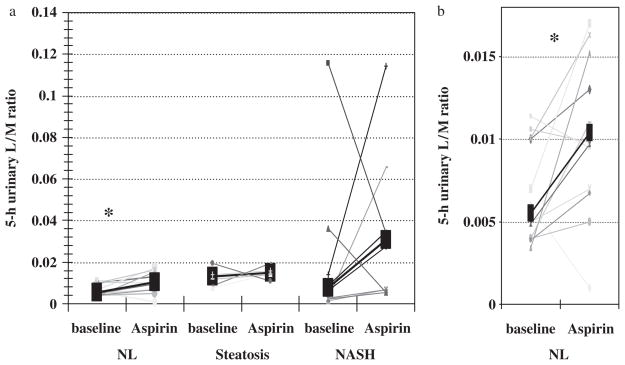
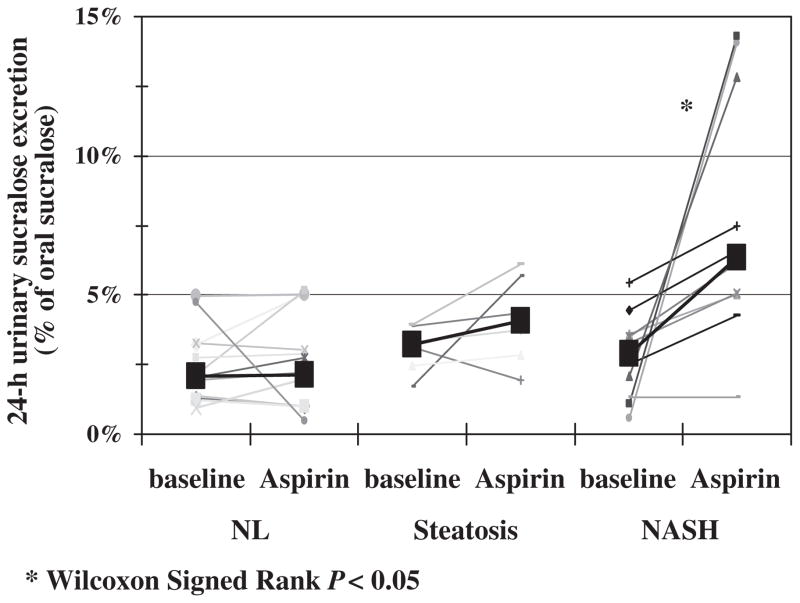
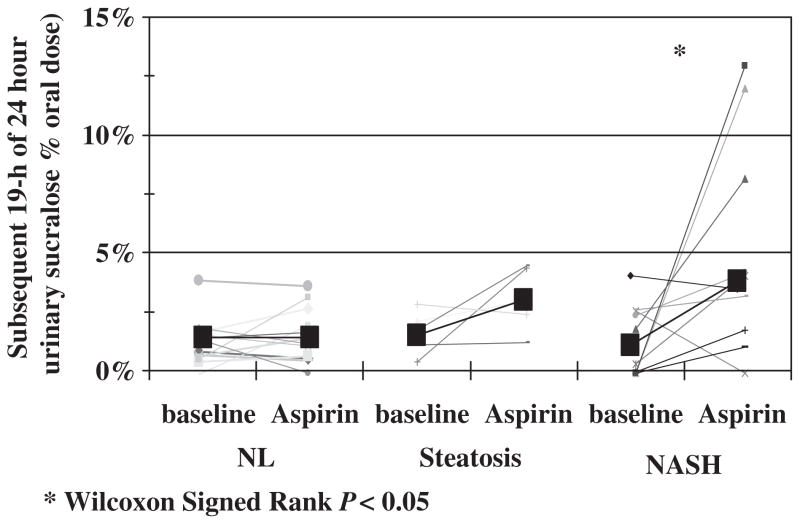
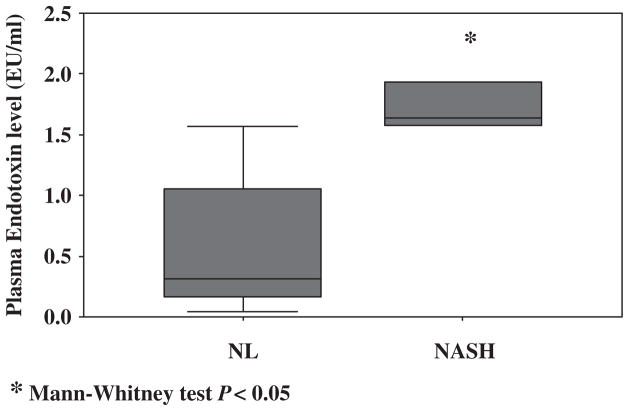
Results: Groups had similar baseline urinary 0-5 h L/M ratio (small bowel permeability) and 0-24 h sucralose (whole-gut permeability). Aspirin increased 0-5 h urinary L/M in most subjects. In contrast, aspirin significantly increased whole-gut permeability only in NASH subjects. In fact, the major increase in the urinary sucralose occurred in the 6-24 h samples, which points towards the colon as the major site responsible for aspirin-induced leakiness in NASH patients. Serum endotoxin levels were significantly higher in NASH subjects.
Discussion: Our findings suggest that aspirin acts on the colon to unmask a susceptibility to gut leakiness in patients with NASH. This effect may be the underlying mechanism for increased serum endotoxin, which is the second hit (after altered lipid metabolism) that is required to initiate a necroinflammatory cascade in hepatocytes which are already primed with obesity-induced abnormal lipid homoeostasis.
Figures
References
-
- Angulo P. Nonalcoholic fatty liver disease. N Engl J Med. 2002;346:1221–31. - PubMed
-
- Bacon BR, Farahvash MJ, Janney CG, Neuschwander-Tetri BA. Nonalcoholic steatohepatitis: an expanded clinical entity. Gastroenterology. 1994;107:1103–9. - PubMed
-
- Clark JM, Brancati FL, Diehl AM. The prevalence and etiology of elevated aminotransferase levels in the United States. Am J Gastroenterol. 2003;98:960–7. - PubMed
-
- Ruhl CE, Everhart JE. Determinants of the association of overweight with elevated serum alanine aminotransferase activity in the United States. Gastroenterology. 2003;124:71–9. - PubMed
-
- Matteoni CA, Younossi ZM, Gramlich T, Boparai N, Liu YC, McCullough AJ. Nonalcoholic fatty liver disease: a spectrum of clinical and pathological severity. Gastroenterology. 1999;116:1413–9. - PubMed
MeSH terms
Substances
Grants and funding
LinkOut - more resources
Full Text Sources
Other Literature Sources
Medical
