


An intensivist-led tracheostomy review team is associated with shorter decannulation time and length of stay: a prospective cohort study
- PMID: 18402705
- PMCID: PMC2447599
- DOI: 10.1186/cc6864
An intensivist-led tracheostomy review team is associated with shorter decannulation time and length of stay: a prospective cohort study
Abstract
Introduction: Without specific strategies to address tracheostomy care on the wards, patients discharged from the intensive care unit (ICU) with a tracheostomy may receive suboptimal care. We formed an intensivist-led multidisciplinary team to oversee ward management of such patients. To evaluate the service, we compared outcomes for the first 3 years of the service with those in the year preceding the service.
Methods: Data were prospectively collected over the course of 3 years on ICU patients not under the care of the ear, nose, and throat unit who were discharged to the ward with a tracheostomy and compared with outcomes in the year preceding the introduction of the service. Principal outcomes were decannulation time, length of stay after ICU discharge, and stay of less than 43 days (upper trim point for the disease-related group [DRG] for tracheostomy). Analysis included trend by year and multivariable analysis using a Cox proportional hazards model. P values of less than 0.05 were assumed to indicate statistical significance. As this was a quality assurance project, ethics approval was not required.
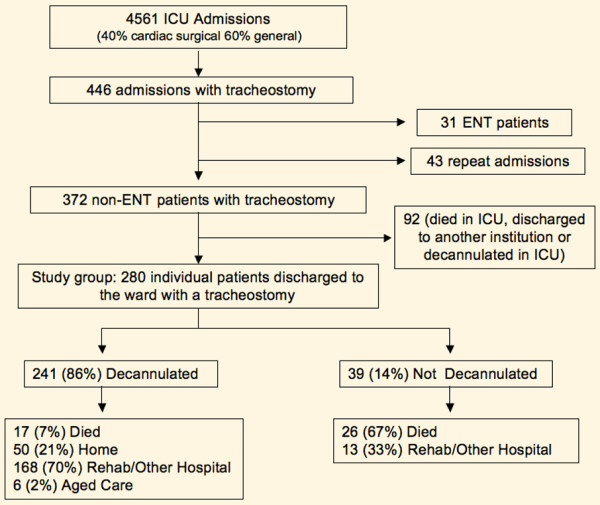
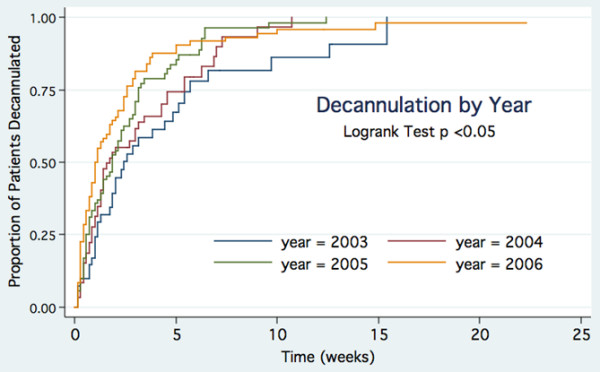
Results: Two hundred eighty patients were discharged with a tracheostomy over the course of a 4-year period: 41 in 2003, 60 in 2004, 95 in 2005, and 84 in 2006. Mean age was 61.8 (13.1) years, 176 (62.9%) were male, and mean APACHE (Acute Physiology and Chronic Health Evaluation) II score was 20.4 (6.4). Length of stay after ICU decreased over time (30 [13 to 52] versus 19 [10 to 34] days; P < 0.05 for trend), and a higher proportion of decannulated patients were discharged under the upper DRG trim point of 43 days (48% versus 66%; P < 0.05). Time to decannulation after ICU discharge decreased (14 [7 to 31] versus 7 [3 to 17] days; P < 0.01 for trend). Multivariate analysis showed that the hazard for decannulation increased by 24% (3% to 49%) per year.
Conclusion: An intensivist-led tracheostomy team is associated with shorter decannulation time and length of stay which may result in financial savings for institutions.
Figures
References
MeSH terms
LinkOut - more resources
Full Text Sources
Research Materials
