


Review
doi: 10.1016/j.cvsm.2008.01.004.
Pediatric fluid therapy
Affiliations
- PMID: 18402886
- PMCID: PMC7124354
- DOI: 10.1016/j.cvsm.2008.01.004
Item in Clipboard
Review
Pediatric fluid therapy
Vet Clin North Am Small Anim Pract.
2008 May.
Abstract
Many conditions of pediatric patients require fluid therapy. Depending on the veterinarian's assessment of hydration and perfusion status, fluids can be administered orally, subcutaneously, intraperitoneally, intravenously, or by the intraosseous route. Pediatric patients are prone to hypothermia, hypovolemia, hypoglycemia, and hypokalemia, which must be addressed during fluid therapy in pediatric patients. Typical parameters used to assess hydration status in adult animals do not always apply to pediatric patients. Veterinarians should be aware of differences between pediatric patients and adult animals in terms of physical assessment, common presentations, and fluid requirements for resuscitation and maintenance needs.
Figures
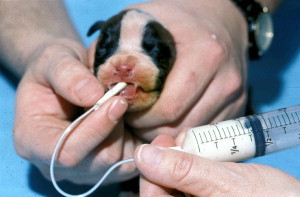
Oral feeding through a stomach tube can be an effective way of maintaining nutrition and fluid requirements in neonates that are unable to nurse.
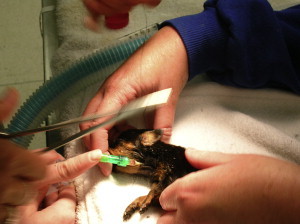
A cephalic catheter can be placed in the jugular vein to provide an effective means for delivering intravenous fluids to critically ill neonates.
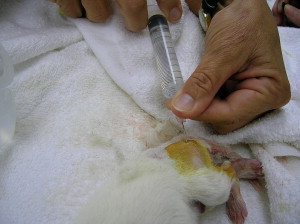
Resuscitation of critically ill neonates can be accomplished by placing a spinal needle in the shaft of the femur and administering warmed fluids by the intraosseous route.
References
-
- Hoskins J.D., editor. Veterinary pediatrics. 3rd edition. WB Saunders Co.; Philadelphia: 2001.
-
- Macintire D.K. Pediatric intensive care. Vet Clin North Am Small Anim Pract. 1999;29:971–988. - PubMed
-
- Poffenbarger E.M., Ralston A.L., Chandler M.L. Canine neonatology: part 1. Physiologic differences between puppies and adults. Compendium on Continuing Education for the Practicing Veterinarian. 1990;12:601–609.
-
- Lawler D.F. Care and diseases of neonatal puppies and kittens. In: Kirk R.W., editor. Current veterinary therapy x: small animal practice. WB Saunders Co.; Philadelphia: 1989. pp. 1325–1333.
-
- Poffenbarger E.M., Ralston A.L., Chandler M.L. Canine neonatology: part 2. Disorders of the neonate. Compendium on Continuing Education for the Practicing Veterinarian. 1991;13:25–37.
Publication types
MeSH terms
LinkOut - more resources
Full Text Sources
Medical
