


Effects of chronic electrical stimulation on paralyzed expiratory muscles
- PMID: 18403449
- PMCID: PMC3575086
- DOI: 10.1152/japplphysiol.01321.2007
Effects of chronic electrical stimulation on paralyzed expiratory muscles
Abstract
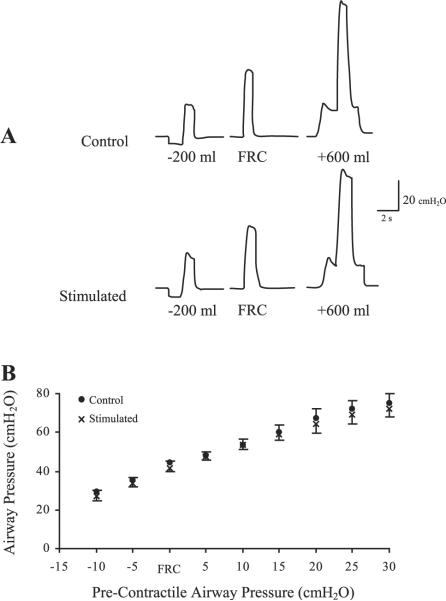
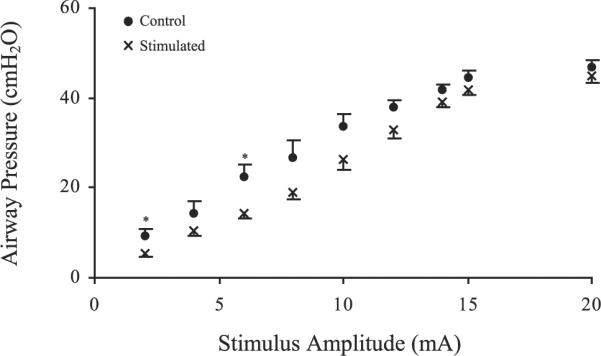
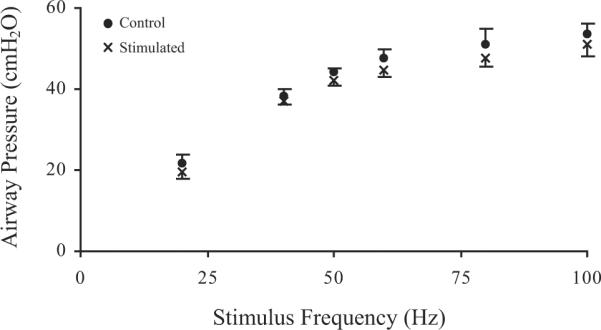
Following spinal cord injury, the expiratory muscles develop significant disuse atrophy characterized by reductions in their weight, fiber cross-sectional area, and force-generating capacity. We determined the extent to which these physiological alterations can be prevented with electrical stimulation. Because a critical function of the expiratory muscles is cough generation, an important goal was the maintenance of maximal force production. In a cat model of spinal cord injury, short periods of high-frequency lower thoracic electrical spinal cord stimulation (SCS) at the T(10) level (50 Hz, 15 min, twice/day, 5 days/wk) were initiated 2 wk following spinalization and continued for a 6-mo period. Airway pressure (P)-generating capacity was determined by SCS. Five acute, spinalized animals served as controls. Compared with controls, initial P fell from 43.9 +/- 1.0 to 41.8 +/- 0.7 cmH(2)O (not significant) in the chronic animals. There were small reductions in the weight of the external oblique, internal oblique, transverses abdominis, internal intercostal, and rectus abdominis muscles (not significant for each). There were no significant changes in the population of fast muscle fibers. Because prior studies (Kowalski KE, Romaniuk JR, DiMarco AF. J Appl Physiol 102: 1422-1428, 2007) have demonstrated significant atrophy following spinalization in this model, these results indicate that expiratory muscle atrophy can be prevented by the application of short periods of daily high-frequency stimulation. Because the frequency of stimulation is similar to the expected pattern of clinical use for cough generation, the daily application of electrical stimulation could potentially serve the dual purpose of maintenance of expiratory muscle function and airway clearance.
Figures
References
-
- Baldi JC, Jackson RD, Moraille R, Mysiw WJ. Muscle atrophy is prevented in patients with acute spinal cord injury using functional electrical stimulation. Spinal Cord. 1998;36:463–469. - PubMed
-
- Bickel CS, Slade JM, VanHiel LR, Warren GL, Dudley GA. Variable-frequency-train stimulation of skeletal muscle after spinal cord injury. J Rehabil Res Dev. 2004;41:33–40. - PubMed
-
- Carter RE. Respiratory aspects of spinal cord injury management. Paraplegia. 1987;25:262–266. - PubMed
-
- Chilibeck PD, Jeon J, Weiss C, Bell G, Burnham R. Histochemical changes in muscle of individuals with spinal cord injury following functional electrical stimulated exercise training. Spinal Cord. 1999;37:264–268. - PubMed
Publication types
MeSH terms
Grants and funding
LinkOut - more resources
Full Text Sources
Medical
Research Materials
Miscellaneous
