. 2008 Apr 11;4(4):e1000052.
doi: 10.1371/journal.pgen.1000052.

A genome-wide gene expression signature of environmental geography in leukocytes of Moroccan Amazighs

Affiliations

A genome-wide gene expression signature of environmental geography in leukocytes of Moroccan Amazighs

Youssef Idaghdour et al. PLoS Genet. .

Abstract

The different environments that humans experience are likely to impact physiology and disease susceptibility. In order to estimate the magnitude of the impact of environment on transcript abundance, we examined gene expression in peripheral blood leukocyte samples from 46 desert nomadic, mountain agrarian and coastal urban Moroccan Amazigh individuals. Despite great expression heterogeneity in humans, as much as one third of the leukocyte transcriptome was found to be associated with differences among regions. Genome-wide polymorphism analysis indicates that genetic differentiation in the total sample is limited and is unlikely to explain the expression divergence. Methylation profiling of 1,505 CpG sites suggests limited contribution of methylation to the observed differences in gene expression. Genetic network analysis further implies that specific aspects of immune function are strongly affected by regional factors and may influence susceptibility to respiratory and inflammatory disease. Our results show a strong genome-wide gene expression signature of regional population differences that presumably include lifestyle, geography, and biotic factors, implying that these can play at least as great a role as genetic divergence in modulating gene expression variation in humans.


Conflict of interest statement

The authors have declared that no competing interests exist.

Figures
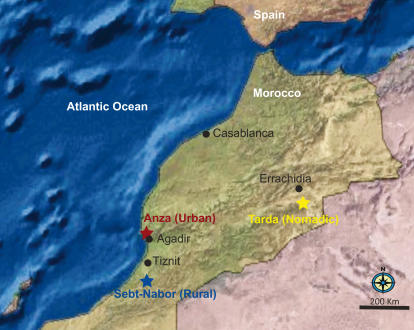
Figure 1
Figure 1. Geographic locations of sampled Amazighs groups in Morocco.
A total of 52 peripheral blood samples were collected: 20 urban samples from the town of Anza (Latitude: 29.367°, Longitude: −9.633°), 15 rural samples from the rural village of Sebt-Nabor (Latitude: 31.450°, Longitude: −9.650°), and 17 nomadic samples from the Sahara desert in eastern Morocco (Latitude: 31.809°, Longitude −4.603°). Subsets of these were used in the gene expression profiling, genotyping and methylation profiling as described in Table S5.
Figure 2
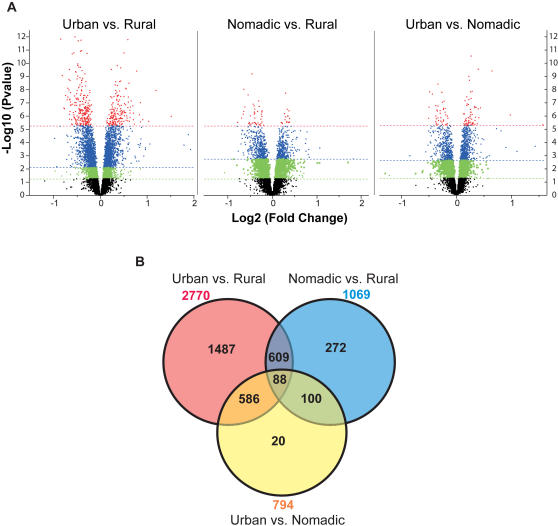
Figure 2. Volcano plots of statistical significance versus magnitude of differential expression between locations.
(A) For each transcript, significance is shown as the negative logarithm of the P value on the y-axis, and the log base 2 of magnitude of mean expression difference is on the x-axis. Dashed lines indicate the threshold for significance (green: P<0.05, blue: 1% FDR, and red: Bonferroni adjusted P<0.05). The Venn diagram (B) shows the numbers of differentially expressed genes at 1% FDR for each comparison and the overlaps between them.
Figure 3
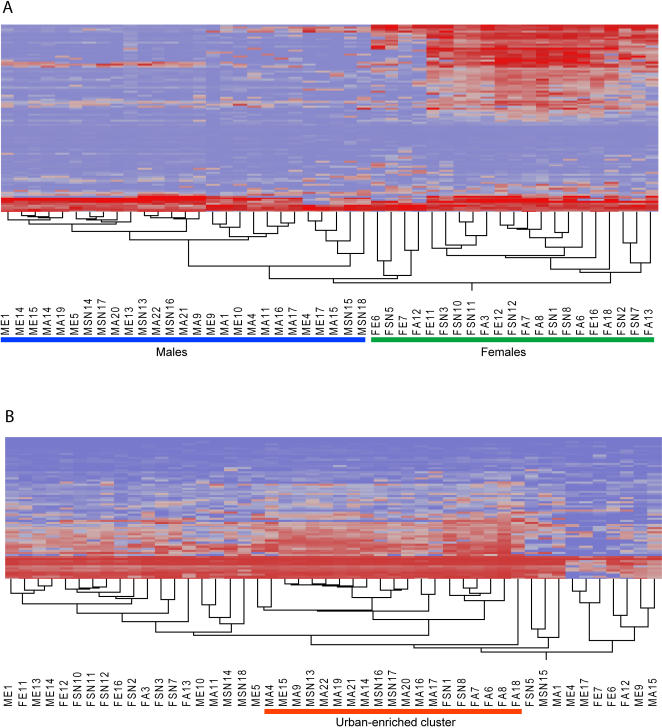
Figure 3. Sex and location effects on methylation patterns.
Two-way clustering of differentially methylated CpG sites at P<0.05 (ANOVA) for the sex effect (A) and for the location effect (B). Sample labels indicate their sex and location (M: male, F: female, E: nomad, SN: rural, and A: urban). There is clear separation of the sexes in (A), and a suggestion of a signature of urban living for a dozen or so genes in (B) highlighted as the Anza-enriched cluster.
Figure 4
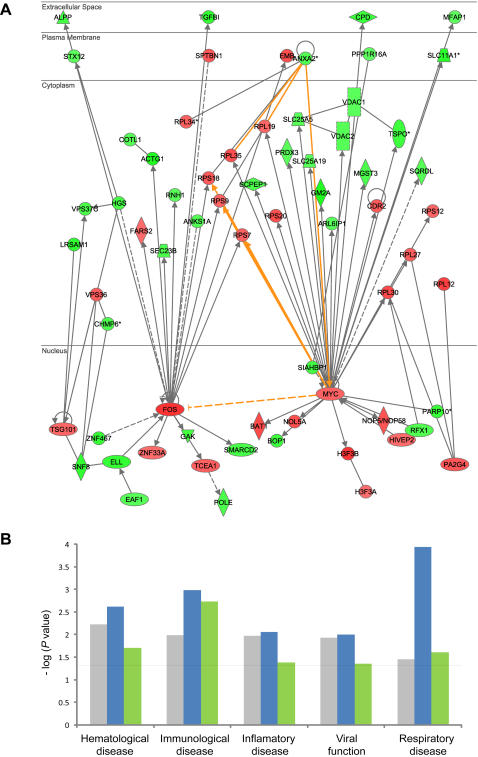
Figure 4. Functional analysis of differentially expressed genes.
(A) Differential expression of the FOS and MYC networks and enriched disease classes. The Ingenuity Pathways Knowledge Base (IPKB) was used to generate networks of interacting genes that are overrepresented in the set of transcripts differentially expressed (based on a 1% FDR cutoff) between the urban and rural samples. The top two networks are focused on the FOS and MYC transcription factors, and every one of the genes that the IPKB indicate as interacting either genetically or biochemically are differentially expressed in this comparison. Network connectivity is indicated as solid edges for direct interactions, and dashed edges for indirect interactions. Transcripts are displayed in green for down-regulated and red for up-regulated, while cellular compartments in which the gene products are localized are also indicated. Gold edges highlight shared interactions. The list of genes, their fold change and P values are listed in Table S3. (B) Overrepresentation of disease classes affected by differentially expressed genes. Some of the Ingenuity Knowledge Database disease bio-function categories enriched (P<0.05) in differentially expressed transcripts (1% FDR) in the three lifestyle pairwise comparisons (grey, urban vs. rural; blue, nomadic vs. urban; green, nomadic vs. rural). Fisher's exact test was used to calculate the P value associated with the probability that the number of genes in each biological function and/or disease assigned to that data set is greater or less than expected by chance given the numbers of genes expressed in leukocytes.

References

    1. Göring HHH, et al. Discovery of expression QTLs using large-scale transcriptional profiling in human lymphocytes. Nat Genet. 2007;39:1208–1216. - PubMed
    1. Stranger BS, et al. Population genomics of human gene expression. Nat Genet. 2007;39:1217–1224 (2007). - PMC - PubMed
    1. Dixon AL, et al. A genome-wide association study of global gene expression. Nat Genet. 2007;39:1202–1207. - PubMed
    1. Bosch E, et al. Genetic structure of north-west Africa revealed by STR analysis. Europ J Hum Genet. 2000;8:360–366. - PubMed
    1. Coudray C, et al. Population genetic data of 15 tetrameric short tandem repeats (STRs) in Berbers from Morocco. Forensic Sci Int. 2007;167:81–86. - PubMed

Publication types