


Activation of ErbB3, EGFR and Erk is essential for growth of human breast cancer cell lines with acquired resistance to fulvestrant
- PMID: 18409071
- PMCID: PMC2764248
- DOI: 10.1007/s10549-008-0011-8
Activation of ErbB3, EGFR and Erk is essential for growth of human breast cancer cell lines with acquired resistance to fulvestrant
Abstract
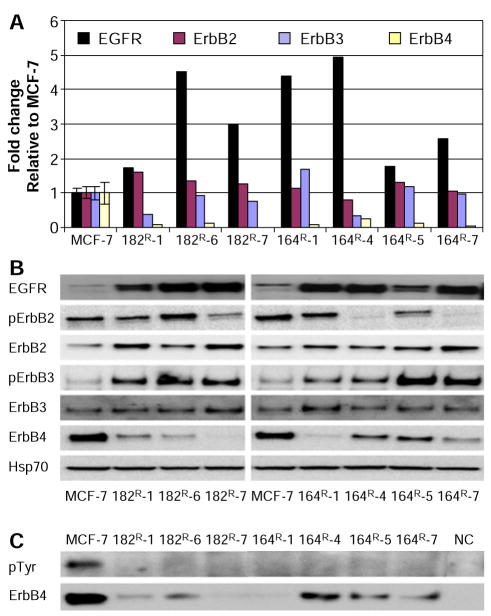
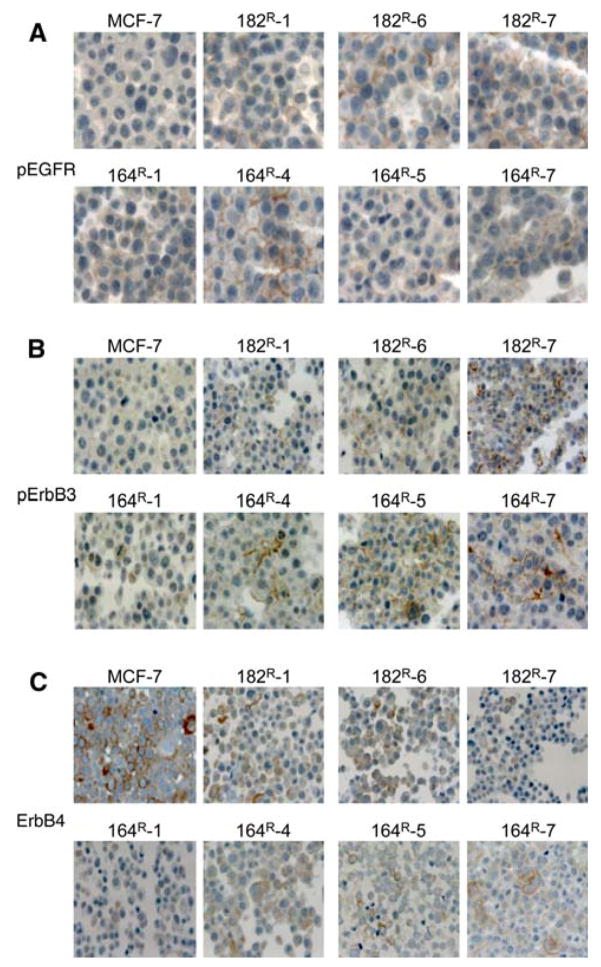
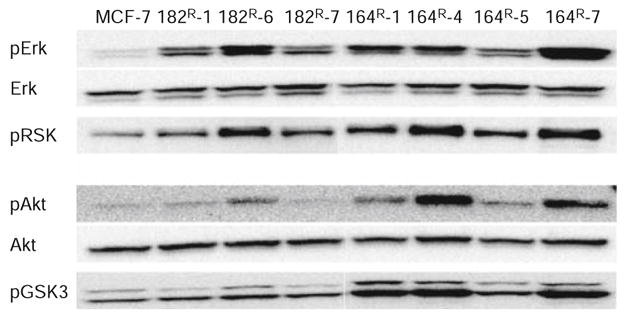
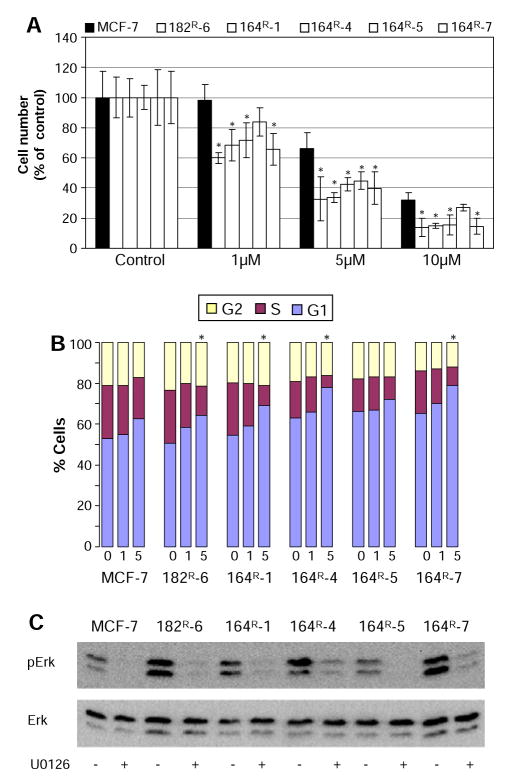
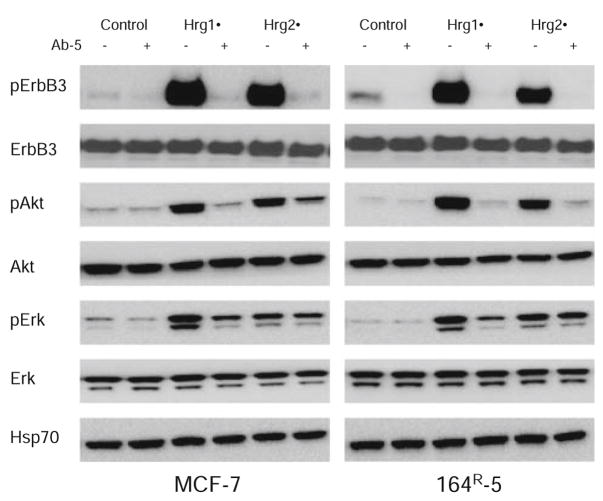
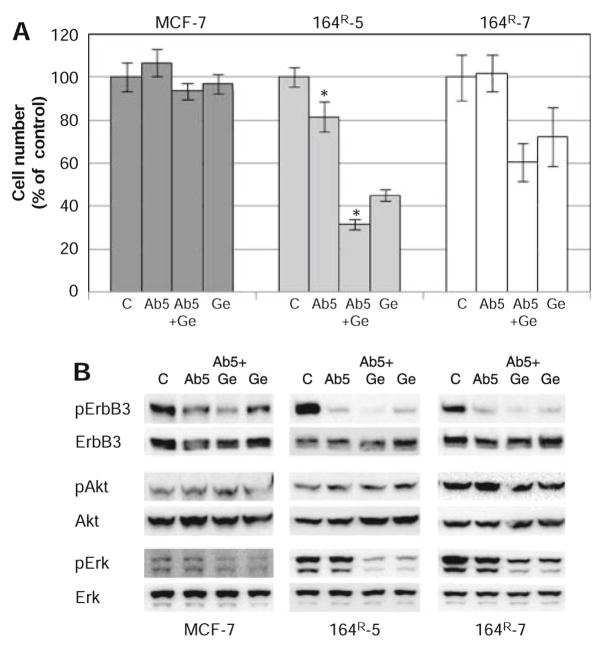
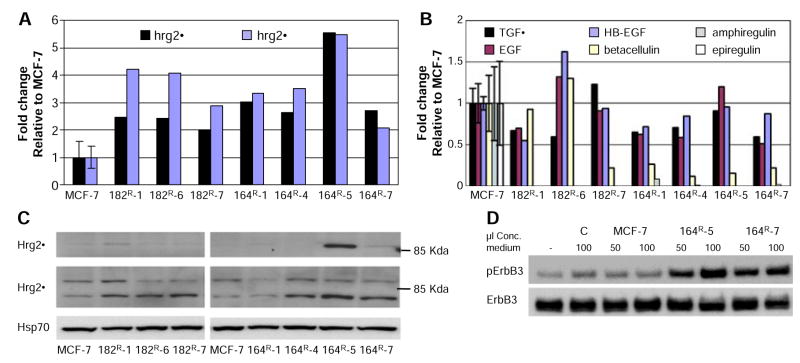
Seven fulvestrant resistant cell lines derived from the estrogen receptor alpha positive MCF-7 human breast cancer cell line were used to investigate the importance of epidermal growth factor receptor (ErbB1-4) signaling. We found an increase in mRNA expression of EGFR and the ErbB3/ErbB4 ligand heregulin2 (hrg2) and a decrease of ErbB4 in all resistant cell lines. Western analyses confirmed the upregulation of EGFR and hrg2 and the downregulation of ErbB4. Elevated activation of EGFR and ErbB3 was seen in all resistant cell lines and the ErbB3 activation occurred by an autocrine mechanism. ErbB4 activation was observed only in the parental MCF-7 cells. The downstream kinases pAkt and pErk were increased in five of seven and in all seven resistant cell lines, respectively. Treatment with the EGFR inhibitor gefitinib preferentially inhibited growth and reduced the S phase fraction in the resistant cell lines concomitant with inhibition of Erk and unaltered Akt activation. In concert, inhibition of Erk with U0126 preferentially reduced growth of resistant cell lines. Treatment with ErbB3 neutralizing antibodies inhibited ErbB3 activation and resulted in a modest but statistically significant growth inhibition of two resistant cell lines. These data indicate that ligand activated ErbB3 and EGFR, and Erk signaling play important roles in fulvestrant resistant cell growth. Furthermore, the decreased level of ErbB4 in resistant cells may facilitate heterodimerization of ErbB3 with EGFR and ErbB2. Our data support that a concerted action against EGFR, ErbB2 and ErbB3 may be required to obtain complete growth suppression of fulvestrant resistant cells.
Figures

References
-
- Osborne CK. Tamoxifen in the treatment of breast cancer. N Engl J Med. 1999;339:1609–1618. - PubMed
-
- Brünner N, Frandsen TL, Holst-Hansen C, et al. MCF7/LCC2 A 4-hydroxytamoxifen resistant human breast cancer variant that retains sensitivity to the steroidal antiestrogen ICI 182,780. Cancer Res. 1993;53:3229–3232. - PubMed
-
- Lykkesfeldt AE, Madsen MW, Briand P. Altered expression of estrogen-regulated genes in a tamoxifen-resistant and ICI 164,384 and ICI 182,780 sensitive human breast cancer cell line, MCF-7/TAMR-1. Cancer Res. 1994;54:1587–1595. - PubMed
-
- Howell A, DeFriend D, Robertson J, et al. Response to a specific antioestrogen (ICI 182780) in tamoxifen-resistant breast cancer. Lancet. 1995;345:29–30. - PubMed
-
- Howell A. Pure oestrogen antagonists for the treatment of advanced breast cancer. Endocr Relat Cancer. 2006;13:689–706. - PubMed
Publication types
MeSH terms
Substances
Grants and funding
LinkOut - more resources
Full Text Sources
Other Literature Sources
Medical
Research Materials
Miscellaneous
