


Review
doi: 10.1002/ajmg.c.30169.
Genetics of post-traumatic stress disorder: informing clinical conceptualizations and promoting future research
Affiliations
- PMID: 18412098
- PMCID: PMC2680188
- DOI: 10.1002/ajmg.c.30169
Item in Clipboard
Review
Genetics of post-traumatic stress disorder: informing clinical conceptualizations and promoting future research
Am J Med Genet C Semin Med Genet.
.
Abstract
The purpose of this article is to provide an overview of genetic research involving post-traumatic stress disorder (PTSD). First, we summarize evidence for genetic influences on PTSD from family investigations. Second, we discuss the distinct contributions to our understanding of the genetics of PTSD permitted by twin studies. Finally, we summarize findings from molecular genetic studies, which have the potential to inform our understanding of underlying biological mechanisms for the development of PTSD.
Copyright 2008 Wiley-Liss, Inc.
Figures
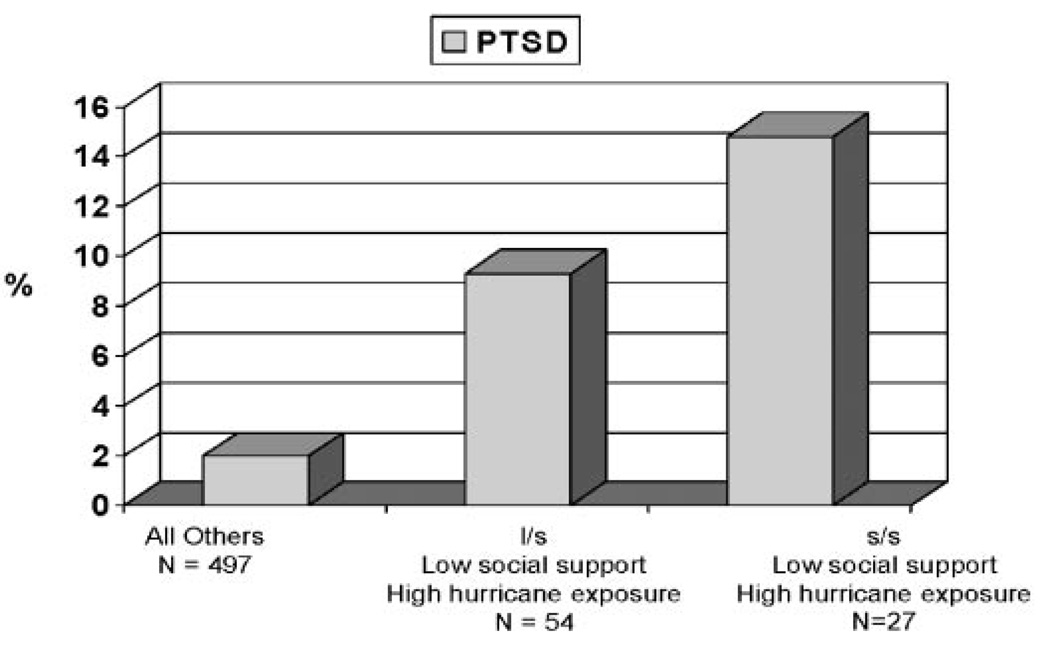
Prevalence of post-hurricane PTSD by SLC6A4 genotype, level of social support, and level of hurricane exposure in adults exposed to 2004 Florida Hurricanes.
References
-
- American Psychiatric Association. Diagnostic and Statistical Manual of Mental Disorders. 4th Edition. Washington, DC: 1994.
-
- Bachmann AW, Sedgley TL, Jackson RV, Gibson JN, Young RM, Torpy DJ. Glucocorticoid receptor polymorphisms and posttraumatic stress disorder. Psychoneuroendocrinology. 2005;30:297–306. - PubMed
-
- Breslau N, Kessler R, Chilcoat HD, Schultz LR, Davis GC, Andreski P. Trauma and posttraumatic stress disorder in the community: The 1996 Detroit area survey of trauma. Arch Gen Psychiatry. 1998;55:626–632. - PubMed
-
- Brewin CR, Andrews B, Valentine JD. Meta-analysis of risk factors for posttraumatic stress disorder in trauma-exposed adults. J Consult Clin Psychol. 2000;68:317–336. - PubMed
-
- Chantarujikapong SI, Scherrer JF, Xian H, Eisen SA, Lyons MJ, Goldberg J, Tsuang M, True WR. A twin study of generalized anxiety disorder symptoms, panic disorder symptoms and post-traumatic stress disorder in men. Psychiatry Res. 2001;103:133–145. - PubMed
Publication types
MeSH terms
Grants and funding
LinkOut - more resources
Full Text Sources
Medical
