


Endogenous steroids and financial risk taking on a London trading floor
- PMID: 18413617
- PMCID: PMC2329689
- DOI: 10.1073/pnas.0704025105
Endogenous steroids and financial risk taking on a London trading floor
Abstract
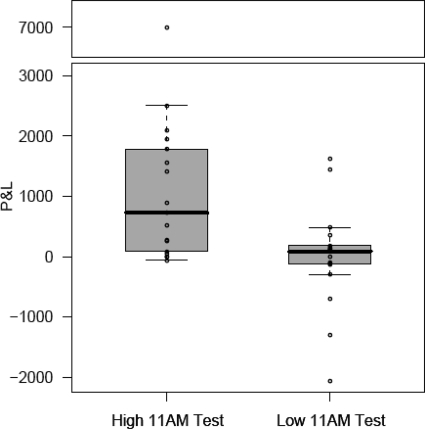
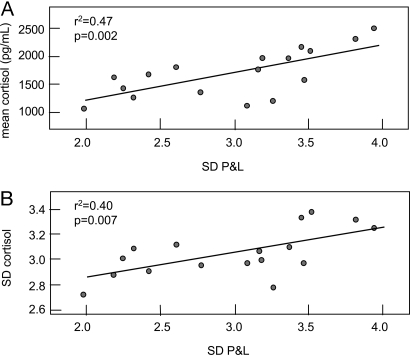
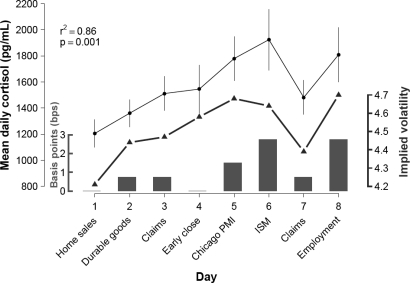
Little is known about the role of the endocrine system in financial risk taking. Here, we report the findings of a study in which we sampled, under real working conditions, endogenous steroids from a group of male traders in the City of London. We found that a trader's morning testosterone level predicts his day's profitability. We also found that a trader's cortisol rises with both the variance of his trading results and the volatility of the market. Our results suggest that higher testosterone may contribute to economic return, whereas cortisol is increased by risk. Our results point to a further possibility: testosterone and cortisol are known to have cognitive and behavioral effects, so if the acutely elevated steroids we observed were to persist or increase as volatility rises, they may shift risk preferences and even affect a trader's ability to engage in rational choice.
Conflict of interest statement
The authors declare no conflict of interest.
Figures
References
-
- Archer J. Neurosci Biobehav Rev. 2006;30:319–345. - PubMed
-
- Booth A, Shelley G, Mazur A, Tharp G, Kittok R. Horm Behav. 1989;23:556–571. - PubMed
-
- Chase I, Costanza B, Dugatkin L. Anim Behav. 1994;48:393–400.
-
- Oyegbile T, Marler C. Horm Behav. 2005;48:259–267. - PubMed
-
- Hennessey J, Levine S. Prog Psychobiol Physiol Psychol. 1979;8:133–178.
MeSH terms
Substances
LinkOut - more resources
Full Text Sources
Other Literature Sources
