


Genetic aspects of Alzheimer disease
- PMID: 18414205
- PMCID: PMC2690397
- DOI: 10.1097/GIM.0b013e31816b64dc
Genetic aspects of Alzheimer disease
Abstract
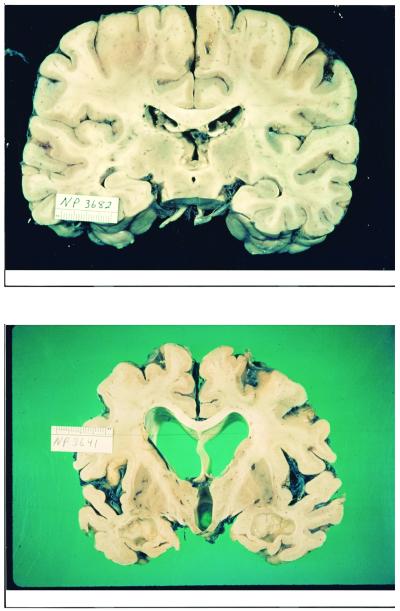
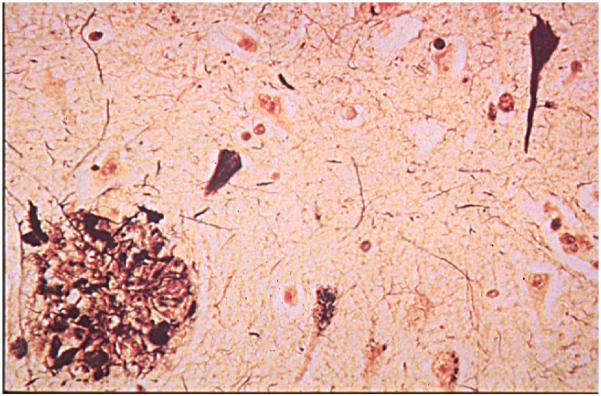
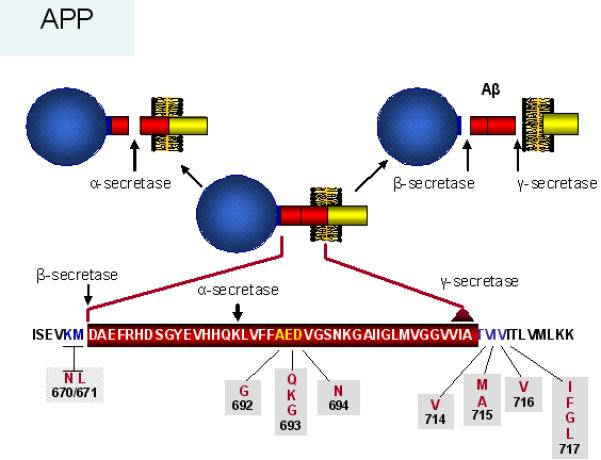
Alzheimer disease is the most common cause of dementia and represents a major public health problem. The neuropathologic findings of amyloid-beta plaques and tau containing neurofibrillary tangles represent important molecular clues to the underlying pathogenesis. Genetic factors are well recognized, but complicated. Three rare forms of autosomal-dominant early-onset familial Alzheimer disease have been identified and are associated with mutations in amyloid precursor protein, presenilin 1, and presenilin 2 genes. The more common late-onset form of Alzheimer disease is assumed to be polygenic/multifactorial. However, thus far the only clearly identified genetic risk factor for Alzheimer disease is Apo lipoprotein E. The epsilon4 allele of Apo lipoprotein E influences age at onset of Alzheimer disease, but is neither necessary nor sufficient for the disease. The search continues for the discovery of additional genetic influences.
Figures
References
Literature Cited
-
- Bird TD, Miller BL. Alzheimer’s disease and primary dementias. In: Kasper D, Fauci A, Branwald E, et al., editors. Harrison’s Principles of Internal Medicine. 16 ed. McGraw-Hill; NY: 2005. pp. 2393–406.
-
- Mayeux R, Saunders AM, Shea S, Mirra S, et al. Alzheimer’s Disease Centers Consortium on Apolipoprotein E and Alzheimer’s Disease Utility of the apolipoprotein E genotype in the diagnosis of Alzheimer’s disease. N Engl J Med. 1998;338:506–11. - PubMed
-
- Kaye JA. Diagnostic challenges in dementia. Neurology. 1998;51:45–52. - PubMed
-
- Braak H, Braak E. Neuropathological stageing of Alzheimer-related changes. Acta Neuropathol (Berl) 1991;82:239–59. - PubMed
-
- National Institute on Aging-Reagan Working Group Consensus recommendations for the postmortem diagnosis of Alzheimer’s disease. Neurobiol Aging. 1997;18(Suppl 4):S1–2. - PubMed
References
-
- American College of Medical Genetics. American Society of Human Genetics Working Group on ApoE and Alzheimer’s disease . Statement on use of apolipoprotein E testing for Alzheimer’s disease. 1995. - PubMed
-
- National Institute on Aging. Alzheimer’s Association Working Group Apolipoprotein E genotyping in Alzheimer’s disease. Lancet. 1996;347:1091–5. - PubMed
-
- National Society of Genetic Counselors . Resolution on prenatal and childhood testing for adult-onset disorders. 1995.
-
- Post SG, Whitehouse PJ, Binstock RH, Bird TD, Eckert SK, Farrer LA, Fleck LM, Gaines AD, Juengst ET, Karlinsky H, Miles S, Murray TH, Quaid KA, Relkin NR, Roses AD, St George-Hyslop PH, Sachs GA, Steinbock B, Truschke EF, Zinn AB. The clinical introduction of genetic testing for Alzheimer’s disease: an ethical perspective. JAMA. 1997;277:832–6. - PubMed
Publication types
MeSH terms
Grants and funding
LinkOut - more resources
Full Text Sources
Other Literature Sources
Medical
