


Neural measures of individual differences in selecting and tracking multiple moving objects
- PMID: 18417697
- PMCID: PMC2570324
- DOI: 10.1523/JNEUROSCI.0556-08.2008
Neural measures of individual differences in selecting and tracking multiple moving objects
Abstract
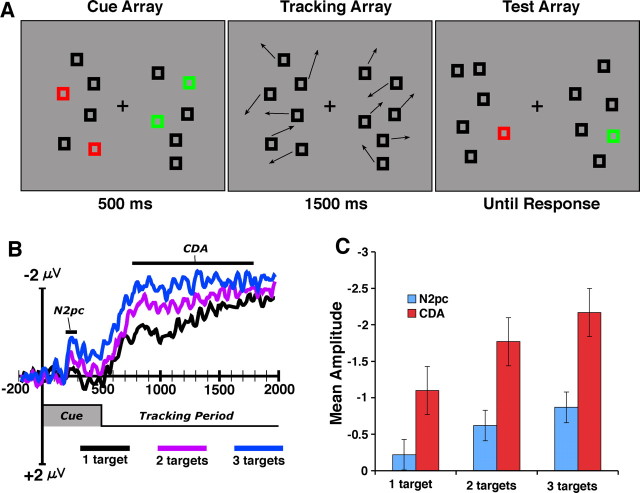
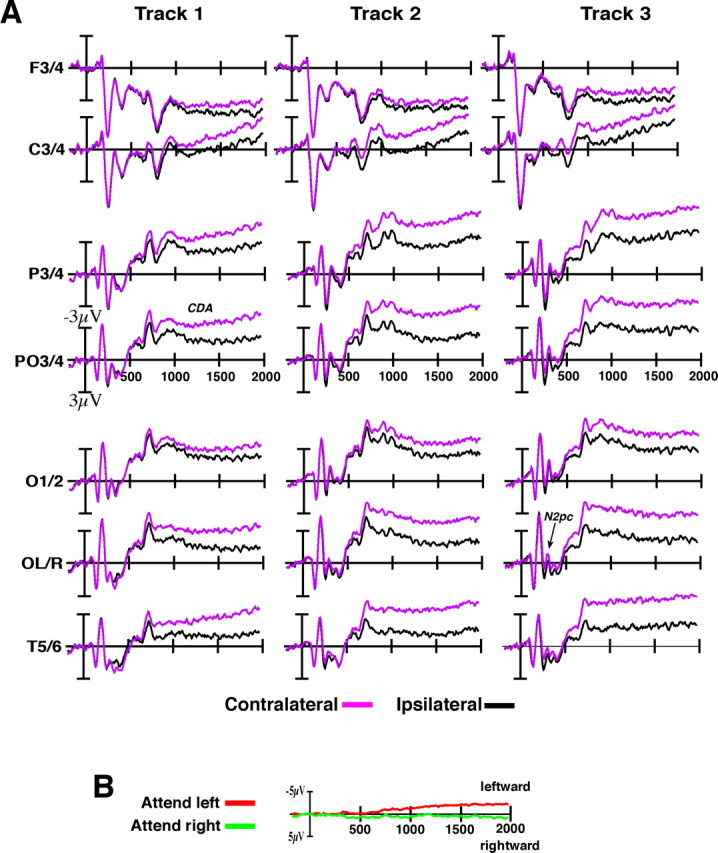
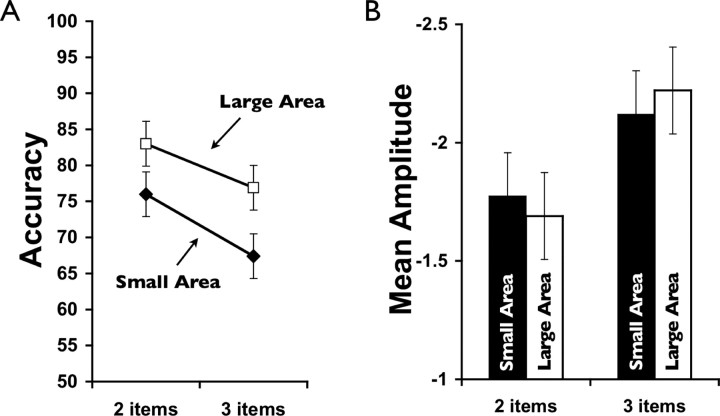
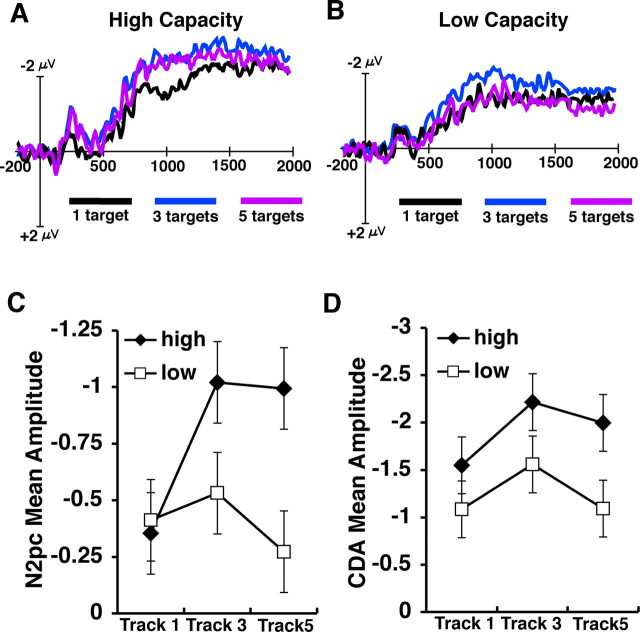
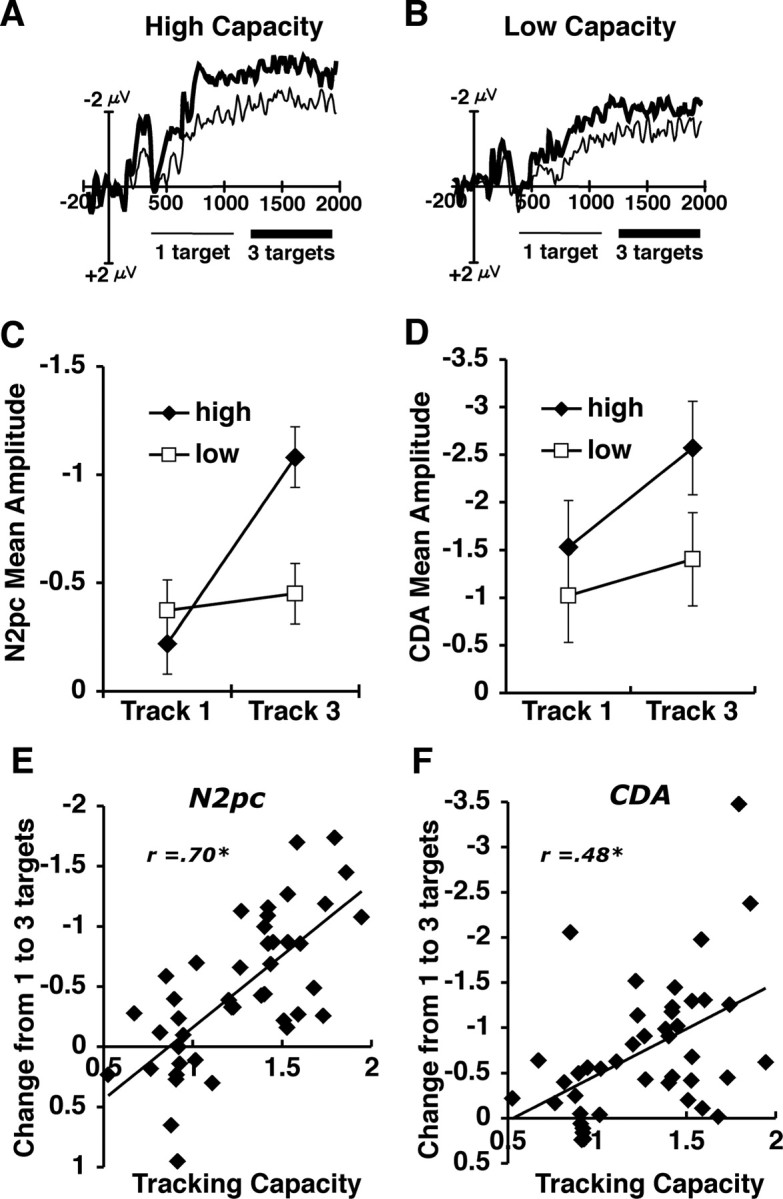
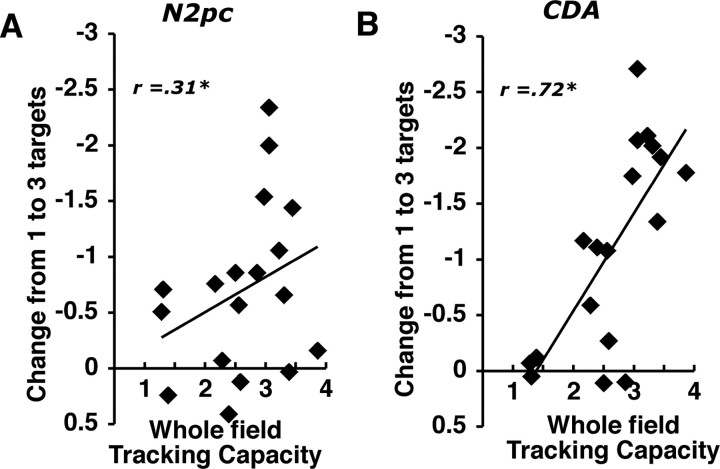
Attention can be divided so that multiple objects can be tracked simultaneously as they move among distractors. Although attentional tracking is known to be highly limited, such that most individuals can track only approximately four objects simultaneously, the neurophysiological mechanisms that underlie this capacity limitation have not been established. Here, we provide electrophysiological measures in humans of the initial selection and sustained attention processes that facilitate attentional tracking. Each measure was modulated by the number of objects the subject was tracking and was highly sensitive to each individual's specific tracking capacity. Consequently, these measures provide strong neurophysiological predictors of an individual's attentional tracking capacity. Moreover, by manipulating the difficulty of these two phases of the task, we observe that the limiting factor underlying tracking capacity can flexibly shift between these two attentional mechanisms depending on the requirements of the task.
Figures
References
-
- Alvarez GA, Cavanagh P. Independent resources for attentional tracking in the left and right visual hemifields. Psychol Sci. 2005;16:637–643. - PubMed
-
- Alvarez GA, Horowitz TS, Arsenio HC, DiMase JS, Wolfe JM. Do multielement visual tracking and visual search draw continuously on the same visual attention resources? J Exp Psychol Hum Percept Perform. 2005;31:643–667. - PubMed
-
- Awh E, Pashler H. Evidence for split attentional foci. J Exp Psychol Hum Percept Perform. 2000;26:834–846. - PubMed
-
- Awh E, Anllo-Vento L, Hillyard S. The role of spatial selective attention in working memory for locations: evidence from event-related potentials. J Cogn Neurosci. 2000;12:840–847. - PubMed
-
- Buschman TJ, Miller EK. Top-down versus bottom-up control of attention in the prefrontal and posterior parietal cortices. Science. 2007;315:1860–1862. - PubMed
Publication types
MeSH terms
Grants and funding
LinkOut - more resources
Full Text Sources
