


Insights into the oncogenic effects of PIK3CA mutations from the structure of p110alpha/p85alpha
- PMID: 18418043
- PMCID: PMC3260475
- DOI: 10.4161/cc.7.9.5817
Insights into the oncogenic effects of PIK3CA mutations from the structure of p110alpha/p85alpha
Abstract
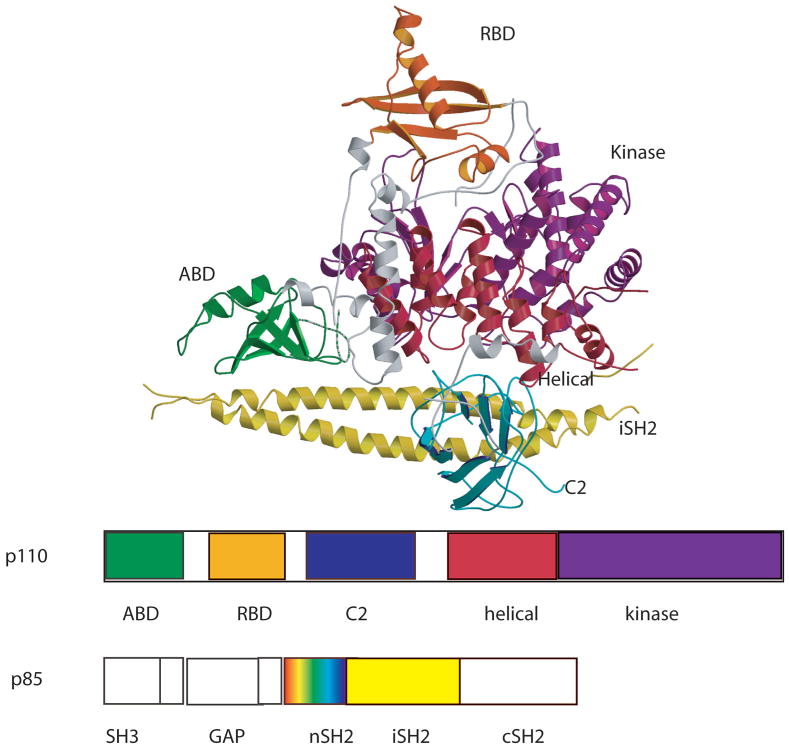
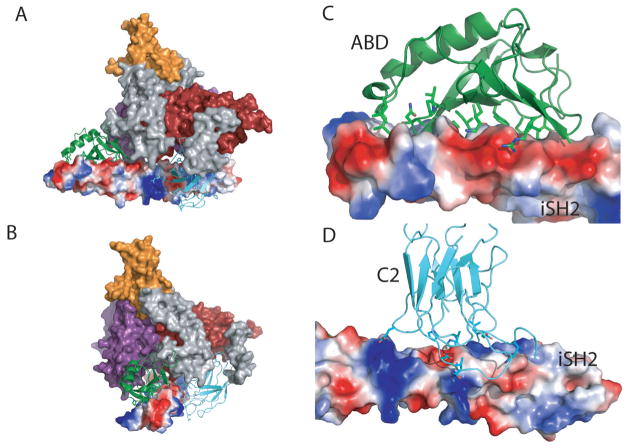
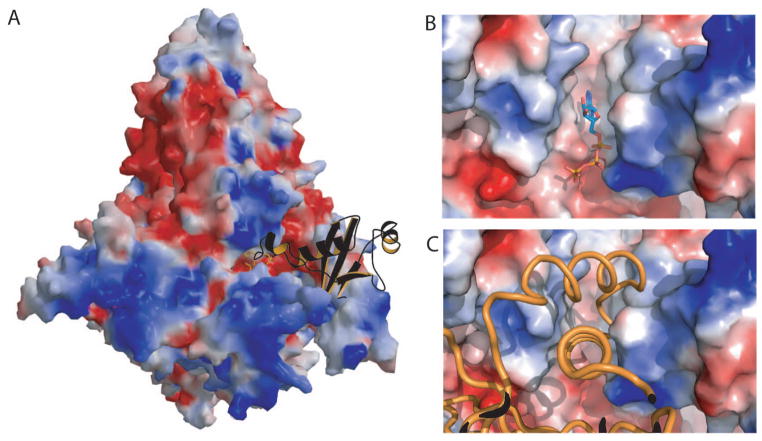
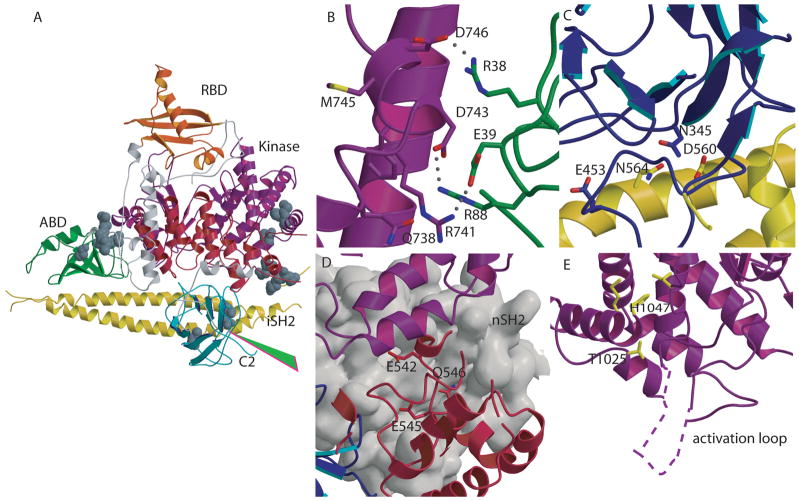
Phosphatidylinositide-3-kinases (PI3K) initiate a number of signaling pathways by recruiting other kinases, such as Akt, to the plasma membrane. One of the isoforms, PI3Kalpha, is an oncogene frequently mutated in several cancer types. These mutations increase PI3K kinase activity, leading to increased cell survival, cell motility, cell metabolism, and cell cycle progression. The structure of the complex between the catalytic subunit of PI3Kalpha, p110alpha, and a portion of its regulatory subunit, p85alpha reveals that the majority of the oncogenic mutations occur at the interfaces between p110 domains and between p110 and p85 domains. At these positions, mutations disrupt interactions resulting in changes in the kinase domain that may increase enzymatic activity. The structure also suggests that interaction with the membrane is mediated by one of the p85 domains (iSH2). These findings may provide novel structural loci for the design of new anti-cancer drugs.
Conflict of interest statement
The authors declare no financial or conflicts of interest in the contents of this paper
Figures
References
-
- Fruman DA, Meyers RE, Cantley LC. Phosphoinositide kinases. Annu Rev Biochem. 1998;67:481–507. - PubMed
-
- Cantley LC. The phosphoinositide 3-kinase pathway. Science. 2002;296:1655–7. - PubMed
-
- Katso R, Okkenhaug K, Ahmadi K, White S, Timms J, Waterfield MD. Cellular function of phosphoinositide 3-kinases: implications for development, homeostasis, and cancer. Annu Rev Cell Dev Biol. 2001;17:615–75. - PubMed
Publication types
MeSH terms
Substances
Grants and funding
LinkOut - more resources
Full Text Sources
Other Literature Sources
Molecular Biology Databases
Miscellaneous
