


Xanthophylls are preferentially taken up compared with beta-carotene by retinal cells via a SRBI-dependent mechanism
- PMID: 18424859
- PMCID: PMC2444002
- DOI: 10.1194/jlr.M700580-JLR200
Xanthophylls are preferentially taken up compared with beta-carotene by retinal cells via a SRBI-dependent mechanism
Abstract
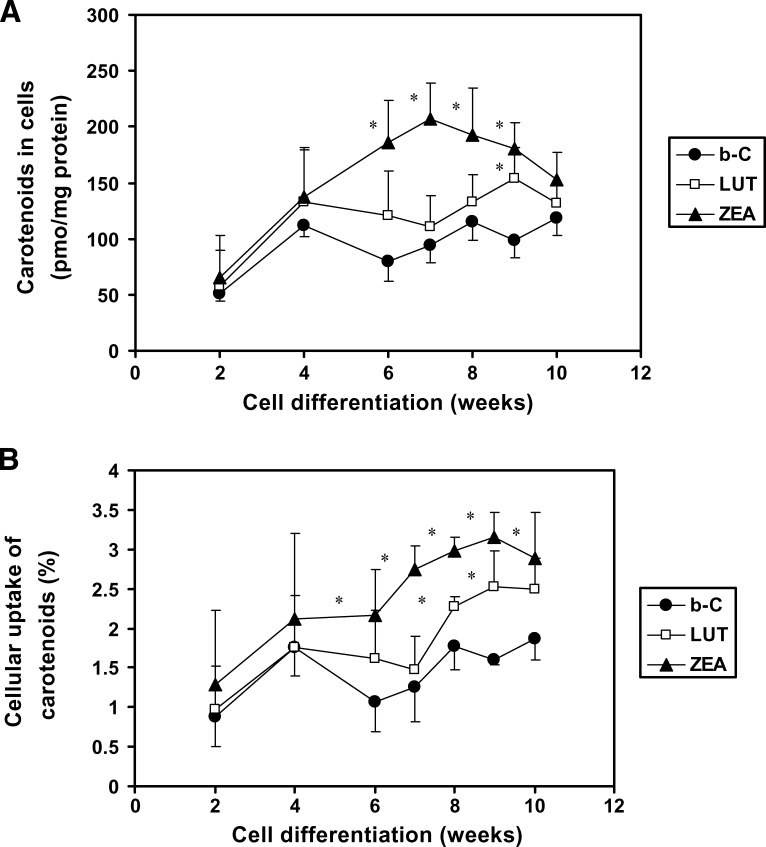
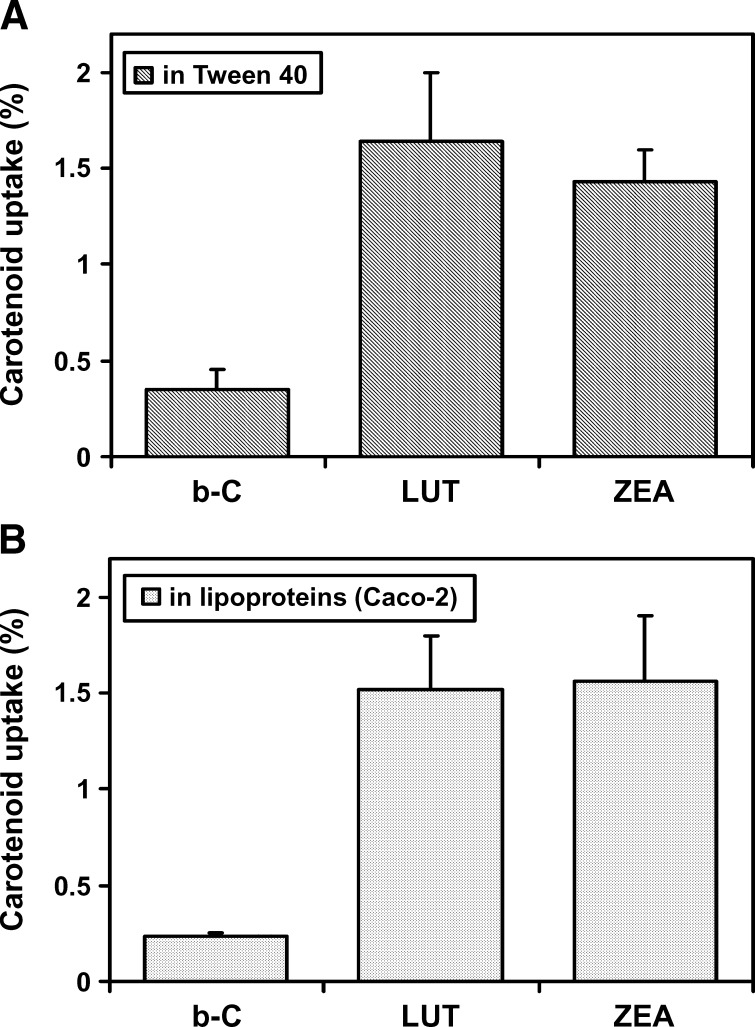
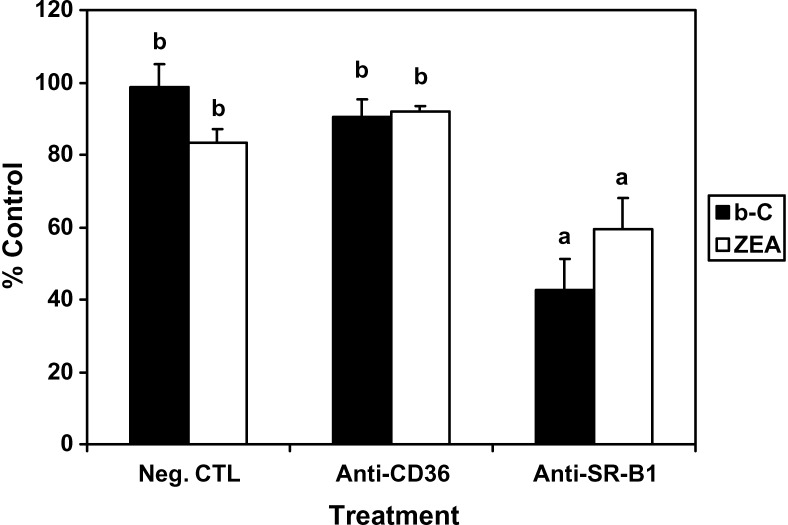
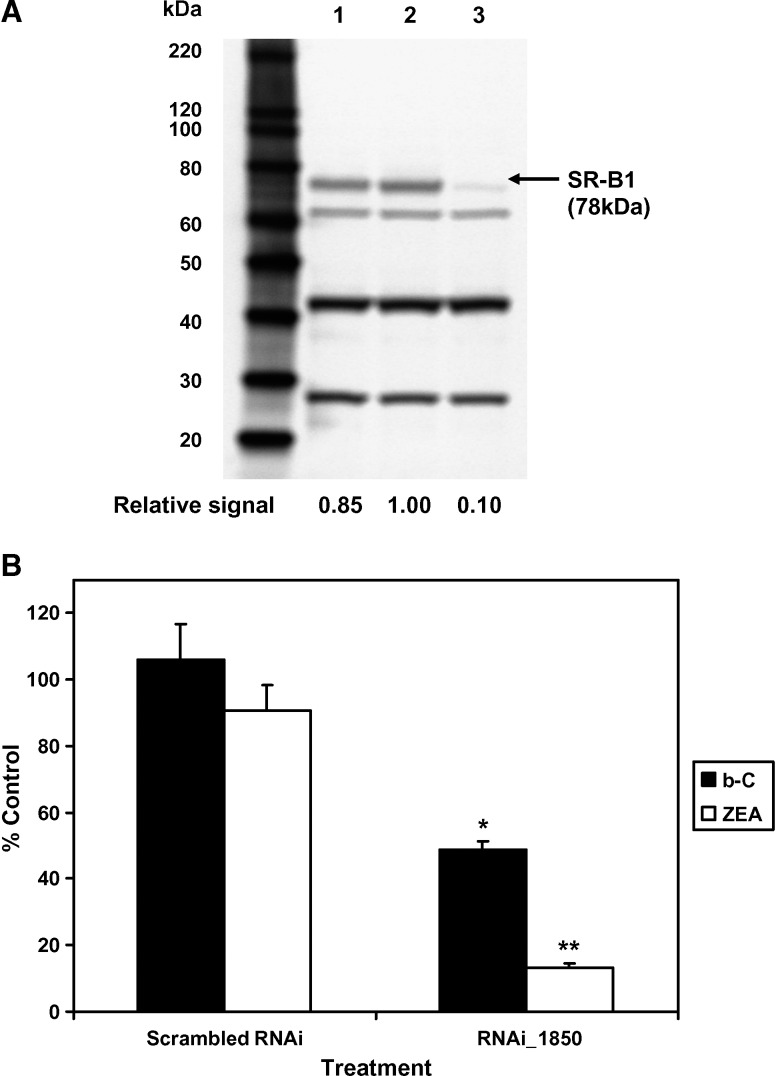
The purpose of this study was to investigate the mechanisms by which carotenoids [xanthophylls vs. beta-carotene(beta-C)] are taken up by retinal pigment epithelial (RPE) cells. The human RPE cell line, ARPE-19, was used. When ARPE-19 cells were fully differentiated (7-9 weeks), the xanthophylls lutein (LUT) and zeaxanthin (ZEA) were taken up by cells to an extent 2-fold higher than beta-C (P < 0.05). At 9 weeks, cellular uptakes were 1.6, 2.5, and 3.2%, respectively, for beta-C, LUT, and ZEA. Similar extents were observed when carotenoids were delivered in either Tween 40 or "chylomicrons" produced by Caco-2 cells. Differentiated ARPE-19 cells did not exhibit any detectable beta-C 15,15'-oxygenase activity or convert exogenous beta-C into vitamin A. When using specific antibodies against the lipid transporters cluster determinant 36 (CD36) and scavenger receptor class B type I (SR-BI), cellular uptake of beta-C and ZEA were significantly decreased (40-60%) with anti-SR-BI but not with anti-CD36. Small interfering RNA transfection for SR-BI led to marked knockdown of SR-BI protein expression (approximately 90%), which resulted in decreased beta-C and ZEA uptakes by 51% and 87%, respectively. Thus, the present data show that RPE cells preferentially take up xanthophylls versus the carotene by a process that appears to be entirely SR-BI-dependent for ZEA and partly so for beta-C. This mechanism may explain, in part, the preferential accumulation of xanthophylls in the macula of the retina.
Figures
References
-
- Moeller S. M., N. Parekh, L. Tinker, C. Ritenbaugh, B. Blodi, R. B. Wallace, and J. A. Mares. 2006. Associations between intermediate age-related macular degeneration and lutein and zeaxanthin in the Carotenoids in Age-Related Eye Disease Study (CAREDS): ancillary study of the Women's Health Initiative. Arch. Ophthalmol. 124 1151–1162. - PubMed
-
- Snodderly D. M. 1995. Evidence for protection against age-related macular degeneration by carotenoids and antioxidant vitamins. Am. J. Clin. Nutr. 62 (6Suppl.) 1448S–1461S. - PubMed
-
- Parker R. S. 1989. Carotenoids in human blood and tissues. J. Nutr. 119 101–104. - PubMed
-
- Goodwin, T. W., and G. Britton. 1988. Distribution and analysis of carotenoids. In Plant Pigments, T.W. Goodwin, editor. Academic Press, New York. 61–127.
Publication types
MeSH terms
Substances
Grants and funding
LinkOut - more resources
Full Text Sources
Research Materials
