


The physical and biological characterization of a frail mouse model
- PMID: 18426963
- PMCID: PMC5903428
- DOI: 10.1093/gerona/63.4.391
The physical and biological characterization of a frail mouse model
Abstract
Background: The development of animal models that approximate human frailty is necessary to facilitate etiologic and treatment-focused frailty research. The genetically altered IL-10(tm/tm) mouse does not express the antiinflammatory cytokine interleukin 10 (IL-10) and is, like frail humans, more susceptible to inflammatory pathway activation. We hypothesized that with increasing age, IL-10(tm/tm) mice would develop physical and biological characteristics similar to those of human frailty as compared to C57BL/6J control mice.
Methods: Strength, activity, serum IL-6, and skeletal muscle gene expression were compared between age-matched and gender-matched IL-10(tm/tm) mice on C57BL/6J background and C57BL/6J control mice using a longitudinal design for physical characteristics and cross-sectional design for biological characteristics.
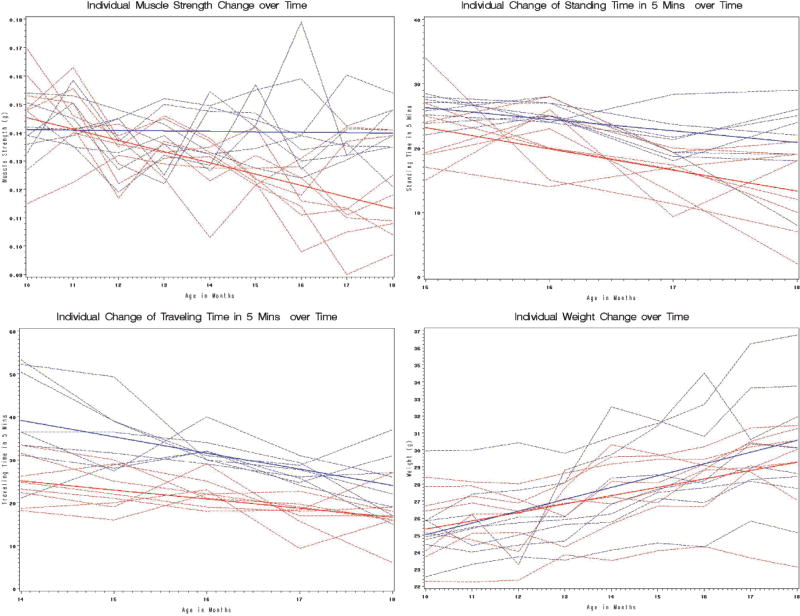
Results: Strength levels declined significantly faster in IL-10(tm/tm) compared to control mice with increasing age. Serum IL-6 levels were significantly higher in older compared to younger IL-10(tm/tm) mice and were significantly higher in older IL-10(tm/tm) compared to age- and gender-matched C57BL/6J control mice. One hundred twenty-five genes, many related to mitochondrial biology and apoptosis, were differentially expressed in skeletal muscle between 50-week-old IL-10(tm/tm) and 50-week-old C57BL/6J mice. No expression differences between IL-10(tm/tm) age groups were identified by quantitative polymerase chain reaction.
Conclusion: These physical and biological findings suggest that the IL-10(tm/tm) mouse develops inflammation and strength decline consistent with human frailty at an earlier age compared to C57BL/6J control type mice. This finding provides rationale for the further development and utilization of the IL-10(tm/tm) mouse to study the biological basis of frailty.
Figures
References
-
- Fried LP, Tangen C, Walston J, et al. Frailty in older adults: evidence for a phenotype. J Gerontol Med Sci. 2001;56A:M1–M11. - PubMed
-
- Brown M, Sinacore DR, Binder EF, Kohrt WM. Physical and performance measures for the identification of mild to moderate frailty. J Gerontol Med Sci. 2000;55:M350–M355. - PubMed
-
- Chin APM, Dekker JM, Feskens EJ, Schouten EG, Kromhout D. How to select a frail elderly population? A comparison of three working definitions. J Clin Epidemiol. 1999;52:1015–1021. - PubMed
-
- Walston J, McBurnie MA, Newman A, et al. Frailty and activation of the inflammation and coagulation systems with and without clinical morbidities: results from the Cardiovascular Health Study. Arch Intern Med. 2002;162:2333–2341. - PubMed
-
- Leng S, Chaves P, Koenig K, Walston J. Serum interleukin-6 and hemoglobin as physiological correlates in the geriatric syndrome of frailty: a pilot study. J Am Geriatr Soc. 2002;50:1268–1271. - PubMed
Publication types
MeSH terms
Substances
Grants and funding
LinkOut - more resources
Full Text Sources
Other Literature Sources
Molecular Biology Databases
