


Higher doses of lenalidomide are associated with unacceptable toxicity including life-threatening tumor flare in patients with chronic lymphocytic leukemia
- PMID: 18427150
- PMCID: PMC4312490
- DOI: 10.1200/JCO.2007.13.9709
Higher doses of lenalidomide are associated with unacceptable toxicity including life-threatening tumor flare in patients with chronic lymphocytic leukemia
Abstract
Purpose: Lenalidomide is a novel therapeutic agent with uncertain mechanism of action that is clinically active in myelodysplastic syndrome (MDS) and multiple myeloma (MM). Application of high (MM) and low (MDS) doses of lenalidomide has been reported to have clinical activity in CLL. Herein, we highlight life-threatening tumor flare when higher doses of lenalidomide are administered to patients with CLL and provide a potential mechanism for its occurrence.
Patients and methods: Four patients with relapsed CLL were treated with lenalidomide (25 mg/d for 21 days of a 28-day cycle). Serious adverse events including tumor flare and tumor lysis are summarized. In vitro studies examining drug-induced apoptosis and activation of CLL cells were also performed.
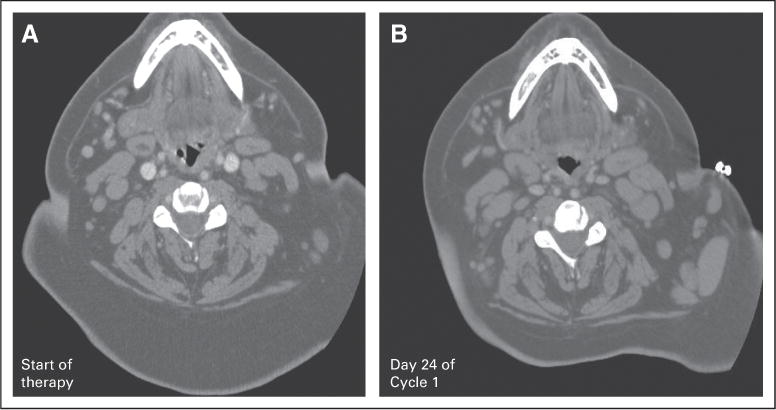
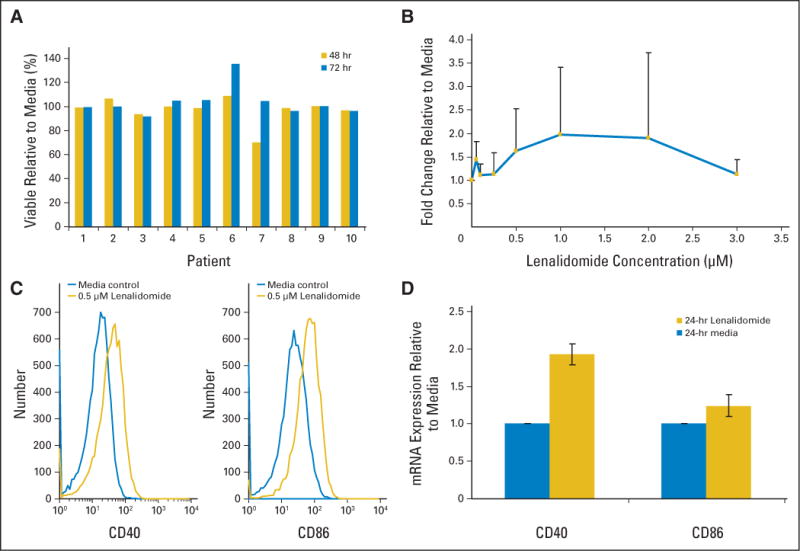
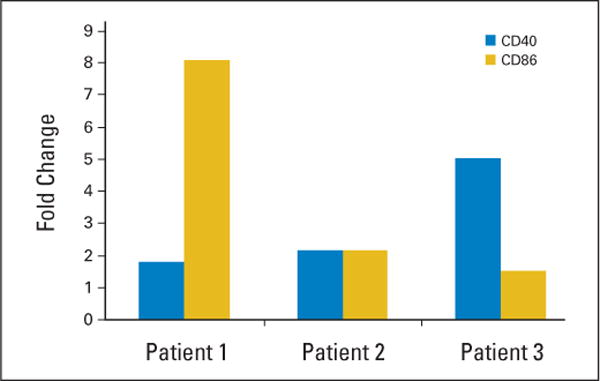
Results: Four consecutive patients were treated with lenalidomide; all had serious adverse events. Tumor flare was observed in three patients and was characterized by dramatic and painful lymph node enlargement resulting in hospitalization of two patients, with one fatal outcome. Another patient developed sepsis and renal failure. In vitro studies demonstrated lenalidomide-induced B-cell activation (upregulation of CD40 and CD86) corresponding to degree of tumor flare, possibly explaining the tumor flare observation.
Conclusion: Lenalidomide administered at 25 mg/d in relapsed CLL is associated with unacceptable toxicity; the rapid onset and adverse clinical effects of tumor flare represent a significant limitation of lenalidomide use in CLL at this dose. Drug-associated B-cell activation may contribute to this adverse event. Future studies with lenalidomide in CLL should focus on understanding this toxicity, investigating patients at risk, and investigating alternative safer dosing schedules.
Conflict of interest statement
Although all authors completed the disclosure declaration, the following author(s) indicated a financial or other interest that is relevant to the subject matter under consideration in this article. Certain relationships marked with a “U” are those for which no compensation was received; those relationships marked with a “C” were compensated. For a detailed description of the disclosure categories, or for more information about ASCO’s conflict of interest policy, please refer to the Author Disclosure Declaration and the Disclosures of Potential Conflicts of Interest section in Information for Contributors.
Figures
Comment in
-
Lenalidomide-associated tumor flare reaction is manageable in patients with chronic lymphocytic leukemia.J Clin Oncol. 2008 Oct 10;26(29):4851-2; author reply 4852-3. doi: 10.1200/JCO.2008.18.2857. Epub 2008 Sep 8. J Clin Oncol. 2008. PMID: 18779599 No abstract available.
References
-
- Tai YT, Li XF, Catley L, et al. Immunomodulatory drug lenalidomide (CC-5013, IMiD3) augments anti-CD40 SGN-40-induced cytotoxicity in human multiple myeloma: Clinical implications. Cancer Res. 2005;65:11712–11720. - PubMed
-
- Hernandez-Ilizaliturri FJ, Reddy N, Holkova B, et al. Immunomodulatory drug CC-5013 or CC-4047 and rituximab enhance antitumor activity in a severe combined immunodeficient mouse lymphoma model. Clin Cancer Res. 2005;11:5984–5992. - PubMed
-
- LeBlanc R, Hideshima T, Catley LP, et al. Immunomodulatory drug costimulates T cells via the B7-CD28 pathway. Blood. 2004;103:1787–1790. - PubMed
Publication types
MeSH terms
Substances
Grants and funding
LinkOut - more resources
Full Text Sources
Other Literature Sources
Medical
Research Materials
Miscellaneous
