Association between thyroid-stimulating immunoglobulin levels and ocular findings in pediatric patients with Graves disease
- PMID: 18427604
- PMCID: PMC2258108
Association between thyroid-stimulating immunoglobulin levels and ocular findings in pediatric patients with Graves disease
Abstract
Purpose: Graves ophthalmopathy and Graves disease may be caused by the same autoimmune process. An explanation for this may be the presence of autoantibodies reacting with an autoantigen in the orbit and the thyroid gland, like the thyroid-stimulating hormone (TSH) receptor. The purpose of this study was to see if initial levels of TSH receptor antibodies, known as thyroid-stimulating immunoglobulin (TSI), in pediatric patients with Graves disease were associated with the development of Graves ophthalmopathy during the follow-up period.
Methods: This was a retrospective review of all the patients at Texas Children's Hospital with a new diagnosis of Graves disease between the years 2000 and 2006, who had TSI titers obtained at the time of diagnosis. The ocular findings during the follow-up period were analyzed in relation to the TSI levels.
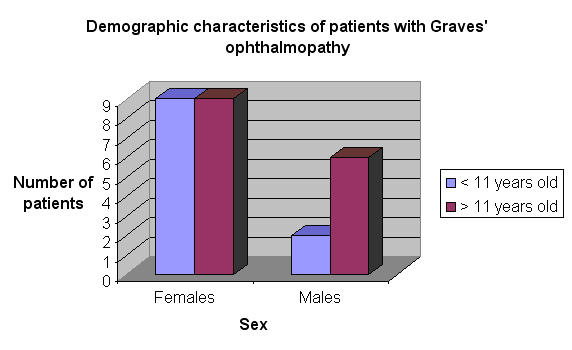
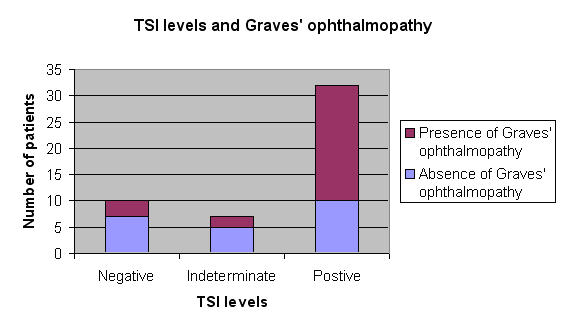
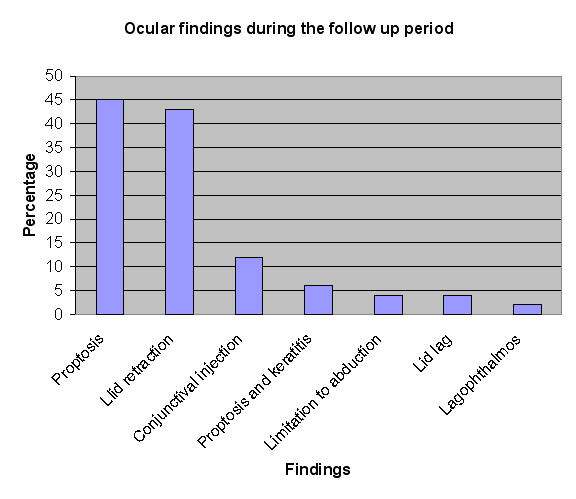
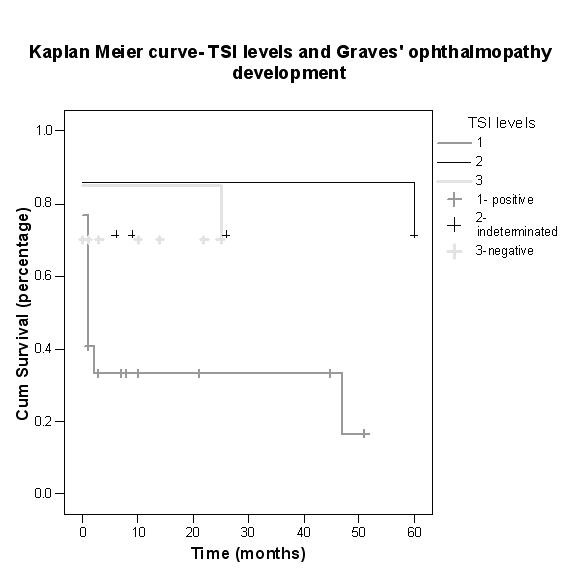
Results: Forty-nine patients were included (36 female, 13 male). The mean age was 11.3 +/- 4.1 years. Fifty-three percent developed Graves ophthalmopathy during the follow-up period (24.6 +/- 37.6 months). Thirty-two (65%) of the 49 children had positive TSI levels at the time of diagnosis, and 22 (69%) of them developed Graves ophthalmopathy. Only 4 (24%) of the 17 children with normal or indeterminate TSI levels developed Graves ophthalmopathy. A significant association between elevated initial TSI levels and Graves ophthalmopathy was found (chi(2) = 6.94, P = .029). The most frequent ocular findings were mild proptosis (44%), exposure keratitis (4%), lid lag (2%), and motility deficits (2%).
Conclusion: A positive association exists between elevated initial levels of TSI and the development of Graves ophthalmopathy in children with Graves disease.
Figures
References
-
- Shibayama K, Ohyama Y, Yokota Y, et al. Assays for thyroid-stimulating antibodies and thyrotropin-binding inhibitory immunoglobulins in children with Graves’ disease. Endocr J. 2005;52:505–510. - PubMed
-
- Graves R. Clinical lectures (part II) London Med Surg J. 1835;7:516–517.
-
- Uretsky SH, Kennerdell JS, Gutai JP. Graves’ ophthalmopathy in childhood and adolescence. Arch Ophthalmol. 1980;98:1963–1964. - PubMed
-
- Heufelder AE. Involvement of the orbital fibroblast and TSH receptor in the pathogenesis of Graves’ ophthalmopathy. Thyroid. 1995;5:331–340. - PubMed
Publication types
MeSH terms
Substances
LinkOut - more resources
Full Text Sources