


Cardiac remodelling: concentric versus eccentric hypertrophy in strength and endurance athletes
- PMID: 18427637
- PMCID: PMC2300466
- DOI: 10.1007/BF03086131
Cardiac remodelling: concentric versus eccentric hypertrophy in strength and endurance athletes
Abstract
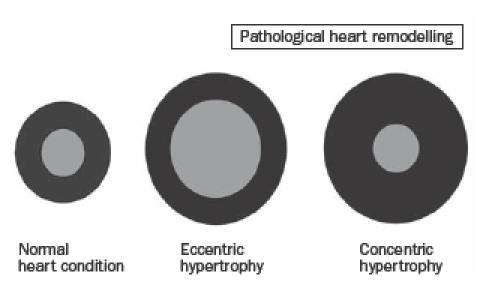
Cardiac remodelling is commonly defined as a physiological or pathological state that may occur after conditions such as myocardial infarction, pressure overload, idiopathic dilated cardiomyopathy or volume overload. When training excessively, the heart develops several myocardial adaptations causing a physiological state of cardiac remodelling. These morphological changes depend on the kind of training and are clinically characterised by modifications in cardiac size and shape due to increased load. Several studies have investigated morphological differences in the athlete's heart between athletes performing strength training and athletes performing endurance training. Endurance training is associated with an increased cardiac output and volume load on the left and right ventricles, causing the endurance-trained heart to generate a mild to moderate dilatation of the left ventricle combined with a mild to moderate increase in left ventricular wall thickness. Strength training is characterised by an elevation of both systolic and diastolic blood pressure. This pressure overload causes an increase in left ventricular wall thickness. This may or may not be accompanied by a slight raise in the left ventricular volume. However, the development of an endurancetrained heart and a strength-trained heart should not be considered an absolute concept. Both forms of training cause specific morphological changes in the heart, dependent on the type of sport. (Neth Heart J 2008;16:129-33.).
Keywords: Prinzmetal angina; acetylcholine; heart; hypertrophy; multifocal spasm; sports; ventricular remodelling.
Figures
References
-
- Cohn JN, Ferrari R, Sharpe N. Cardiac remodelling–concepts and clinical implications: a consensus paper from an international forum on cardiac remodelling. On behalf of an International Forum on Cardiac Remodelling. J Am Coll Cardiol 2000;35:569-82. - PubMed
-
- Hoogsteen J. Cardiologic aspects of endurance athletes [Thesis]. Leiden University, Leiden, the Netherlands, 2004.
-
- Wakatsuki T, Schlessinger J, Elson EL. The biochemical response of the heart to hypertension and exercise. Trends Biochem Sci 2004; 29:609-17. - PubMed
-
- Anversa P, Olivetti G, Capasso JM. Cellular basis of ventricular remodelling after myocardial infarction. Am J Cardiol 1991;68: 7D-16D. - PubMed
-
- Weber KT. Fibrosis and hypertensive heart disease. Curr Opin Cardiol 2000;15:264-72. - PubMed
LinkOut - more resources
Full Text Sources
Medical