


Epigenetic control may explain large within-plant heterogeneity of meiotic behavior in telocentric trisomics of rye
- PMID: 18430925
- PMCID: PMC2323786
- DOI: 10.1534/genetics.108.087643
Epigenetic control may explain large within-plant heterogeneity of meiotic behavior in telocentric trisomics of rye
Abstract
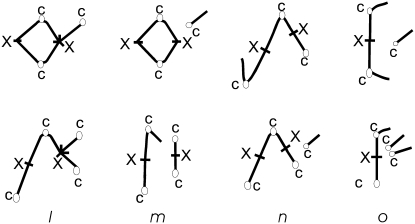
In telocentric trisomics (telotrisomics) of organisms in which the chromosomes normally have two distinct arms, a single chromosome arm with a centromere is present in addition to a complete diploid set of chromosomes. It is the simplest form of polysomy and suitable for analyzing meiotic pairing and recombination patterns in situations where chromosomes compete for pairing. When no suitable meiotic chromosome markers are available, four metaphase I configurations can be distinguished. Their relative frequencies are indicative of the pairing and recombination patterns. In short arm (1RS) telotrisomics of chromosome 1R of rye (Secale cereale) we observed great differences in pairing and recombination patterns among spikes from different tillers and clones of the same plants. Anthers within spikes were only very rarely different. We analyzed a large number of genotypes, including inbreds as well as hybrids. The effects of genetic and environmental conditions on heterogeneity, if any, were limited. Considering that the reproductive tissue of a spike is derived from one primordial cell, it seems that at the start of sexual differentiation there was variation among cells in chromosomal control, which at meiosis determines pairing and crossing-over competence. We suggest that it is an epigenetic system that rigidly maintains this pattern through generative differentiation. In competitive situations the combination most competent for pairing will pair preferentially, forming specific meiotic configurations with different frequencies for different spikes of the same plant. This would explain the heterogeneity between spikes and the homogeneity within spikes. The epigenetic system could involve chromatin conformation or DNA methylation. There were no signs of heterochromatinization.
Figures

References
-
- Alonso, L. C., and G. Kimber, 1983. A study of genome relationships in wheat based on telocentric chromosome pairing II. Z. Pflanzenz. 90 273–284.
-
- Benavente, E., and J. Orellana, 1985. Evidence for preferential pairing in telotrisomic plants of rye. Heredity 55 181–186.
-
- Benavente, E., and J. Sybenga, 2004. The relation between pairing preference and chiasma frequency in tetrasomics of rye. Genome 47 122–133. - PubMed
-
- Cook, P. R., 1997. The transcriptional basis of chromosome pairing. J.Cell Sci. 110 1033–1040. - PubMed
-
- Haber, J. E., 1997. A super new twist on the initiation of meiotic recombination. Cell 89 163–166. - PubMed
Publication types
MeSH terms
LinkOut - more resources
Full Text Sources
