


Differential regulation of central BDNF protein levels by antidepressant and non-antidepressant drug treatments
- PMID: 18433734
- PMCID: PMC2394727
- DOI: 10.1016/j.brainres.2008.03.023
Differential regulation of central BDNF protein levels by antidepressant and non-antidepressant drug treatments
Abstract
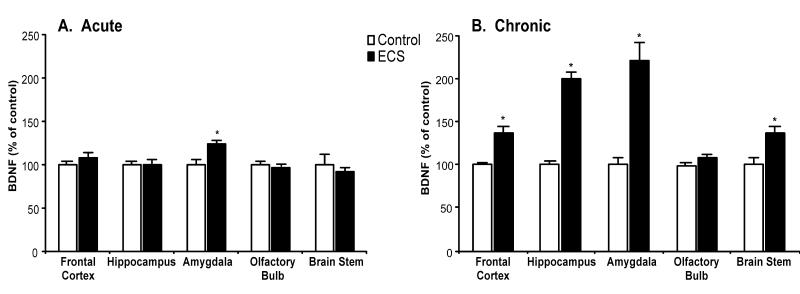
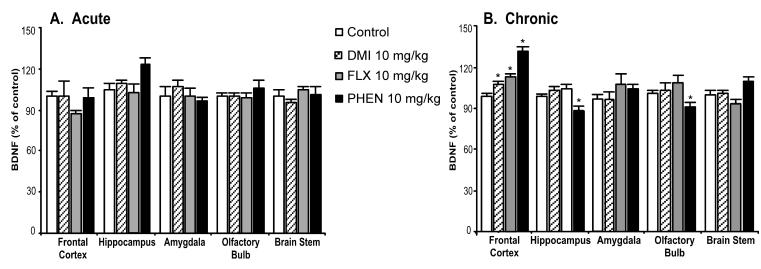
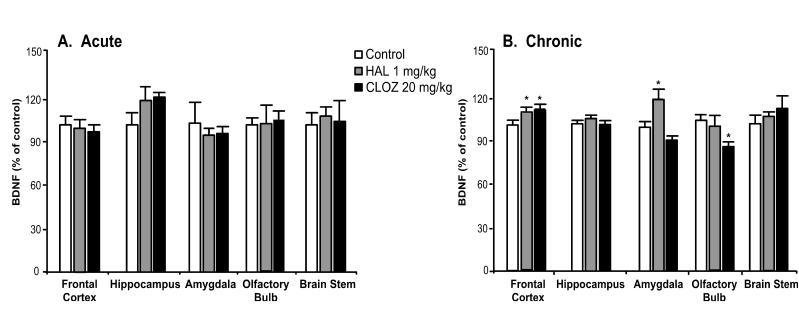
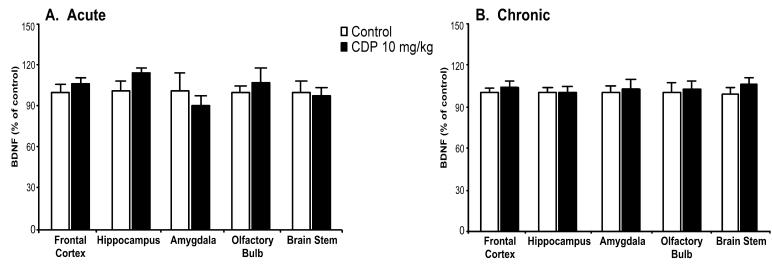
Antidepressant treatments have been proposed to produce their therapeutic effects, in part, through increasing neurotrophin levels in the brain. The current experiments investigated the effects of acute and chronic treatment with different pharmacologic and somatic antidepressant treatments on protein levels of BDNF in several brain regions associated with depression in the rat. Repeated applications (10 days) of electroconvulsive shock (ECS), but not a single treatment (1 day), produced 40-100% increases of BDNF protein in the hippocampus, frontal cortex, amygdala, and brainstem. Chronic (21 days), but not acute (1 day), treatment with the tricyclic antidepressant (TCA) desipramine (10 mg/kg), the selective serotonin reuptake inhibitor (SSRI) fluoxetine (10 mg/kg), and the monoamine oxidase inhibitor (MAOI) phenelzine (10 mg/kg) increased BDNF protein levels in the frontal cortex (10-30%), but not in the hippocampus, amygdala, olfactory bulb, and brain stem. To determine whether the regulation of BDNF was unique to antidepressant treatments, drugs used to treat schizophrenia and anxiety were also studied. Chronic administration of the typical antipsychotic haloperidol (1 mg/kg) and the atypical antipsychotic clozapine (20 mg/kg) increased BDNF levels by only 8-10% in the frontal cortex. Haloperidol also elevated BDNF levels in the amygdala, while clozapine decreased BDNF in the olfactory bulb. Acute or chronic treatment with the benzodiazepine chlordiazepoxide (10 mg/kg) did not alter BDNF levels. These results suggest that diverse pharmacologic and somatic antidepressant treatments, as well as antipsychotics, increase levels of BDNF protein in the frontal cortex, even though they have different mechanisms of action at neurotransmitter systems.
Figures
References
-
- Altar CA, Whitehead RE, Chen R, Wortwein G, Madsen TM. Effects of electroconvulsive seizures and antidepressant drugs on brain-derived neurotrophic factor protein in rat brain. Biol Psychiatry. 2003;54:703–709. - PubMed
-
- Altieri M, Marini F, Arban R, Vitulli G, Jansson BO. Expression analysis of brain- derived neurotrophic factor (BDNF) mRNA isoforms after chronic and acute antidepressant treatment. Brain Res. 2004;1000:148–155. - PubMed
-
- Angelucci F, Mathe AA, Aloe L. Brain-derived neurotrophic factor and tyrosine kinase receptor TrkB in rat brain are significantly altered after haloperidol and risperidone administration. J Neurosci Res. 2000;60:783–794. - PubMed
-
- Bai O, Chlan-Fourney J, Bowen R, Keegan D, Li XM. Expression of brain-derived neurotrophic factor mRNA in rat hippocampus after treatment with antipsychotic drugs. J Neurosci Res. 2003;71:127–131. - PubMed
-
- Banasr M, Valentine GW, Li XY, Gourley SL, Taylor JR, Duman RS. Chronic unpredictable stress decreases cell proliferation in the cerebral cortex of the adult rat. Biol Psychiatry. 2007;62:496–504. - PubMed
Publication types
MeSH terms
Substances
Grants and funding
LinkOut - more resources
Full Text Sources
Medical
