


Molecular dynamics simulation of the Escherichia coli NikR protein: equilibrium conformational fluctuations reveal interdomain allosteric communication pathways
- PMID: 18433769
- PMCID: PMC2478562
- DOI: 10.1016/j.jmb.2008.03.010
Molecular dynamics simulation of the Escherichia coli NikR protein: equilibrium conformational fluctuations reveal interdomain allosteric communication pathways
Abstract
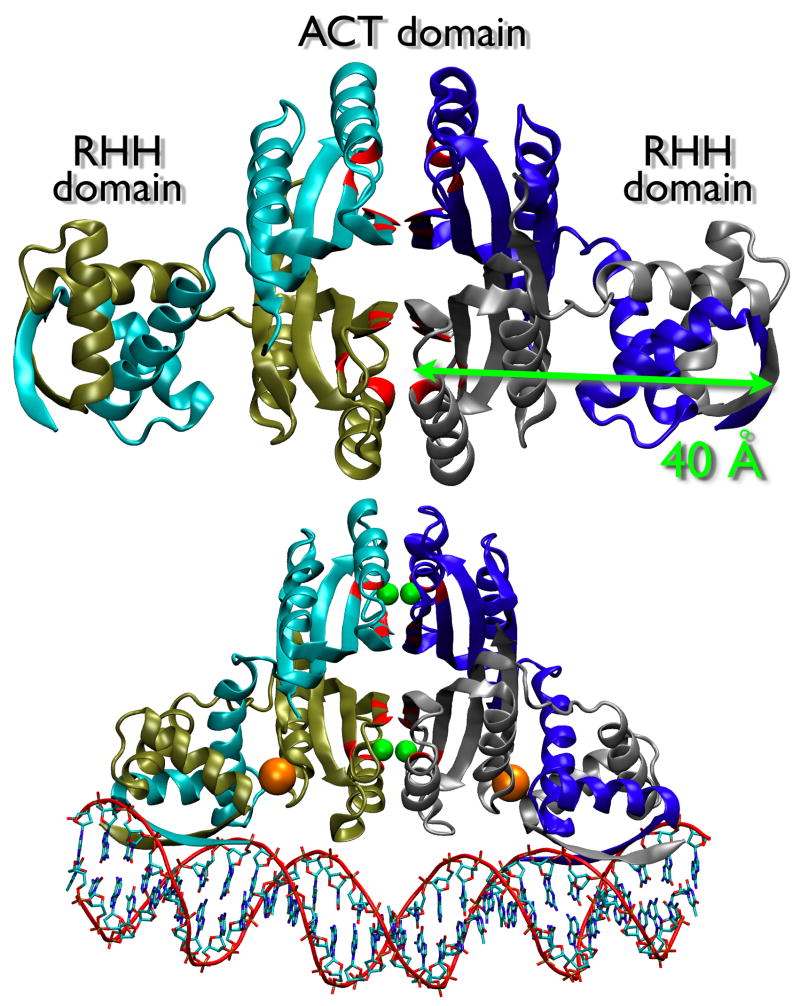
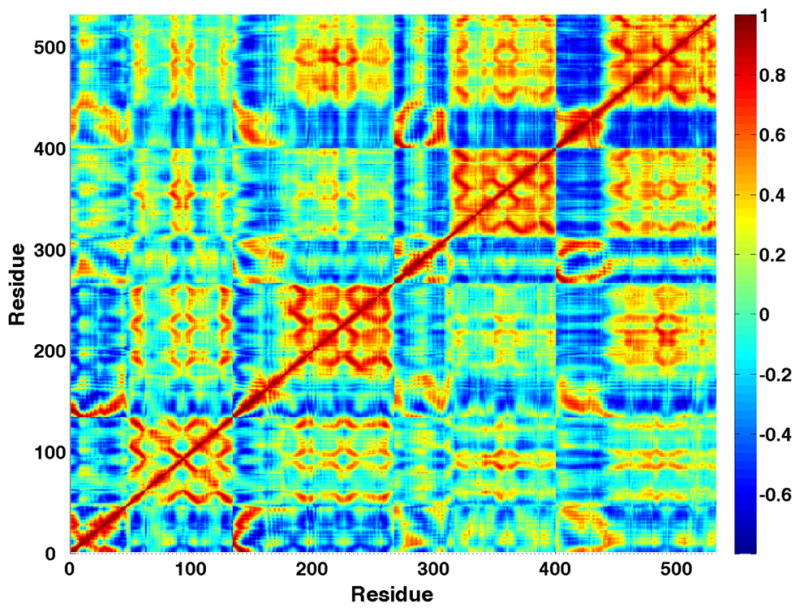
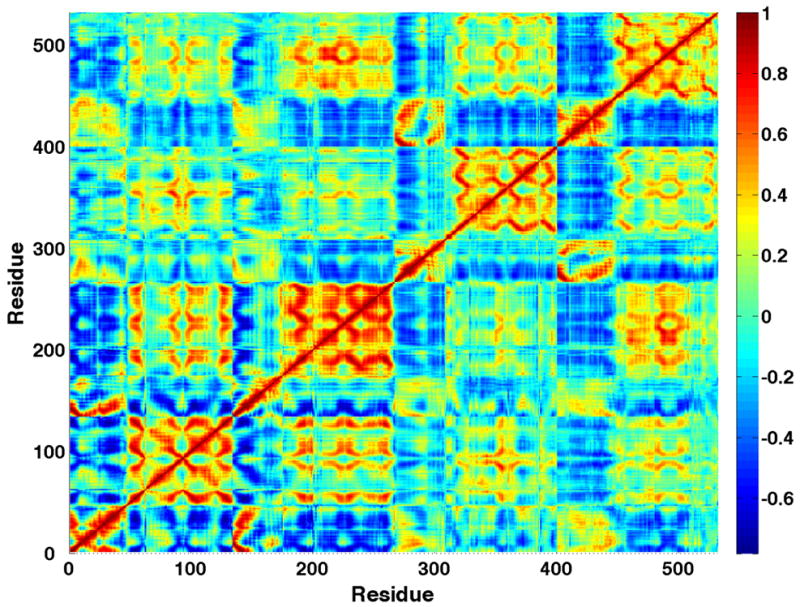
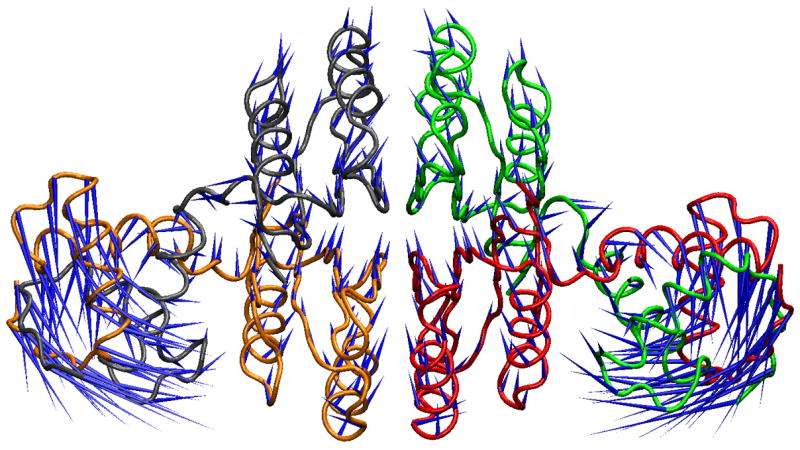
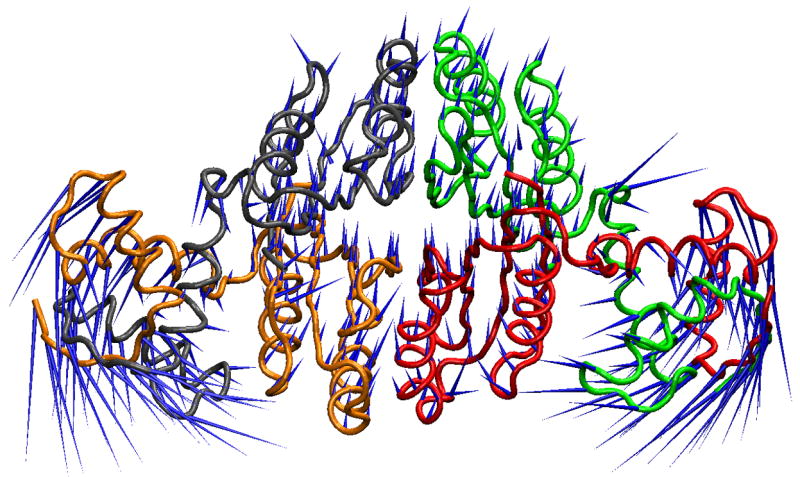
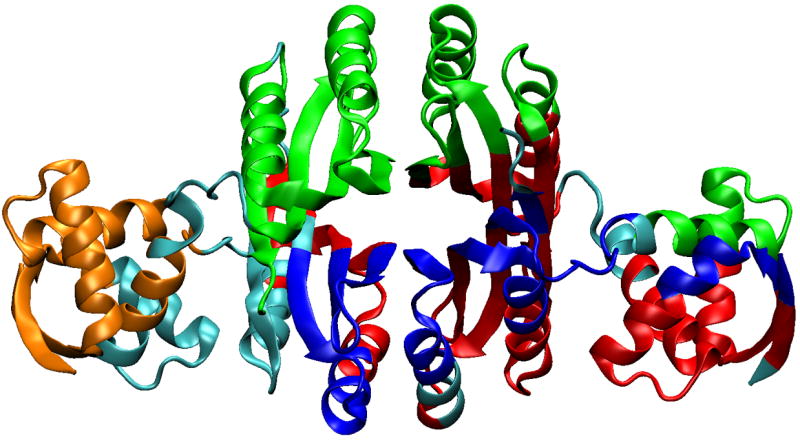
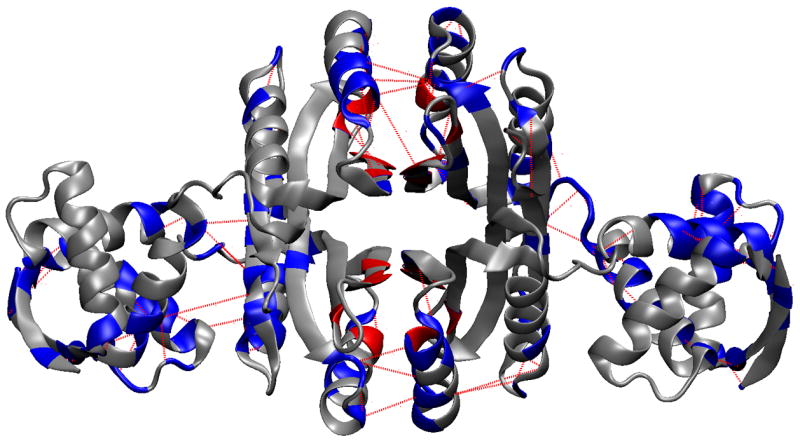
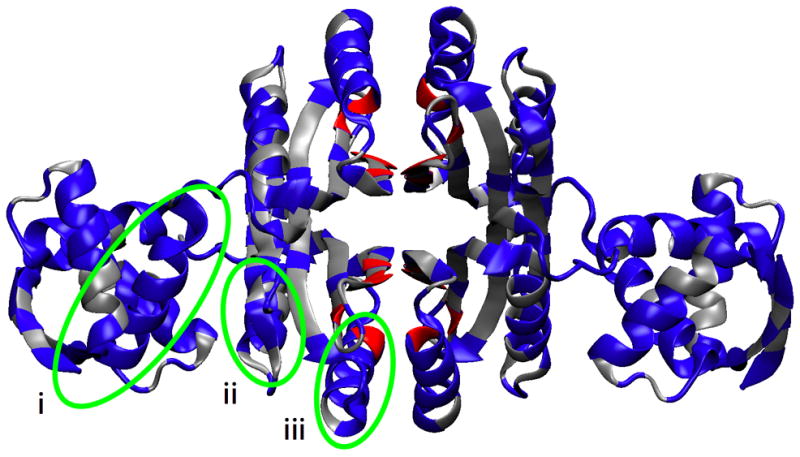
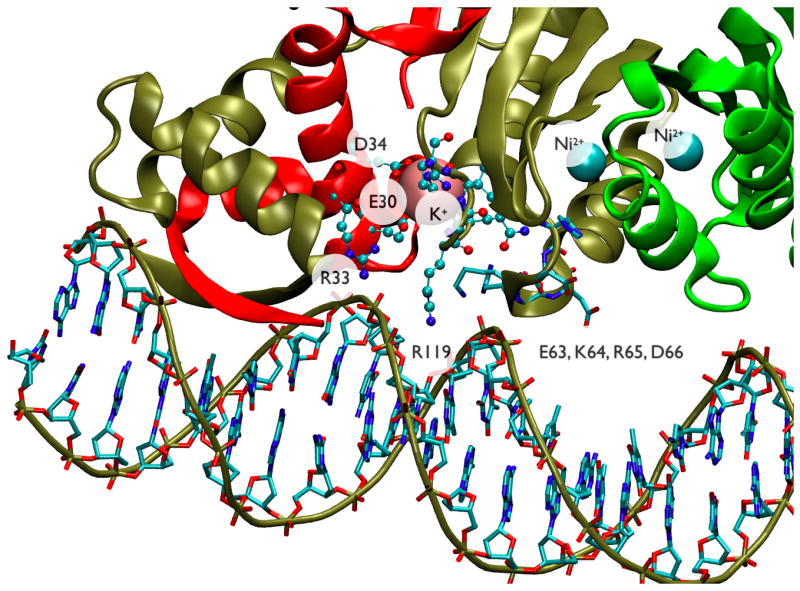
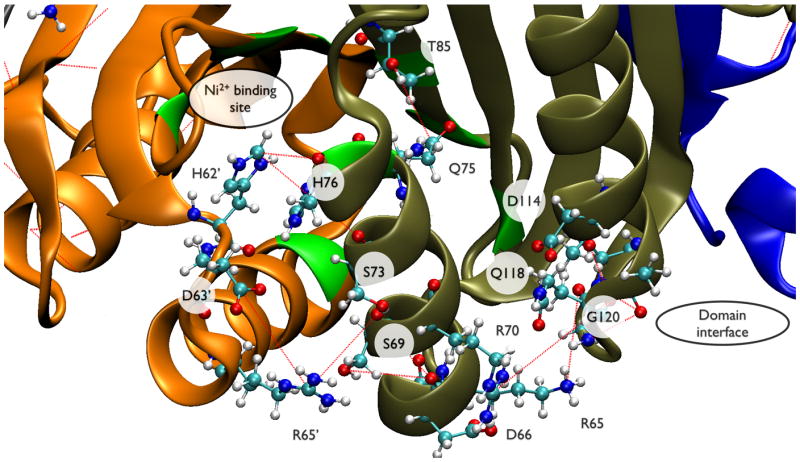
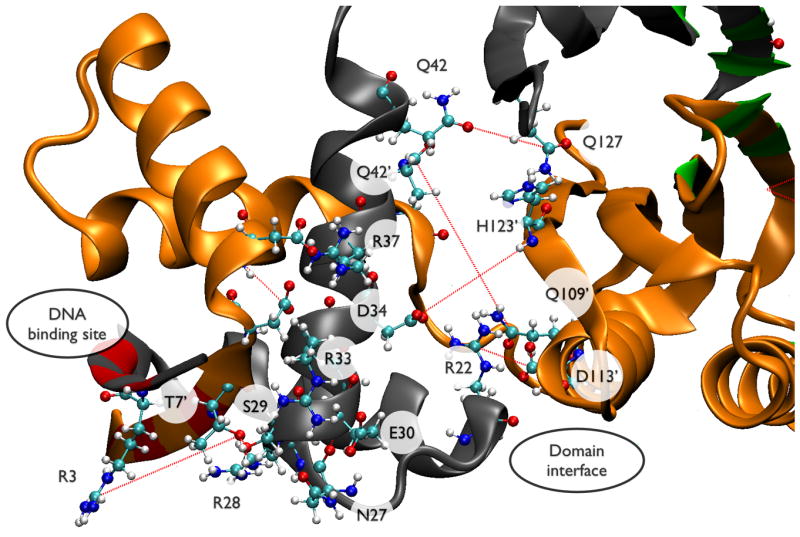
Escherichia coli NikR is a homotetrameric Ni(2+)- and DNA-binding protein that functions as a transcriptional repressor of the NikABCDE nickel permease. The protein is composed of two distinct domains. The N-terminal 50 amino acids of each chain forms part of the dimeric ribbon-helix-helix (RHH) domains, a well-studied DNA-binding fold. The 83-residue C-terminal nickel-binding domain forms an ACT (aspartokinase, chorismate mutase, and TyrA) fold and contains the tetrameric interface. In this study, we have utilized an equilibrium molecular dynamics simulation in order to explore the conformational dynamics of the NikR tetramer and determine important residue interactions within and between the RHH and ACT domains to gain insight into the effects of Ni(2+) on DNA-binding activity. The molecular simulation data were analyzed using two different correlation measures based on fluctuations in atomic position and noncovalent contacts together with a clustering algorithm to define groups of residues with similar correlation patterns for both types of correlation measure. Based on these analyses, we have defined a series of residue interrelationships that describe an allosteric communication pathway between the Ni(2+)- and DNA-binding sites, which are separated by 40 A. Several of the residues identified by our analyses have been previously shown experimentally to be important for NikR function. An additional subset of the identified residues structurally connects the experimentally implicated residues and may help coordinate the allosteric communication between the ACT and RHH domains.
Figures
References
-
- Vignais PM, Billoud B, Meyer J. Classification and phylogeny of hydrogenases. FEMS Microbiol Rev. 2001;25:455–501. - PubMed
-
- Navarro C, Wu LF, Mandrand-Berthelot MA. The nik operon of Eschericia coli encodes a periplasmic binding-protein-dependent transport system for nickel. Mol Microbiol. 1993;9:1181–1191. - PubMed
-
- Chivers PT, Sauer RT. Regulation of high affinity nickel uptake in bacteria. Ni2+-Dependent interaction of NikR with wild-type and mutant operator sites. J Biol Chem. 2000;275:19735–41. - PubMed
-
- Iwig JS, Rowe JL, Chivers PT. Nickel homeostasis in Escherichia coli – the rcnR-rcnA efflux pathway and its linkage to NikR function. Molecular Microbiology. 2006;62:252–62. - PubMed
Publication types
MeSH terms
Substances
Grants and funding
LinkOut - more resources
Full Text Sources
Other Literature Sources
