


Reduced hedonic capacity in major depressive disorder: evidence from a probabilistic reward task
- PMID: 18433774
- PMCID: PMC2637997
- DOI: 10.1016/j.jpsychires.2008.03.001
Reduced hedonic capacity in major depressive disorder: evidence from a probabilistic reward task
Abstract
Objective: Anhedonia, the lack of reactivity to pleasurable stimuli, is a cardinal feature of depression that has received renewed interest as a potential endophenotype of this debilitating disease. The goal of the present study was to test the hypothesis that individuals with major depression are characterized by blunted reward responsiveness, particularly when anhedonic symptoms are prominent.
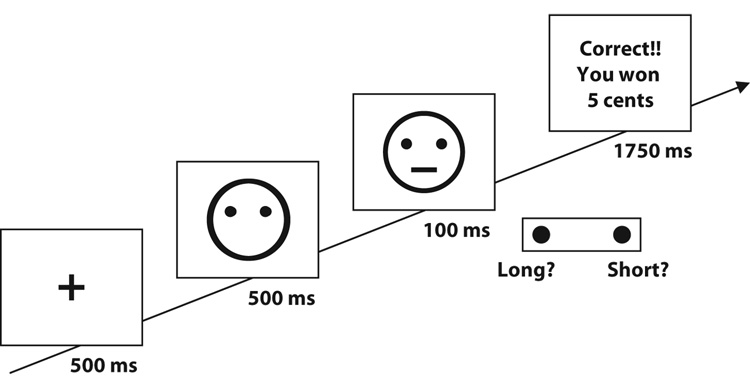
Methods: A probabilistic reward task rooted within signal-detection theory was utilized to objectively assess hedonic capacity in 23 unmedicated subjects meeting DSM-IV criteria for major depressive disorder (MDD) and 25 matched control subjects recruited from the community. Hedonic capacity was defined as reward responsiveness - i.e., the participants' propensity to modulate behavior as a function of reward.
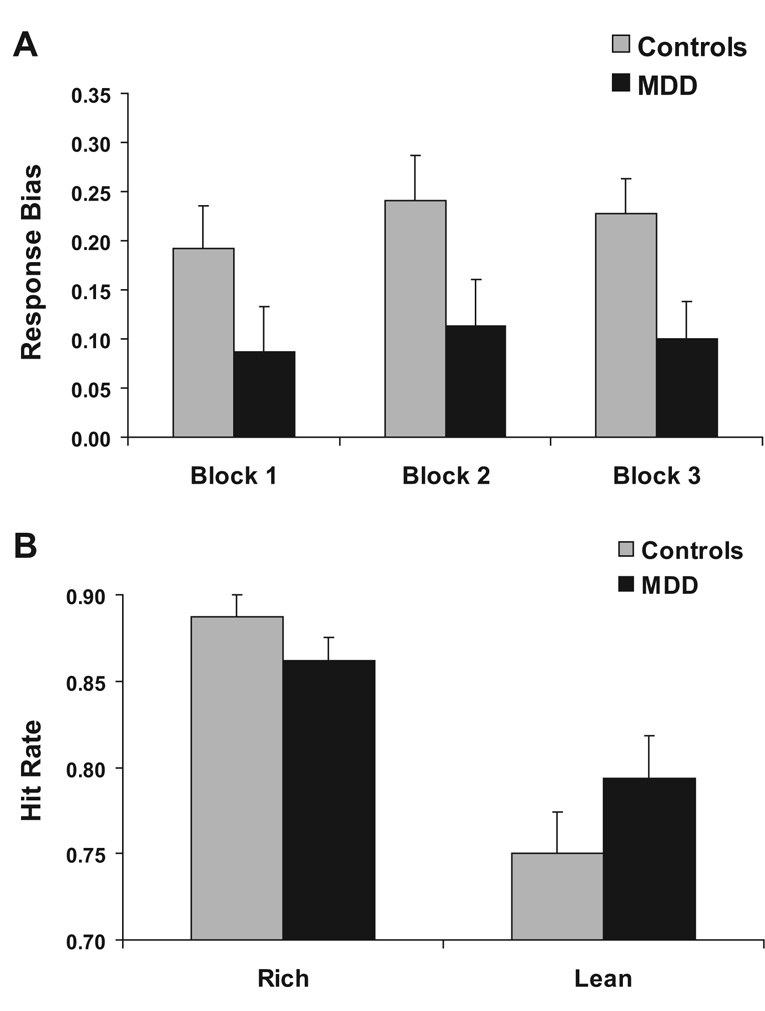
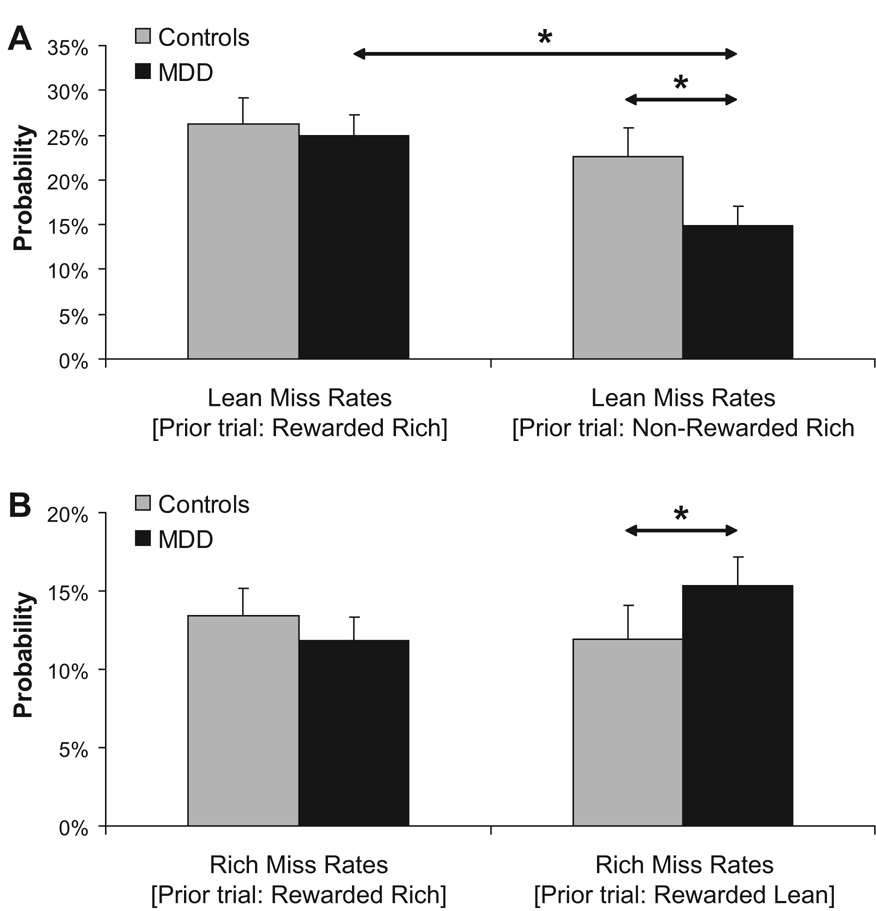
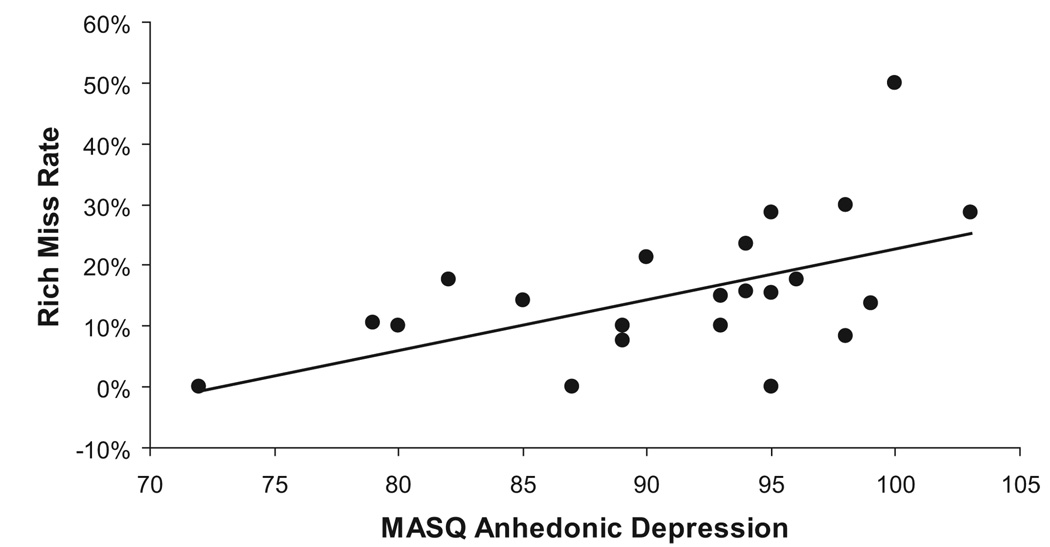
Results: Compared to controls, MDD subjects showed significantly reduced reward responsiveness. Trial-by-trial probability analyses revealed that MDD subjects, while responsive to delivery of single rewards, were impaired at integrating reinforcement history over time and expressing a response bias toward a more frequently rewarded cue in the absence of immediate reward. This selective impairment correlated with self-reported anhedonic symptoms, even after considering anxiety symptoms and general distress.
Conclusions: These findings indicate that MDD is characterized by an impaired tendency to modulate behavior as a function of prior reinforcements, and provides initial clues about which aspects of hedonic processing might be dysfunctional in depression.
Figures
References
-
- American Psychiatric Association. Diagnostic and Statistical Manual of Mental Disorders. 4th ed., text revision. Washington, D.C.: American Psychiatric Press; 2000.
-
- Barch DM. The relationships among cognition, motivation, and emotion in schizophrenia: How much and how little we know. Schizophrenia Bulletin. 2005;31:875–881. - PubMed
-
- Beck AT, Steer RA, Brown GK. Beck Depression Inventory Manual. 2nd ed. San Antonio: The Psychological Corporation; 1996.
-
- Berridge KC, Robinson TE. What is the role of dopamine in reward: hedonic impact, reward learning, or incentive salience? Brain Research Review. 1998;28:309–369. - PubMed
Publication types
MeSH terms
Grants and funding
LinkOut - more resources
Full Text Sources
Other Literature Sources
Medical
