. 2008 Jul;60(1):53-7.
doi: 10.1016/j.pep.2008.03.014. Epub 2008 Mar 26.

Strict regulation of gene expression from a high-copy plasmid utilizing a dual vector system

Affiliations

Strict regulation of gene expression from a high-copy plasmid utilizing a dual vector system

David F Gruber et al. Protein Expr Purif. 2008 Jul.

Abstract

High-copy plasmids are useful for producing large quantities of plasmid DNA, but are generally inadequate for tightly regulating gene expression. Attempts to suppress expression of genes on high-copy plasmids often results in residual or "leaky" production of protein. For stringent regulation of gene expression, it is often necessary to excise the gene of interest and subclone it into a low-copy plasmid. Here, we report a dual plasmid technique that enables tight regulation of gene expression driven by the lac promoter in a high-copy vector. A series of plasmids with varying copies of the lacI(q) gene have been constructed to permit titration of the LacI protein. When a high-copy plasmid is transformed along with the appropriate lacI(q)-containing plasmid, tight gene regulation is achieved, thus eliminating the need to subclone genes into low-copy plasmids. In addition, we show that this dual plasmid technique enables high-copy gene expression of a protein lethal to Escherichia coli, the ccdB protein. In principle, this technique can be applied to any high-copy plasmid containing the popular pUC replication of origin and provides an easier means of obtaining rigid control over gene expression.


Figures
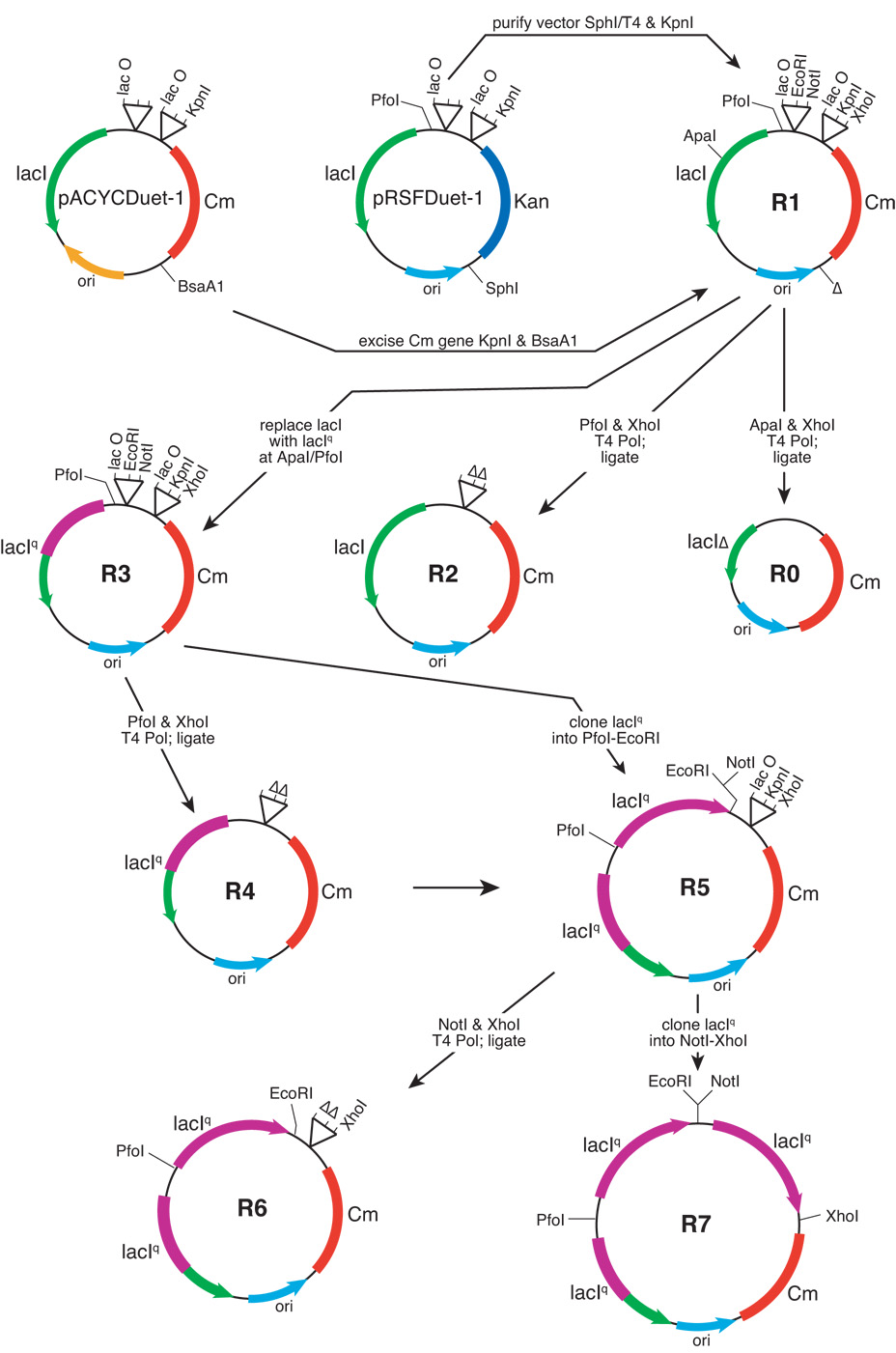
Figure 1
Figure 1. Construction of a series of plasmids containing the RSF replication of origin and varying number of lacI or lacIq genes
The parental vector for this series is R1, which was constructed by replacing the kanamycin cassette (Kan) of pRSFDuet-1 (excised with SphI and KpnI) with the chloramphenical cassette (Cm) of pACYCDuet-1 (excised with KpnI and BsaA1). The SphI site was made compatible with the blunt-ended BsaA1 site by treatment with T4 DNA polymerase. The replication of origin (ori), location of lac operators (lacO), deleted sequences (Δ), and various restriction enzyme sites, are schematically shown. R0, which contains a truncated lacI gene and has no lac operator sequences, was created by digesting R1 with ApaI and XhoI, and recircularizing the vector. R2 possesses no lac operator sequences, which were deleted from R1 by PfoI-XhoI digestion and recircularization. In R3, the lacI gene is replaced with the lacIq gene. A portion of the lacIq gene (from pGex6P-1) was amplified using gene-specific primers, digested with ApaI and PfoI, and inserted into the ApaI-PfoI region of R1, thereby converting the lacI gene into lacIq. R4 was constructed from R3, and is similar except that the two lac operators were deleted by PfoI-XhoI digestion and recircularization. In R5, a second lacIq gene was inserted into the first cloning site of R3 (using PfoI and EcoRI, which deletes one of the two lac operators). R6 was constructed from R5, and is similar except that the lac operators were deleted by NotI-XhoI digestion and recircularization. In R7, a third lacIq gene was inserted into the second cloning site of R5 (using NotI and XhoI, which deletes the remaining lac operator).
Figure 2
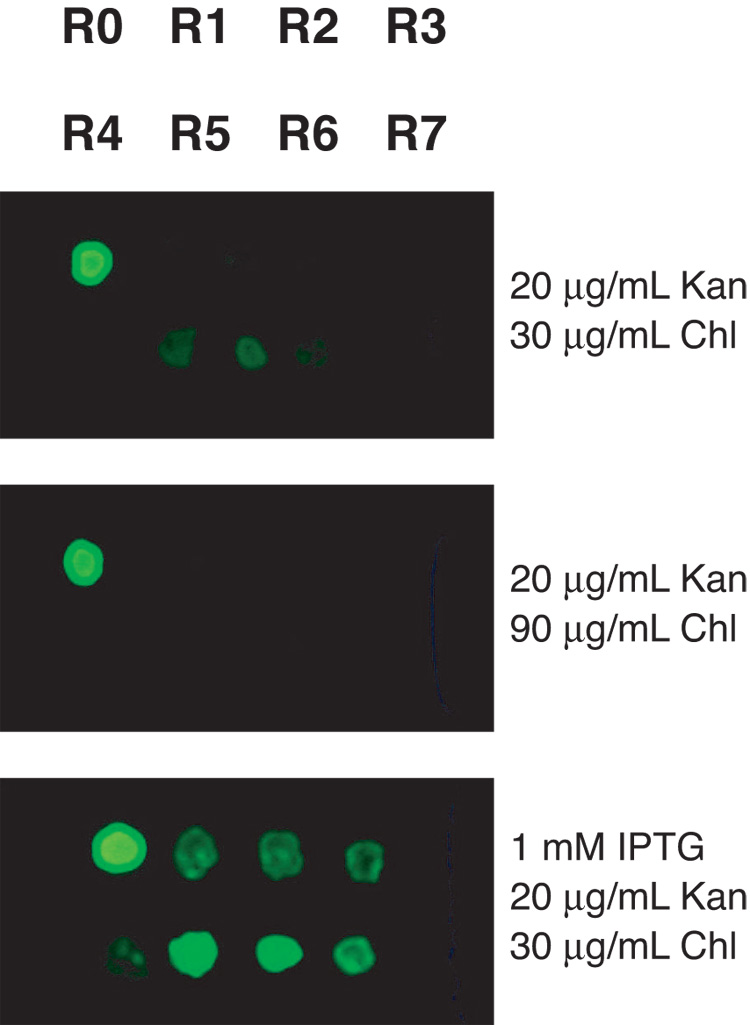
Figure 2. Baseline levels of lac-driven EGFP expression from a high-copy plasmid can be minimized by co-transformation of plasmids R1–R7
To determine if plasmids R0 to R7 were capable of suppressing basal gene expression from the lac promoter in a high-copy plasmid, these plasmids were cotransformed with pCR4-TOPO-Blunt-EGFP as a reporter. In this manner, fluorescence from colonies serves as a visual indicator of the degree of regulation. Bacterial colonies were grown on charcoal plates supplemented with the indicated antibiotics. Using this assay, expression of EGFP was substantially upregulated in the presence of IPTG.
Figure 3
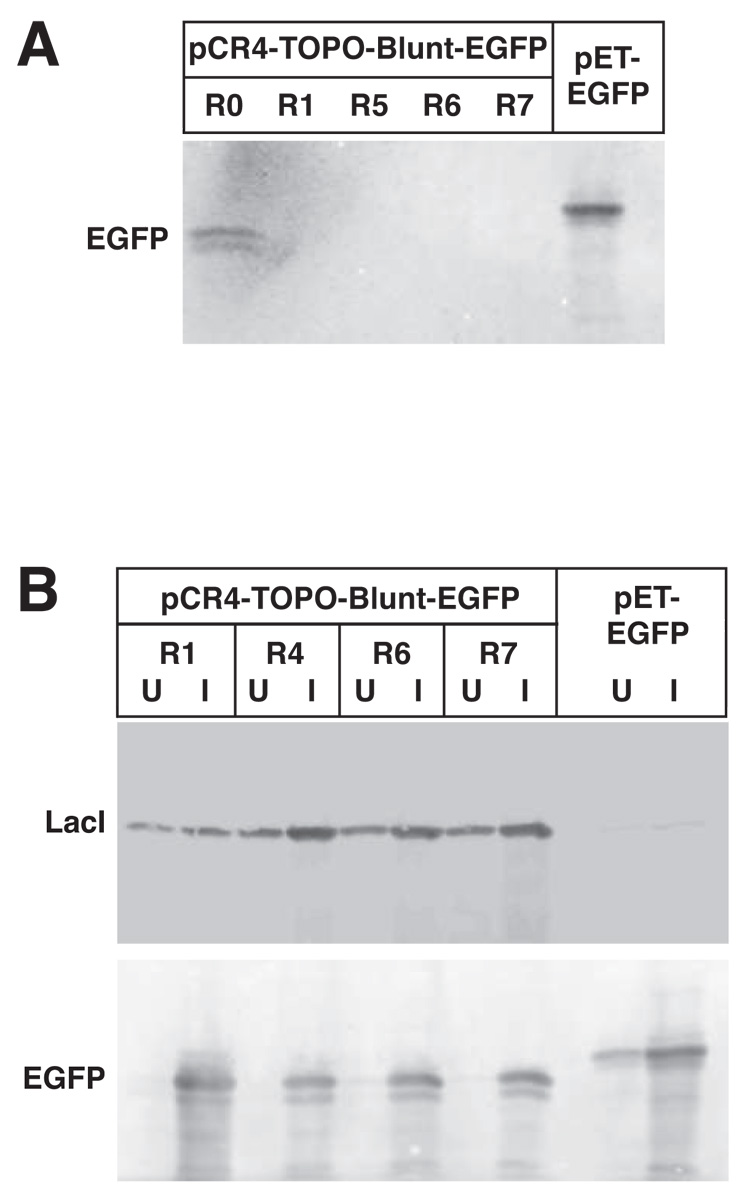
Figure 3. Comparable baseline and induced expression of the EGFP reporter is observed in the Dual Vector and pET systems
A. Baseline levels of expression observed using EGFP as a reporter. Protein extracts were made from overnight cultures of pCR4-TOPO-Blunt-EGFP co-transformed with the indicated RSF plasmid in TOP10 cells, or pET-EGFP in BL21 cells. Extracts were immunoblotted against a polyclonal antibody directed towards GFP. B. pCR4-TOPO-Blunt-EGFP was co-expressed with the indicated RSF plasmid in TOP10 cells until log phase. Similarly, pET-EGFP in BL21 was grown till log phase. Cells were then incubated for a further 3 hours without additives (U) or induced with 1 mM IPTG for 3 hours (I), pelleted, and crude protein extracts immunoblotted with the indicated antibodies.
Figure 4
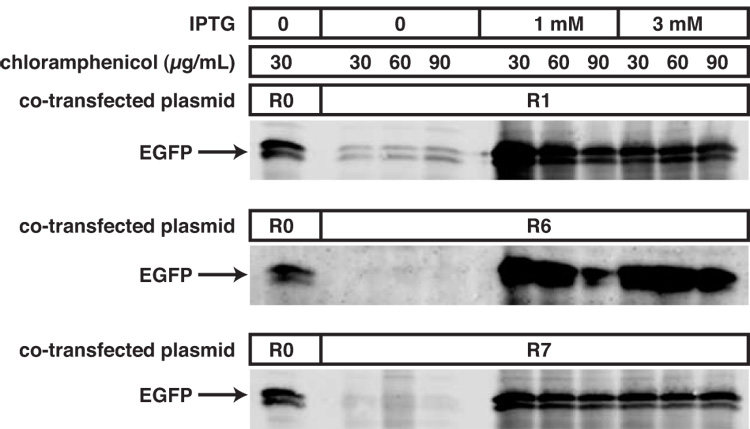
Figure 4. Robust induction of lac-driven EGFP using the Dual Vector method for regulating gene expression from a high-copy plasmid
pCR4-TOPO-Blunt-EGFP was co-expressed with the indicated RSF plasmid in TOP10 cells until log phase, in the presence of the indicated amount of chloramphenical. Cells were then incubated for a further 6 hours with the indicated amount of IPTG, pelleted, and crude protein extracts immunoblotted with an antibody directed towards GFP.
Figure 5
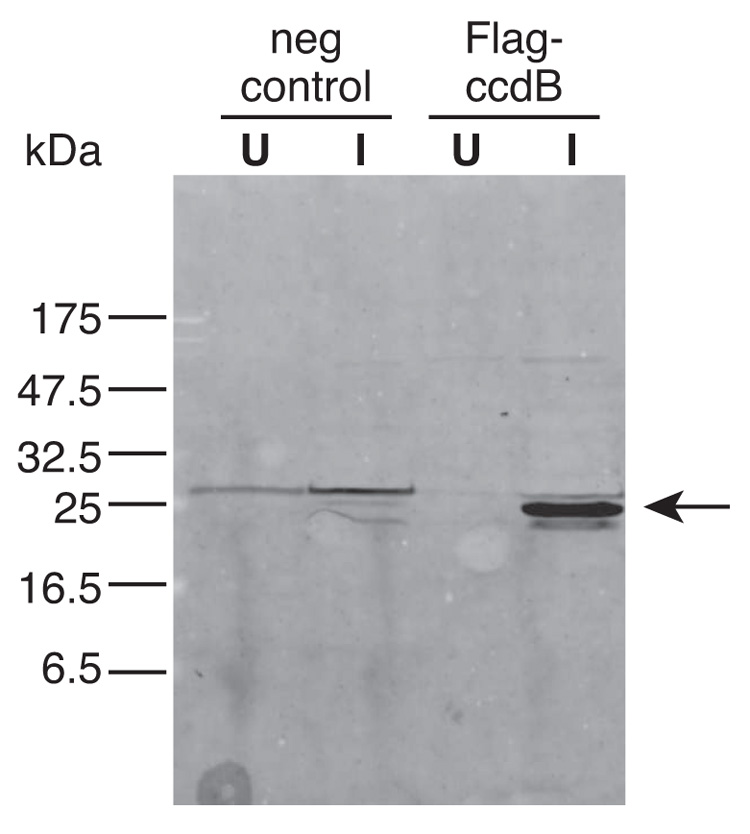
Figure 5. Western blot of bacterial lysates expressing Flag-ccdB in the presence of plasmid R7
The blot was probed with a monoclonal antibody directed towards the Flag epitope. The negative control represents lysate from pCR4-TOPO-Blunt with an irrelevant insert. Lysates were derived from uninduced (U) or induced (I) bacteria that were incubated in the presence of IPTG for four hours. Arrow points to the position of Flag-ccdB, which is expected to migrate at 25 kDa. The ~28 kDa band visible in the negative control represents non-specific binding to the Flag antibody.

References

    1. Baneyx F. Recombinant protein expression in Escherichia coli. Curr. Opin. Biotechnol. 1999;10:411–421. - PubMed
    1. Makrides SC. Strategies for achieving high-level expression of genes in Escherichia coli. Microbiol. Rev. 1996;60:512–538. - PMC - PubMed
    1. Munson M, Predki PF, Regan L. ColE1-compatible vectors for high-level expression of cloned DNAs from the T7 promoter. Gene. 1994;144:59–62. - PubMed
    1. Warne SR, Thomas CM, Nugent ME, Tacon WC. Use of a modified Escherichia coli trpR gene to obtain tight regulation of high-copy-number expression vectors. Gene. 1986;46:103–112. - PubMed
    1. Lee CL, Ow DS, Oh SK. Quantitative real-time polymerase chain reaction for determination of plasmid copy number in bacteria. J. Microbiol. Methods. 2006;65:258–267. - PubMed

Publication types

MeSH terms

Substances