


Neuroactive steroid stereospecificity of ethanol-like discriminative stimulus effects in monkeys
- PMID: 18436788
- PMCID: PMC2562878
- DOI: 10.1124/jpet.108.137315
Neuroactive steroid stereospecificity of ethanol-like discriminative stimulus effects in monkeys
Abstract
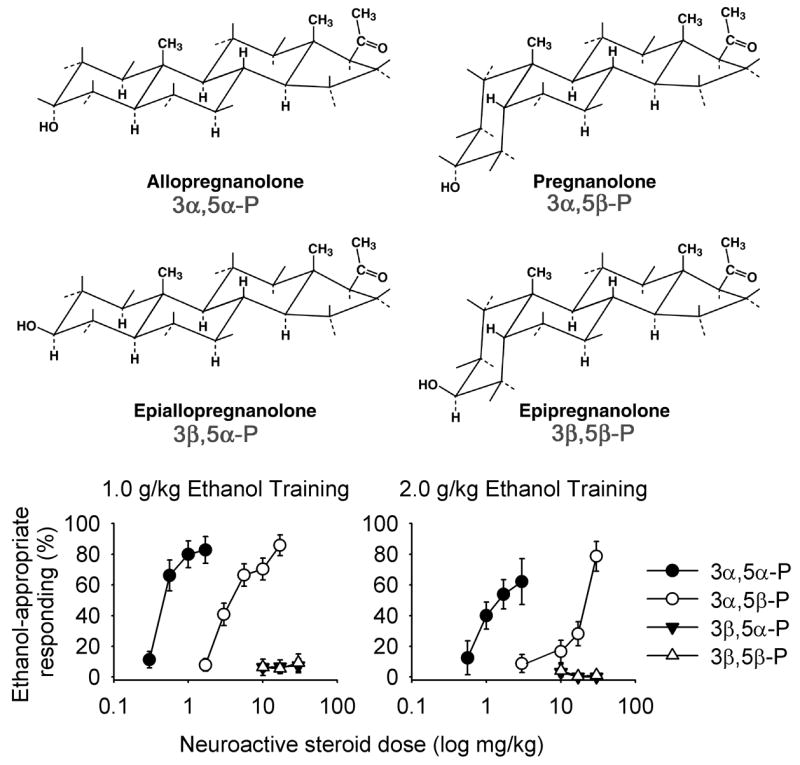
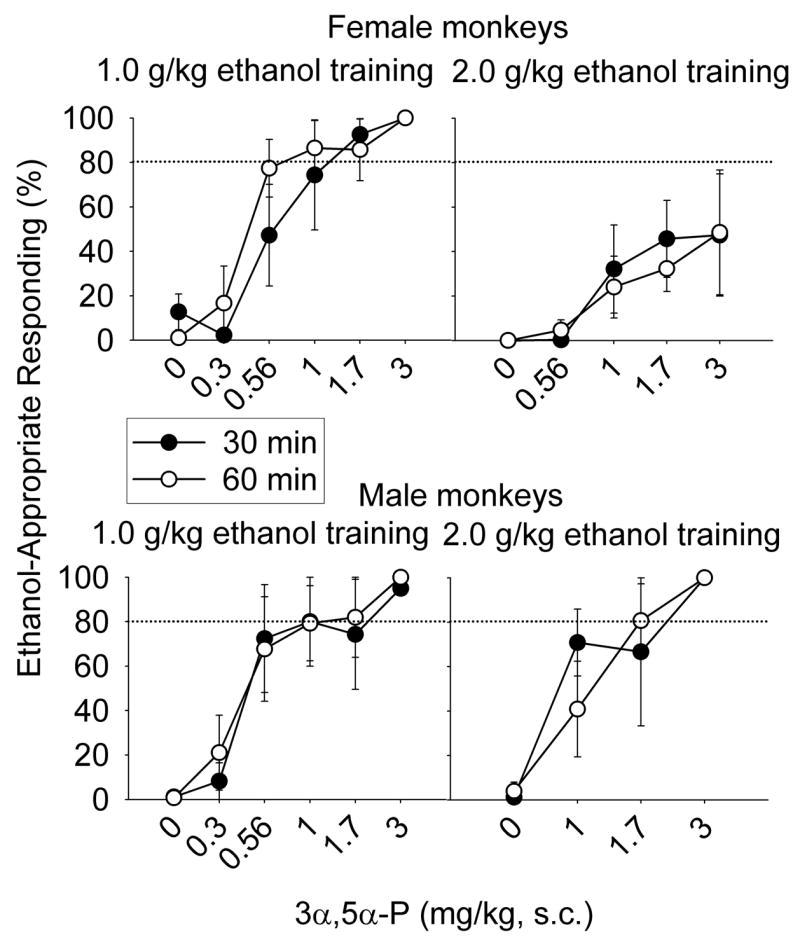
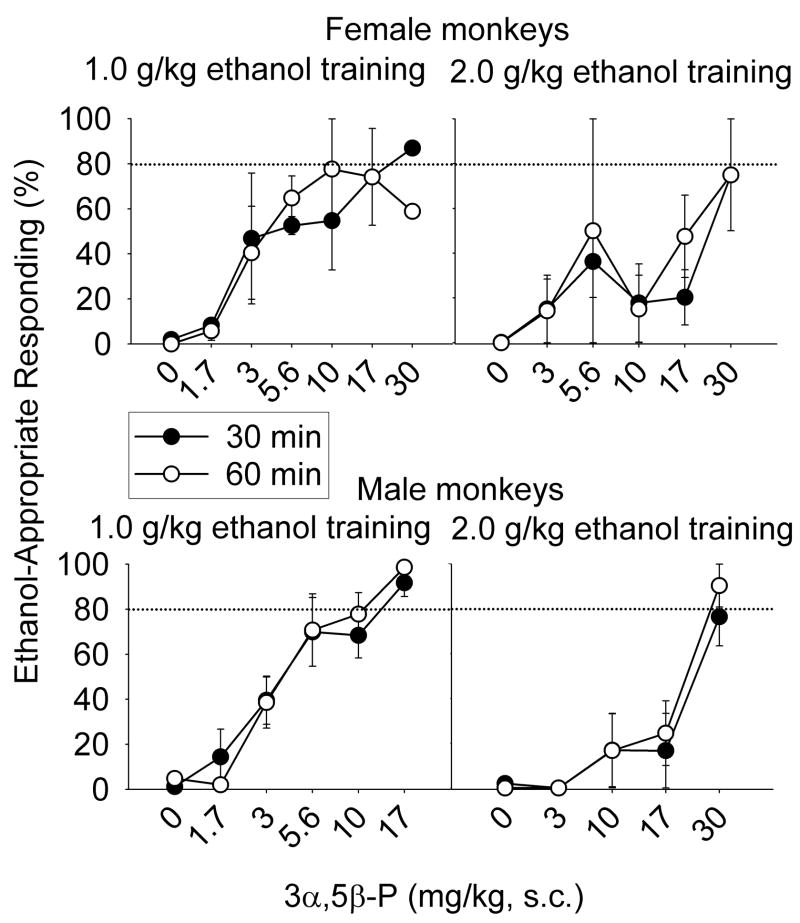
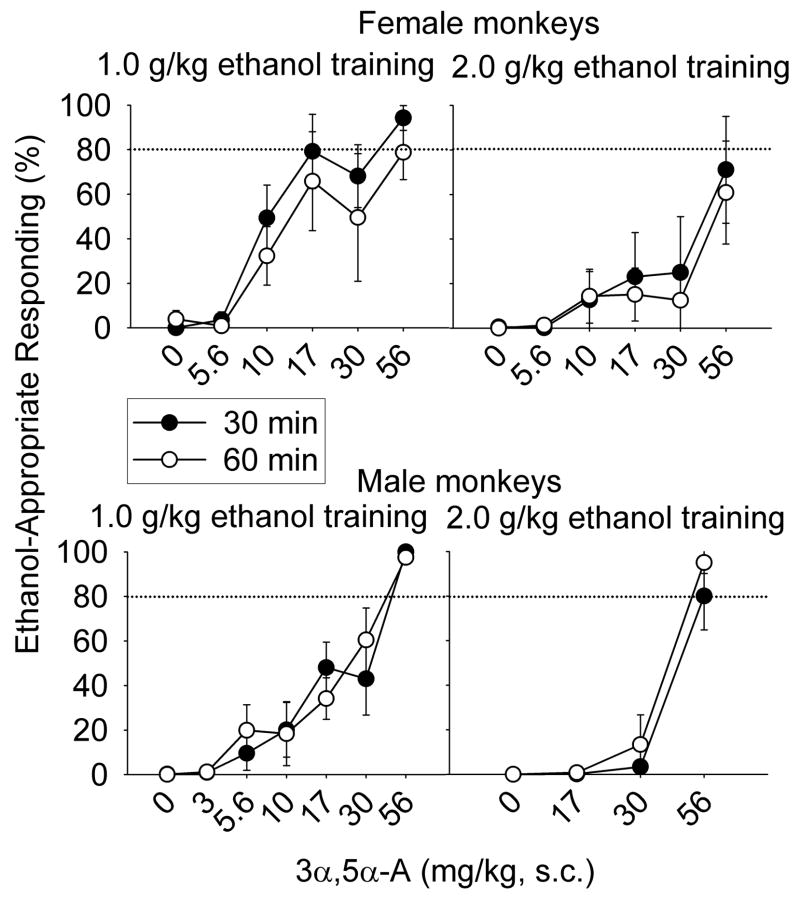
Positive modulation of GABA(A) and antagonism of N-methyl-D-aspartate receptors mediate the discriminative stimulus effects of ethanol. Endogenous neuroactive steroids produce effects similar to ethanol, suggesting that these steroids may modulate ethanol addiction. The four isomers of the functional esters at C-3 of the 3-hydroxy metabolites of 4-pregnene-3,20-dione (progesterone) [allopregnanolone (3alpha,5alpha-P), pregnanolone (3alpha,5beta-P), epiallopregnanolone (3beta,5alpha-P), and epipregnanolone (3beta,5beta-P)], a synthetic analog of steroids modified by endogenous sulfation [pregnanolone hemisuccinate (3alpha,5beta-P HS)], and a structurally similar, adrenally derived steroid [3alpha-hydroxy-5-androstan-17-one (3alpha,5alpha-A, androsterone)] were assessed for ethanol-like discriminative stimulus effects at 30 or 60 min after administration in male (n = 9) and female (n = 8) cynomolgus monkeys (Macaca fascicularis) trained to discriminate 1.0 or 2.0 g/kg ethanol (i.g.) with a 30-min pretreatment interval. The 3alpha-hydroxysteroids completely substituted for ethanol (80% of cases), whereas the 3beta-hydroxysteroids and 3alpha,5beta-P HS rarely substituted for ethanol (6% of cases). There were no sex differences. Compared with monkeys trained to discriminate 2.0 g/kg ethanol, 3alpha,5beta-P and 3alpha,5alpha-A substituted more potently in monkeys trained to discriminate 1.0 g/kg ethanol. Compared with the 5beta-reduced isomer (3alpha,5beta-P), the 5alpha isomer of pregnanolone (3alpha,5alpha-P) substituted for ethanol with 3 to 40-fold greater potency but was least efficacious in female monkeys trained to discriminate 2.0 g/kg ethanol. The data suggest that the discriminative stimulus effects of lower doses (1.0 g/kg) of ethanol are mediated to a greater extent by 3alpha,5beta-P- and 3alpha,5alpha-A-sensitive receptors compared with higher doses (2.0 g/kg). Furthermore, the discriminative stimulus effects of ethanol appear to be mediated by activity at binding sites that are particularly sensitive to 3alpha,5alpha-P.
Figures
References
-
- Adinoff B, Ruether K, Krebaum S, Iranmanesh A, Williams MJ. Increased salivary cortisol concentrations during chronic alcohol intoxication in a naturalistic clinical sample of men. Alcohol Clin Exp Res. 2003;27:1420–1427. - PubMed
-
- Belelli D, Lambert JJ. Neurosteroids: endogenous regulators of the GABAA receptor. Nature Rev Neurosci. 2005;6:565–575. - PubMed
-
- Bowen CA, Purdy RH, Grant KA. Ethanol-like discriminative stimulus effects of endogenous neuroactive steroids: effects of ethanol training dose and dosing procedure. J Pharmacol Exp Ther. 1999;289:405–411. - PubMed
-
- Dale O, Hynne H, Parivar K, Johansson E, Widman M. Pharmacokinetics of eltanolone in male and female patients following intravenous bolus injection. Acta Anaesthesiol Scan. 1999;43:415–20. - PubMed
-
- Duncan S, Read CL, Brodie MJ. How common is catamenial epilepsy? Epilepsia. 1993;34:827–831. - PubMed
Publication types
MeSH terms
Substances
Grants and funding
LinkOut - more resources
Full Text Sources
Other Literature Sources
Miscellaneous
