


"Smart Forms" in an Electronic Medical Record: documentation-based clinical decision support to improve disease management
- PMID: 18436911
- PMCID: PMC2442258
- DOI: 10.1197/jamia.M2501
"Smart Forms" in an Electronic Medical Record: documentation-based clinical decision support to improve disease management
Abstract
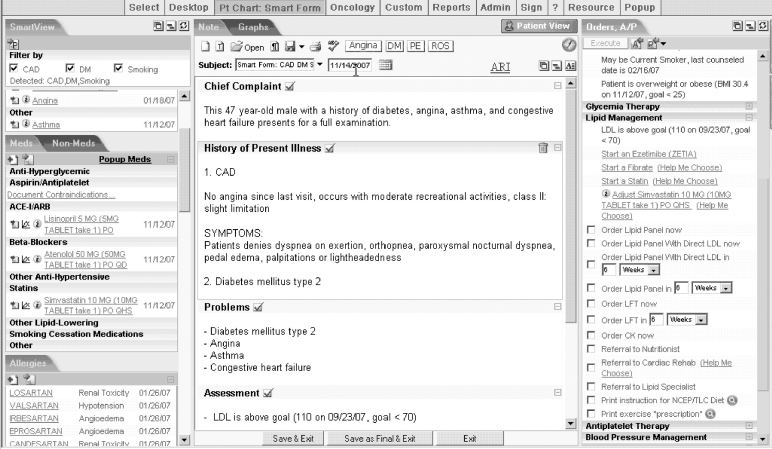
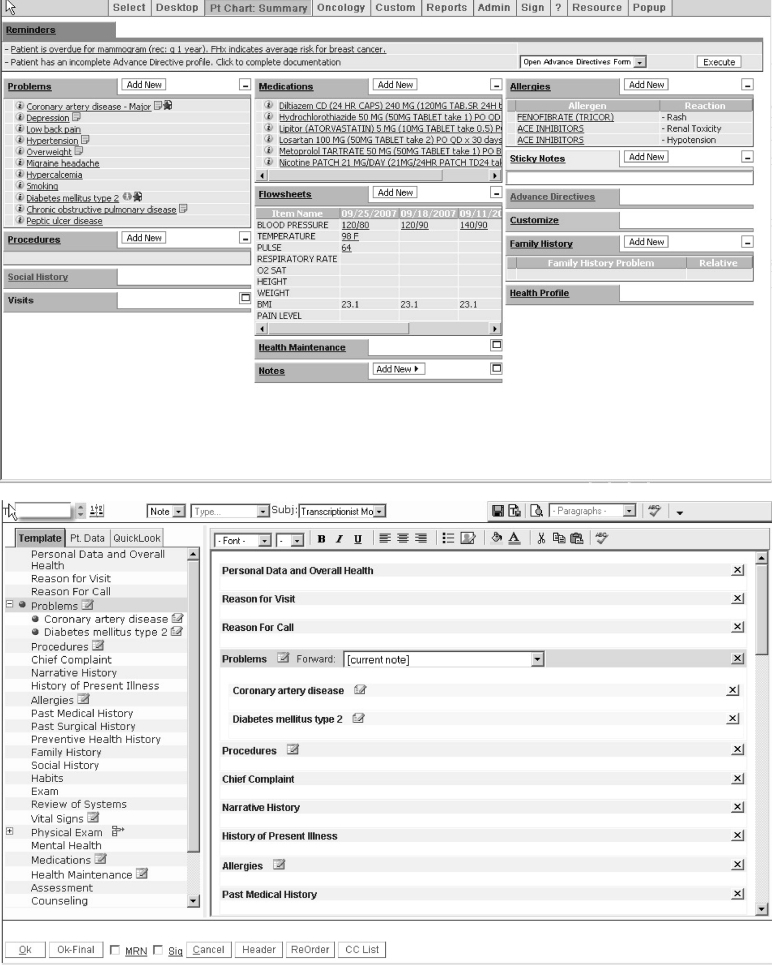
Clinical decision support systems (CDSS) integrated within Electronic Medical Records (EMR) hold the promise of improving healthcare quality. To date the effectiveness of CDSS has been less than expected, especially concerning the ambulatory management of chronic diseases. This is due, in part, to the fact that clinicians do not use CDSS fully. Barriers to clinicians' use of CDSS have included lack of integration into workflow, software usability issues, and relevance of the content to the patient at hand. At Partners HealthCare, we are developing "Smart Forms" to facilitate documentation-based clinical decision support. Rather than being interruptive in nature, the Smart Form enables writing a multi-problem visit note while capturing coded information and providing sophisticated decision support in the form of tailored recommendations for care. The current version of the Smart Form is designed around two chronic diseases: coronary artery disease and diabetes mellitus. The Smart Form has potential to improve the care of patients with both acute and chronic conditions.
Figures
References
-
- Linder JA, Ma J, Bates DW, Middleton B, Stafford RS. Electronic health record use and the quality of ambulatory care in the United States Arch Intern Med 2007;167(13):1400-1405Jul 9. - PubMed
-
- Bates DW, Gawande AA. Improving safety with information technology N Engl J Med 2003;348(25):2526-2534Jun 19. - PubMed
-
- Randolph AG, Haynes RB, Wyatt JC, Cook DJ, Guyatt GH. Users' Guides to the Medical Literature: XVIII. How to use an article evaluating the clinical impact of a computer-based clinical decision support system. JAMA 1999;282(1):67-74Jul 7. - PubMed
-
- Committee on Quality of Health Care in America IoM Crossing the quality chasm: a new health system for the 21st centuryWashinton, DC: National Academy Press; 2001.
-
- McGlynn EA, Asch SM, Adams J, Keesey J, Hicks J, DeCristofaro A, et al. The quality of health care delivered to adults in the United States N Engl J Med 2003;348(26):2635-2645Jun 26. - PubMed
Publication types
MeSH terms
Grants and funding
LinkOut - more resources
Full Text Sources
Other Literature Sources
