


Improvement of report workflow and productivity using speech recognition--a follow-up study
- PMID: 18437491
- PMCID: PMC3043847
- DOI: 10.1007/s10278-008-9121-4
Improvement of report workflow and productivity using speech recognition--a follow-up study
Erratum in
- J Digit Imaging. 2008 Dec;21(4):383
Abstract
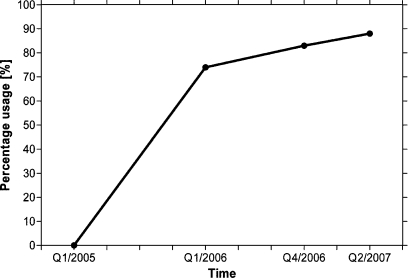
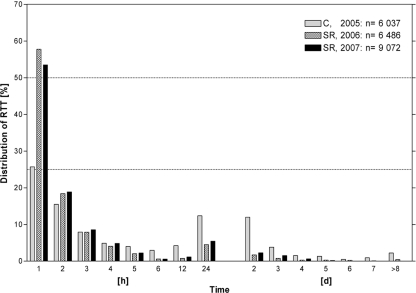
Speech recognition (SR), available since the 1980s, has only recently become sufficiently reliable to allow utilization in medical environment. This study measured the effect of SR for the radiological dictation process and estimated differences in report turnaround times (RTTs). During the transition from cassette-based reporting to SR, the workflow of 14 radiologists was periodically followed up for 2 years in a university hospital. The sample size was more than 20,000 examinations, and the radiologists were the same throughout the study. A RTT was defined as the time from imaging at the modality to the time when the report was available for the clinician. SR cut down RTTs by 81% and the standard deviation by 83%. The proportion of reports available within 1 h escalated from 26% to 58%. The proportion of reports created by SR increased during a follow-up time of this study from 0% up to 88%. SR decreases turnaround times and may thus speed up the whole patient care process by facilitating online reporting. SR was easily adopted and well accepted by radiologists. Our findings encourage the utilization of SR, which improves the productivity and accelerates the workflow with excellent end-user satisfaction.
Figures


Comment in
-
Letter to the editor re: Voice recognition dictation: radiologist as transcriptionist and Improvement of report workflow and productivity using speech recognition--a follow-up study.J Digit Imaging. 2009 Dec;22(6):560-1. doi: 10.1007/s10278-009-9197-5. Epub 2009 Apr 22. J Digit Imaging. 2009. PMID: 19387739 Free PMC article. No abstract available.
References
-
- Trumm C, Francke M, Küttner B, Nissen-Meyer S, Reiser M, Glaser C. Speech recognition: impact on report availability and clinical workflow. Hosp Imaging Radiol Eur. 2006;1:14–16.
Publication types
MeSH terms
LinkOut - more resources
Full Text Sources
Research Materials
