


Socioeconomic status and health: the role of subjective social status
- PMID: 18440111
- PMCID: PMC2547480
- DOI: 10.1016/j.socscimed.2008.03.038
Socioeconomic status and health: the role of subjective social status
Abstract
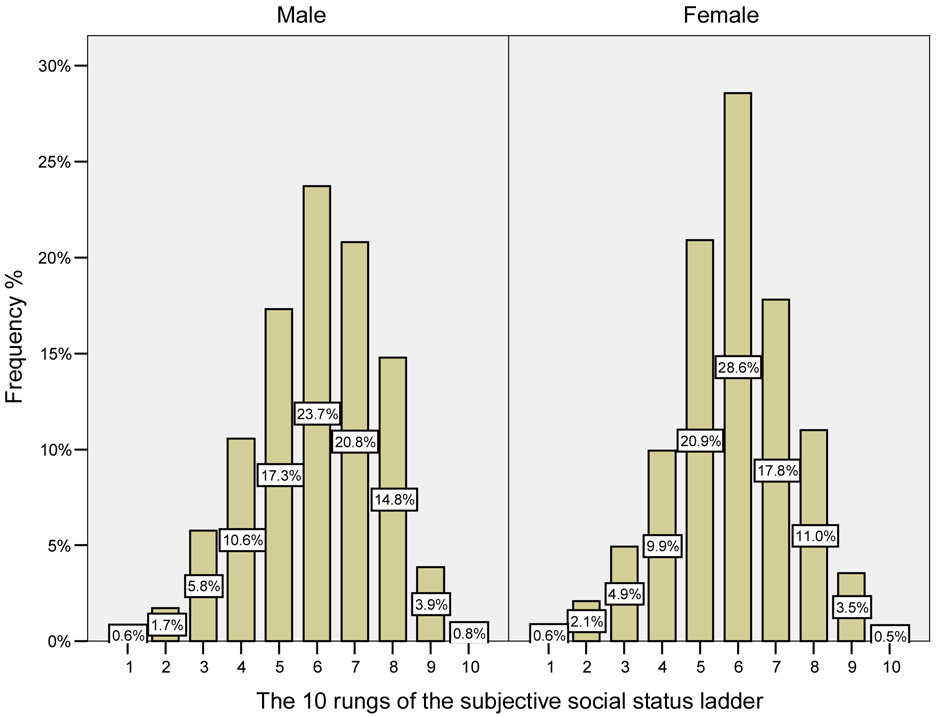
Studies have suggested that subjective social status (SSS) is an important predictor of health. This study examined the link between SSS and health in old age and investigated whether SSS mediated the associations between objective indicators of socioeconomic status and health. It used cross-sectional data from the second wave (2004-2005) of the English Longitudinal Study of Ageing, which were collected through personal interviews and nurse visits. The study population consisted of 3368 men and 4065 women aged 52 years or older. The outcome measures included: self-rated health, long-standing illness, depression, hypertension, diabetes, central obesity, high-density lipoprotein cholesterol, triglycerides, fibrinogen, and C-reactive protein. The main independent variable was SSS measured using a scale representing a 10-rung ladder. Wealth, education, and occupational class were employed as covariates along with age and marital status and also, in additional analyses, as the main independent variables. Gender-specific logistic and linear regression analyses were performed. In age-adjusted analyses SSS was related positively to almost all health outcomes. Many of these relationships remained significant after adjustment for covariates. In men, SSS was significantly (p<or=0.05) related to self-rated health, depression, and long-standing illness after adjustment for all covariates, while its association with fibrinogen became non-significant. In women, after adjusting for all covariates, SSS was significantly associated with self-rated health, depression, long-standing illness, diabetes, and high-density lipoprotein cholesterol, but its associations with central obesity and C-reactive protein became non-significant. Further analysis suggested that SSS mediated fully or partially the associations between education, occupational class and self-reported and clinical health measures. On the contrary, SSS did not mediate wealth's associations with the outcome measures, except those with self-reported health measures. Our results suggest that SSS is an important correlate of health in old age, possibly because of its ability to epitomize life-time achievement and socioeconomic status.
Figures
References
-
- Adler NE, Boyce T, Chesney MA, Cohen S, Folkman S, Kahn RL, Syme SL. Socioeconomic-Status and Health - the Challenge of the Gradient. American Psychologist. 1994;49(1):15–24. - PubMed
-
- Adler NE, Epel ES, Castellazzo G, Ickovics JR. Relationship of subjective and objective social status with psychological and physiological functioning: Preliminary data in healthy white women. Health Psychology. 2000;19(6):586–592. - PubMed
-
- Alberti KG, Zimmet P, Shaw J. Metabolic syndrome - a new world-wide definition. A consensus statement from the International Diabetes Federation. Diabetic Medicine. 2006;23(5):469–480. - PubMed
-
- American Diabetes Association. Standards of medical care in diabetes-2006. Diabetes Care. 2006. pp. S4–S42. - PubMed
Publication types
MeSH terms
Grants and funding
LinkOut - more resources
Full Text Sources
Research Materials
