


Fusion core structure of the severe acute respiratory syndrome coronavirus (SARS-CoV): in search of potent SARS-CoV entry inhibitors
- PMID: 18442051
- PMCID: PMC7166385
- DOI: 10.1002/jcb.21790
Fusion core structure of the severe acute respiratory syndrome coronavirus (SARS-CoV): in search of potent SARS-CoV entry inhibitors
Abstract
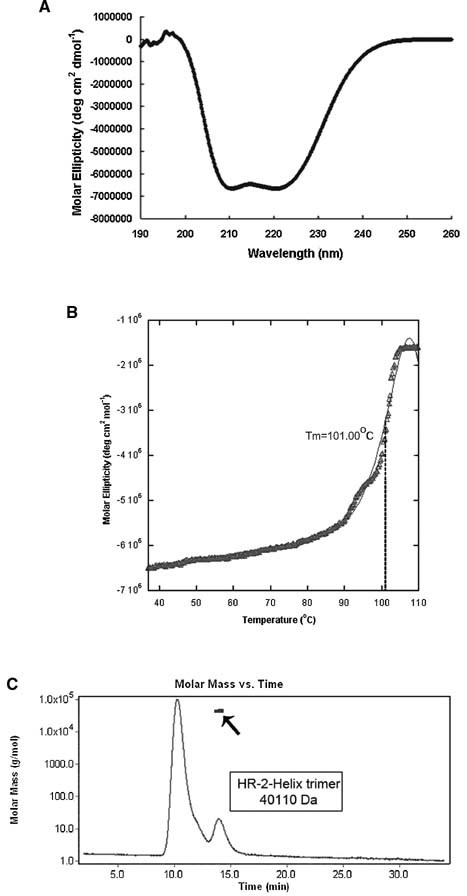
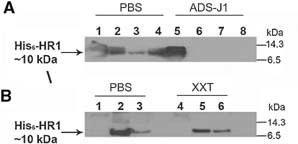
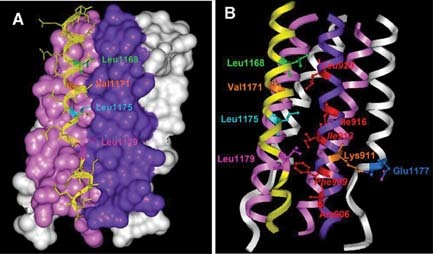
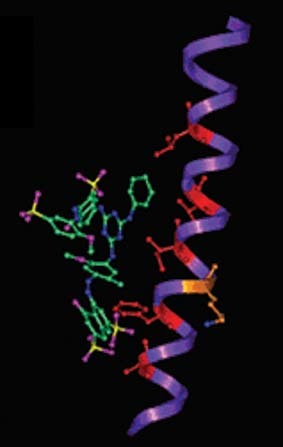
Severe acute respiratory coronavirus (SARS-CoV) spike (S) glycoprotein fusion core consists of a six-helix bundle with the three C-terminal heptad repeat (HR2) helices packed against a central coiled-coil of the other three N-terminal heptad repeat (HR1) helices. Each of the three peripheral HR2 helices shows prominent contacts with the hydrophobic surface of the central HR1 coiled-coil. The concerted protein-protein interactions among the HR helices are responsible for the fusion event that leads to the release of the SARS-CoV nucleocapsid into the target host-cell. In this investigation, we applied recombinant protein and synthetic peptide-based biophysical assays to characterize the biological activities of the HR helices. In a parallel experiment, we employed a HIV-luc/SARS pseudotyped virus entry inhibition assay to screen for potent inhibitory activities on HR peptides derived from the SARS-CoV S protein HR regions and a series of other small-molecule drugs. Three HR peptides and five small-molecule drugs were identified as potential inhibitors. ADS-J1, which has been used to interfere with the fusogenesis of HIV-1 onto CD4+ cells, demonstrated the highest HIV-luc/SARS pseudotyped virus-entry inhibition activity among the other small-molecule drugs. Molecular modeling analysis suggested that ADS-J1 may bind to the deep pocket of the hydrophobic groove on the surface of the central coiled-coil of SARS-CoV S HR protein and prevent the entrance of the SARS-CoV into the host cells.
Figures
References
-
- Chim SS, Tsui SK, Chan KC, Au TC, Hung EC, Tong YK, Chiu RW, Ng EK, Chan PK, Chu CM, Sung JJ, Tam JS, Fung KP, Waye MM, Lee CY, Yuen KY, Lo YM. 2003. Genomic characterisation of the severe acute respiratory syndrome coronavirus of Amoy Gardens outbreak in Hong Kong. Lancet 362: 1807–1808. - PMC - PubMed
-
- Choy WY, Lin SG, Chan PK, Tam JS, Lo YM, Chu IM, Tsai SN, Zhong MQ, Fung KP, Waye MM, Tsui SK, Ng KO, Shan ZX, Yang M, Wu YL, Lin ZY, Ngai SM. 2004. Synthetic peptide studies on the severe acute respiratory syndrome (SARS) coronavirus spike glycoprotein: Perspective for SARS vaccine development. Clin Chem 50: 1036–1042. - PMC - PubMed
-
- Chu LH, Choy WY, Tsai SN, Rao Z, Ngai SM. 2006. Rapid peptide‐based screening on the substrate specificity of severe acute respiratory syndrome (SARS) coronavirus 3C‐like protease by matrix‐assisted laser desorption/ionization time‐of‐flight mass spectrometry. Protein Sci 15: 699–709. - PMC - PubMed
-
- Connor RI, Chen BK, Choe S, Landau NR. 1995. Vpr is required for efficient replication of human immunodeficiency virus type‐1 in mononuclear phagocytes. Virology 206: 935–944. - PubMed
Publication types
MeSH terms
Substances
LinkOut - more resources
Full Text Sources
Research Materials
Miscellaneous
