Judgments of the lucky across development and culture
- PMID: 18444737
- PMCID: PMC2745195
- DOI: 10.1037/0022-3514.94.5.757
Judgments of the lucky across development and culture
Abstract
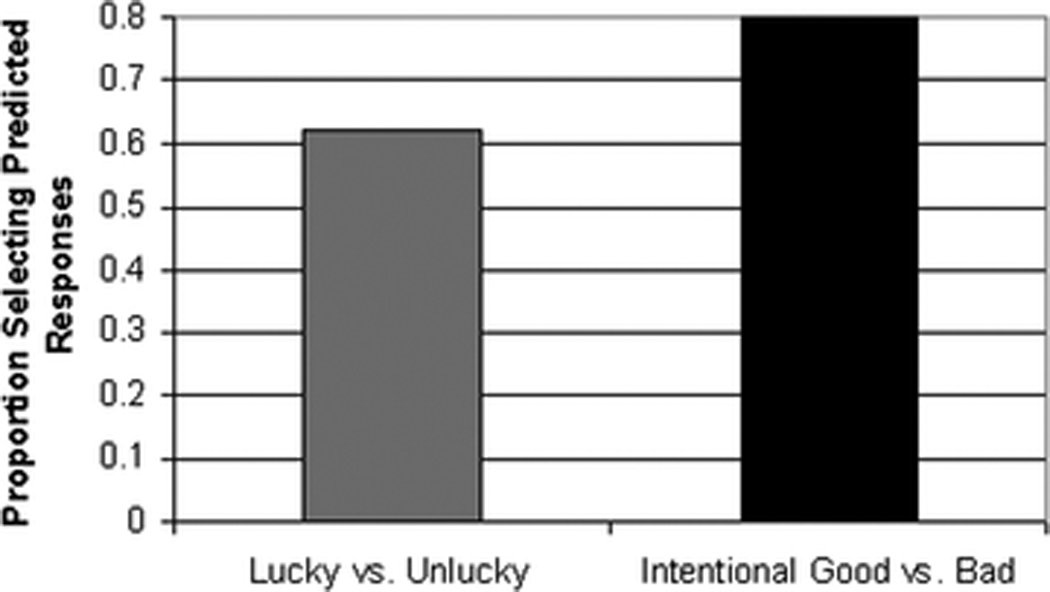
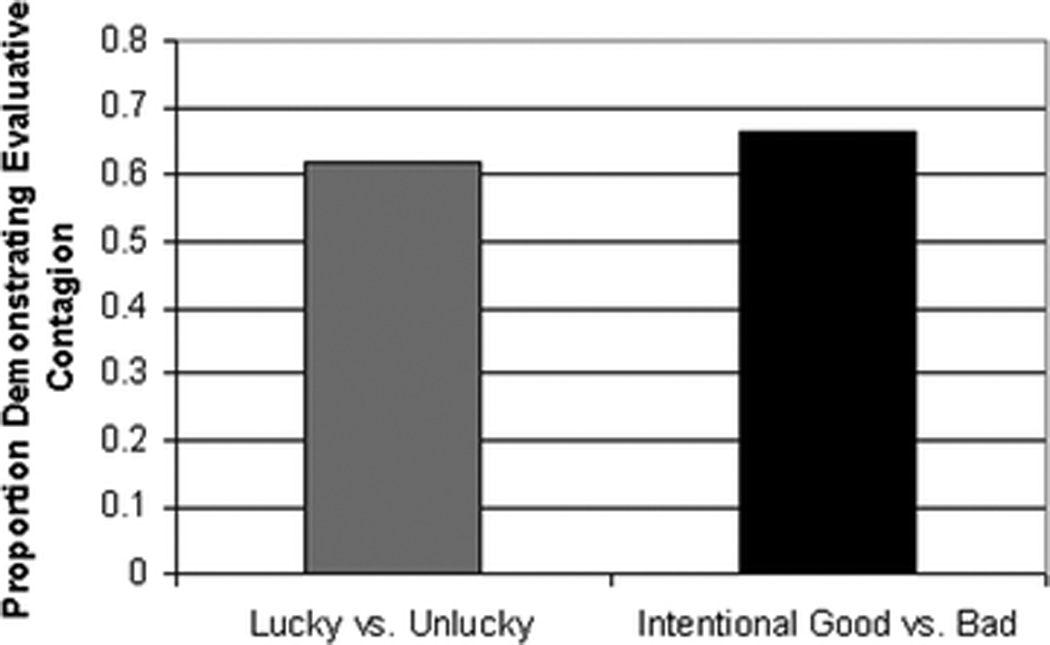
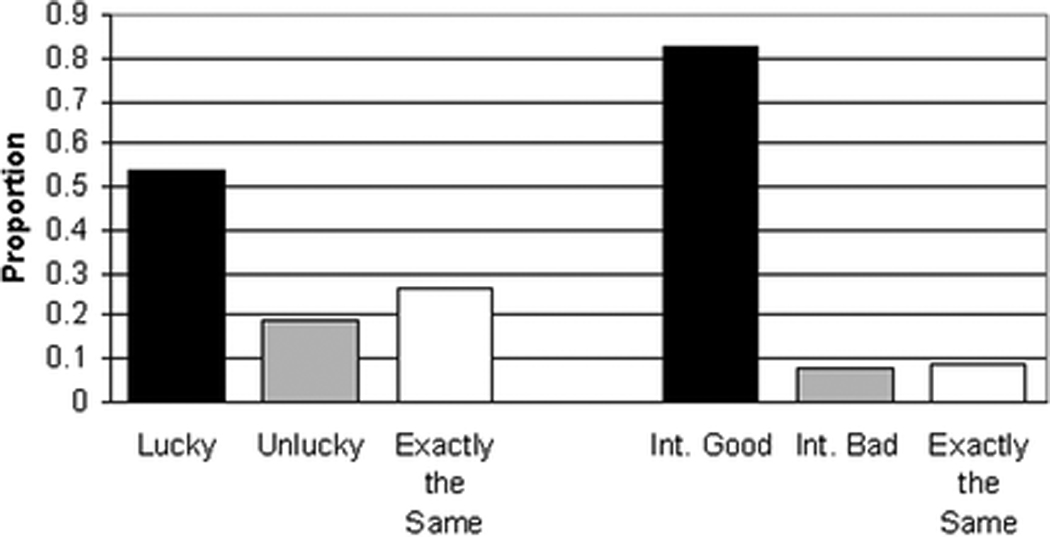
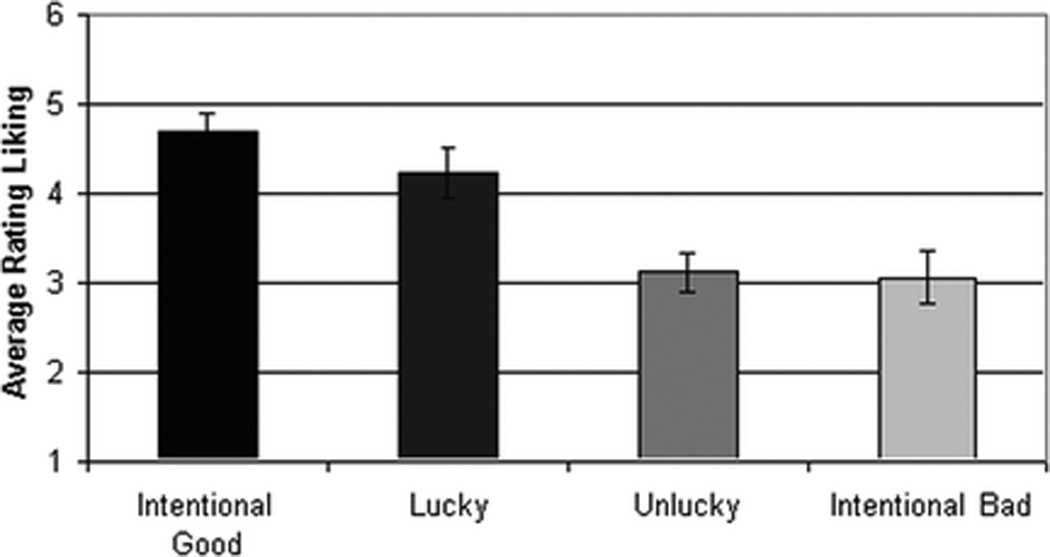
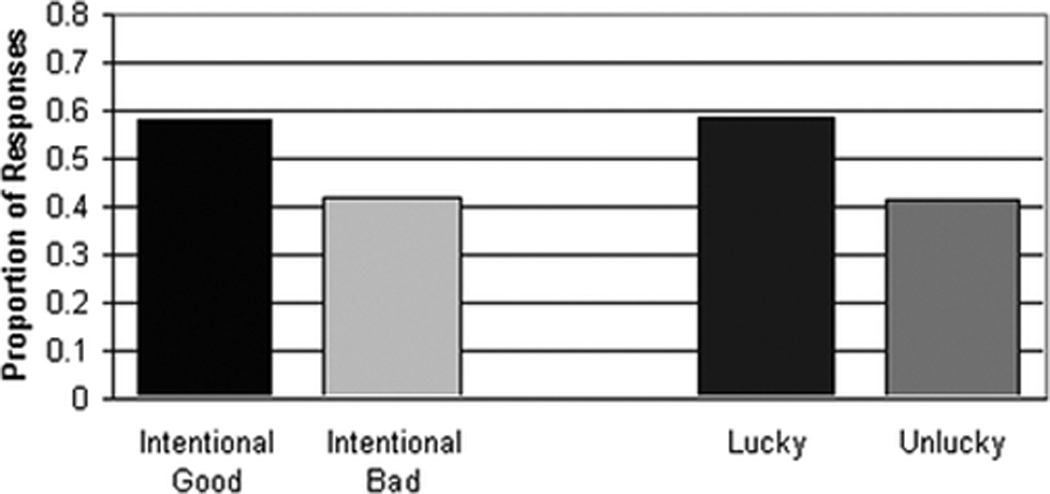
For millennia, human beings have believed that it is morally wrong to judge others by the fortuitous or unfortunate events that befall them or by the actions of another person. Rather, an individual's own intended, deliberate actions should be the basis of his or her evaluation, reward, and punishment. In a series of studies, the authors investigated whether such rules guide the judgments of children. The first 3 studies demonstrated that children view lucky others as more likely than unlucky others to perform intentional good actions. Children similarly assess the siblings of lucky others as more likely to perform intentional good actions than the siblings of unlucky others. The next 3 studies demonstrated that children as young as 3 years believe that lucky people are nicer than unlucky people. The final 2 studies found that Japanese children also demonstrate a robust preference for the lucky and their associates. These findings are discussed in relation to M. J. Lerner's (1980) just-world theory and J. Piaget's (1932/1965) immanent-justice research and in relation to the development of intergroup attitudes.
(c) 2008 APA, all rights reserved
Figures
References
-
- Baillargeon R, Spelke ES, Wasserman S. Object permanence in five-month-old infants. Cognition. 1985;20:191–208. - PubMed
-
- Banaji MR, Bhaskar R. Implicit stereotypes and memory: The bounded rationality of social beliefs. In: Schacter DL, Scarry E, editors. Memory, Brain, and Belief. Cambridge, MA: Harvard University Press; 2000. pp. 139–175.
-
- Bracton H. In: On the laws and customs of England. Thorne SE, translator. Cambridge, MA: Harvard University Press; 1968–1977. (Original work published in 13th Century). Retrieved August 3, 2006, from Bracton Online, Harvard Law School Library: http://hlsl.law.harvard.edu/bracton/.
-
- Callan MJ, Ellard JH, Nicol JE. The belief in a just world and immanent justice reasoning in adults. Personality and Social Psychology Bulletin. 2006;32:1646–1658. - PubMed
-
- Duckworth KL, Bargh JA, Garcia M, Chaiken S. The automatic evaluation of novel stimuli. Psychological Science. 2002;13(6):513–519. - PubMed