


Impact of pneumococcal vaccination on the incidence of pneumonia by HIV infection status among patients enrolled in the Veterans Aging Cohort 5-Site Study
- PMID: 18444830
- PMCID: PMC3115628
- DOI: 10.1086/529201
Impact of pneumococcal vaccination on the incidence of pneumonia by HIV infection status among patients enrolled in the Veterans Aging Cohort 5-Site Study
Abstract
Background: Human immunodeficiency virus (HIV)-infected persons have a high incidence of pneumonia and pneumococcal disease. Benefits of vaccination with the 23-valent pneumococcal polysaccharide vaccine (PPV) among these patients continue to be debated.
Methods: The impact of PPV vaccination on the incidence of pneumonia events (i.e., the composite of pneumococcal pneumonia and pneumonia due to nonspecified organisms) was examined among participants in the Veterans Aging Cohort 5-Site Study, an ongoing prospective study of HIV-infected patients matched to an HIV-uninfected control group. Dates of PPV vaccination and pneumonia were determined by retrospective review of electronic medical records. Time to events was measured for up to 2 years from PPV vaccination or from enrollment for vaccinated and unvaccinated patients, respectively. Kaplan-Meier and Cox proportional hazards regression methods were used to examine the incidence of pneumonia by HIV infection and PPV vaccination status.
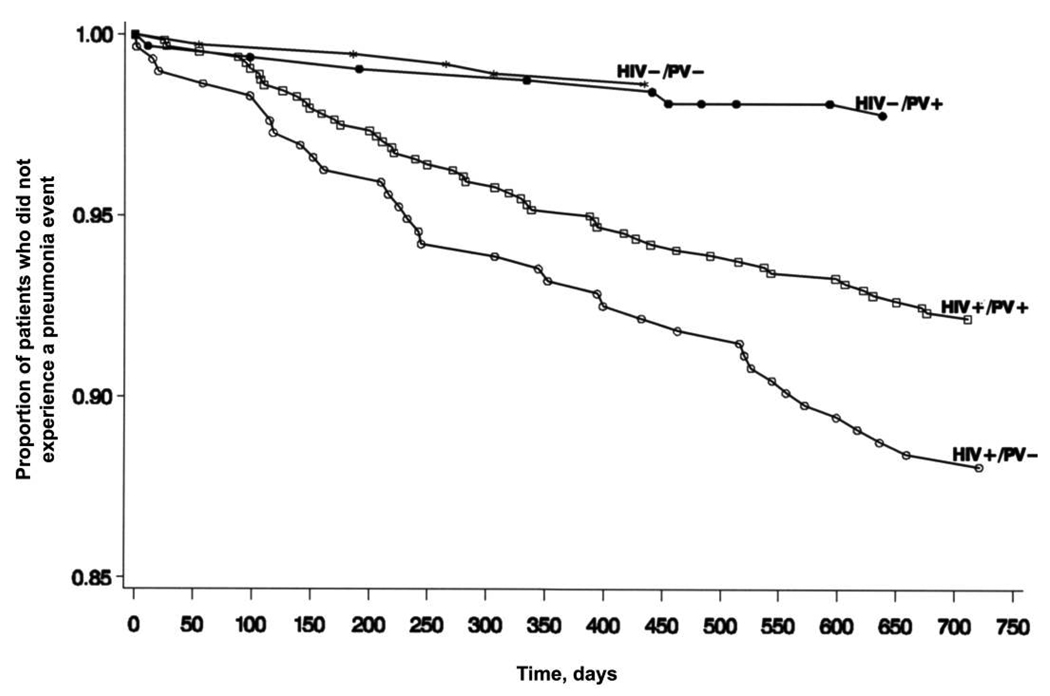
Results: Among 692 HIV-uninfected and 934 HIV-infected study participants, 59% were vaccinated with PPV. The 2-year incidence of pneumonia was 6% (97 participants developed pneumonia). HIV-infected patients had a higher rate of pneumonia (hazard ratio, 5.81; 95% confidence interval, 3.15-10.71); overall, vaccinated patients showed a trend toward lower risk of pneumonia (hazard ratio, 0.75; 95% confidence interval, 0.50-1.13). Among HIV-infected patients, after controlling for HIV-specific and other variables, vaccination significantly reduced the risk of pneumonia (hazard ratio, 0.65; 95% confidence interval, 0.42-1.00); current smoking, low hemoglobin level, and low CD4 cell count significantly increased such risk. The effect of PPV vaccination among HIV-uninfected patients was not significant.
Conclusions: Among HIV-infected patients, PPV vaccination offered protection against pneumonia. Smoking cessation needs to be pursued as an additional strategy for preventing pneumonia.
Conflict of interest statement
Figures
Comment in
-
Confounding may lead to overestimation of pneumococcal polysaccharide vaccine effectiveness among HIV-infected individuals.Clin Infect Dis. 2008 Jul 15;47(2):294-5; author reply 295-6. doi: 10.1086/589580. Clin Infect Dis. 2008. PMID: 18564939 No abstract available.
References
-
- Musher DM. Streptococcus pneumoniae. In: Bennett JB, Mandell GL, Dolin R, editors. Principles and practice of infectious diseases. Philadelphia: Elsevier; 2005. pp. 2392–2411.
-
- Feikin DR, Feldman C, Schuchat AJ, Janoff EN. Global strategies to prevent bacterial pneumonia in adults with HIV disease. Lancet Infect Dis. 2004;4:445–455. - PubMed
-
- Heffernan RT, Barrett NL, Gallagher KM, et al. Declining incidence of invasive Streptococcus pneumoniae infections among persons with AIDS in an era of highly active antiretroviral therapy, 1995–2000. J Infect Dis. 2005;191:2038–2045. - PubMed
-
- López-Palomo C, Martín-Zamorano M, Benítez E, et al. Pneumonia in HIV-infected patients in the HAART era: incidence, risk, and impact of the pneumococcal vaccination. J Med Virol. 2004;72:517–524. - PubMed
-
- Paul S, Gilbert HM, Ziecheck W, Jacobs J, Sepkowitz KA. The impact of potent antiretroviral therapy on the characteristics of hospitalized patients with HIV infection. AIDS. 1999;13:415–418. - PubMed
Publication types
MeSH terms
Substances
Grants and funding
LinkOut - more resources
Full Text Sources
Medical
Research Materials
