


A randomized controlled trial of the impact of chlorhexidine skin cleansing on bacterial colonization of hospital-born infants in Nepal
- PMID: 18449064
- PMCID: PMC2562933
- DOI: 10.1097/INF.0b013e31816791a2
A randomized controlled trial of the impact of chlorhexidine skin cleansing on bacterial colonization of hospital-born infants in Nepal
Abstract
Background: Chlorhexidine skin cleansing might substantially reduce neonatal infection and mortality in developing countries. Few data exist on the impact of chlorhexidine cleansing on skin colonization of infants during the first day of life or on the absorption potential of chlorhexidine during newborn skin cleansing.
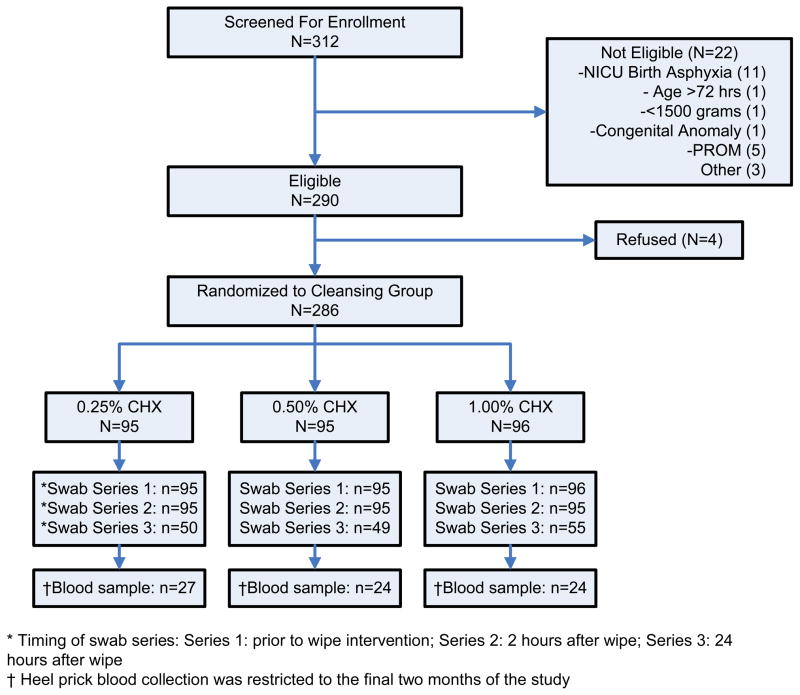
Methods: Hospital-born newborns in Kathmandu, Nepal were randomly allocated to full-body skin cleansing with 0.25%, 0.50%, or 1.00% chlorhexidine solution. Skin swabs were collected from the axilla, inguinal, and peri-umbilical areas before cleansing (baseline), and at 2 and 24 hours after treatment. Skin flora was quantified and organisms identified. In a subsample, heel prick blood was collected 24 hours after the cleansing and percutaneous absorption of chlorhexidine was assessed.
Results: Among 286 enrolled newborns, no adverse effects on skin were reported and body temperature was minimally reduced (mean reduction, 0.33 degrees C). In all groups, positive skin culture rates were significantly reduced at 2 hours but generally not at 24 hours; greater reductions were observed with higher concentrations of chlorhexidine. Effect at 24 hours was highest in the 1.00% group (37% lower positive skin culture rate). For 15 of 75 infants with heel pricks, chlorhexidine was detected at trace concentrations (<8 ng/mL, n = 14; 25.8 ng/mL, n = 1).
Conclusions: Chlorhexidine skin cleansing seemed safe and reduced skin flora in newborns in a dose-dependent manner 2 hours after treatment. Greater residual effect at the highest concentration (1%) might provide broader benefit and may simplify combined maternal and neonatal regimens by matching the concentration used for vaginal cleansing during labor.
Figures
References
-
- Lawn JE, Cousens S, Zupan J Lancet Neonatal Survival Steering Team. 4 million neonatal deaths: when? Where? Why? Lancet. 2005;365:891–900. - PubMed
-
- Darmstadt GL, Saha SK, Ahmed AS, et al. Effect of topical treatment with skin barrier-enhancing emollients on nosocomial infections in preterm infants in Bangladesh: a randomised controlled trial. Lancet. 2005;365:1039–1045. - PubMed
-
- Darmstadt G, Saha S, Ahmed A, et al. The skin as a potential portal of entry for invasive infections in neonates. Perinatol. 2003;5:205–212.
-
- Darmstadt GL, Mao-Qiang M, Chi E, et al. Impact of topical oils on the skin barrier: possible implications for neonatal health in developing countries. Acta Paediatr. 2002;91:546–554. - PubMed
Publication types
MeSH terms
Substances
Grants and funding
LinkOut - more resources
Full Text Sources
Medical
