


Trends in intussusception hospitalizations among US infants, 1993-2004: implications for monitoring the safety of the new rotavirus vaccination program
- PMID: 18450856
- PMCID: PMC2680116
- DOI: 10.1542/peds.2007-1590
Trends in intussusception hospitalizations among US infants, 1993-2004: implications for monitoring the safety of the new rotavirus vaccination program
Abstract
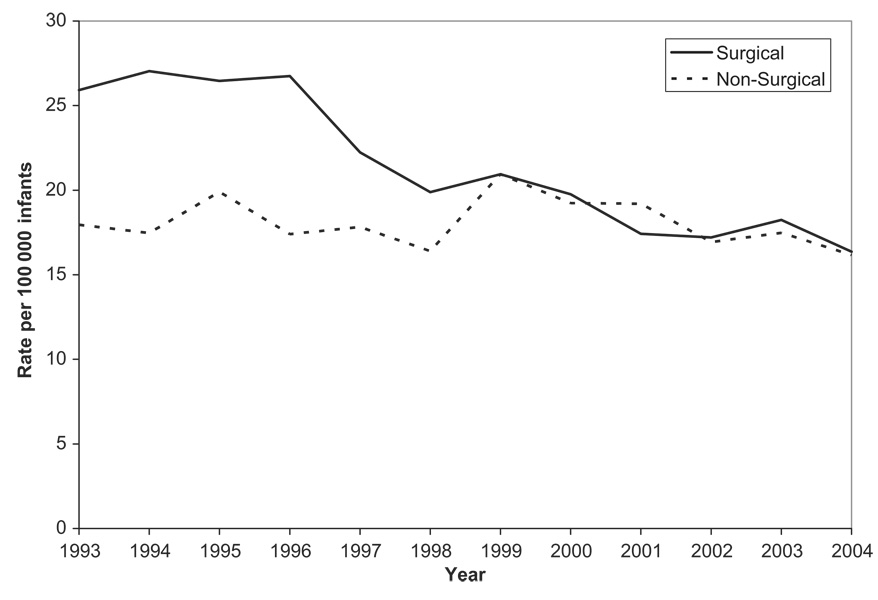
Objectives: In 2006, a new rotavirus vaccine was recommended for routine immunization of US infants. Because a previous rotavirus vaccine was withdrawn in 1999 after it was associated with intussusception, monitoring for this adverse event with the new vaccine is important. The objectives of this study were to assess intussusception hospitalizations trends among US infants for 1993 to 2004; provide estimates of hospitalization rates for intussusception for 2002-2004; and assess variations in background rates by age, race/ethnicity, and surgical management.
Methods: By using the Healthcare Cost and Utilization Project's State Inpatient Database that captures US hospital discharges from 16 states representing 49% of the birth cohort during 1993-2004 and from 35 states representing 85% of the birth cohort in 2002-2004, we examined hospitalizations among infants (<12 months of age) with an International Classification of Disease, Ninth Revision, Clinical Modification code for intussusception (560.0). Incidence rates were calculated by using census data, and rate ratios with 95% confidence intervals were calculated by using Poisson regression data.
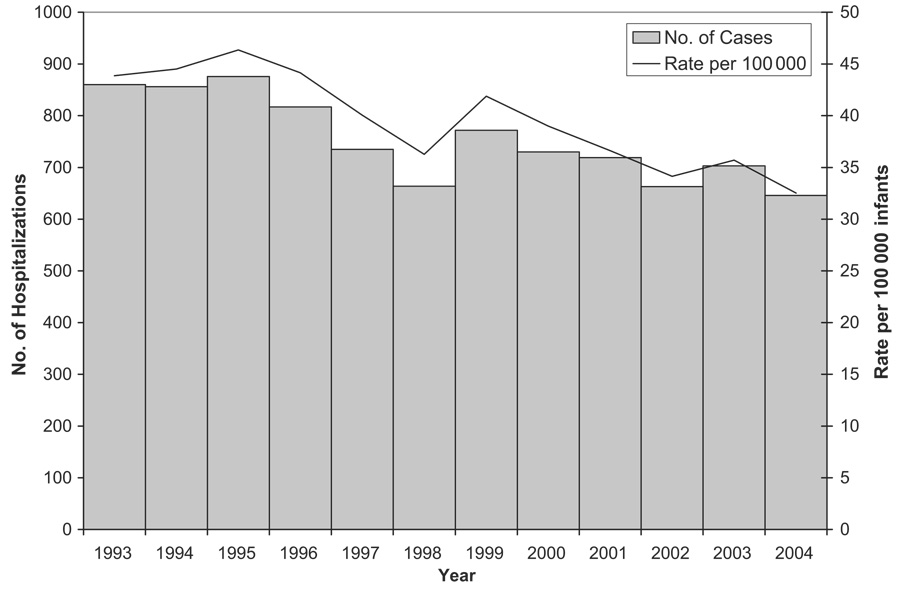
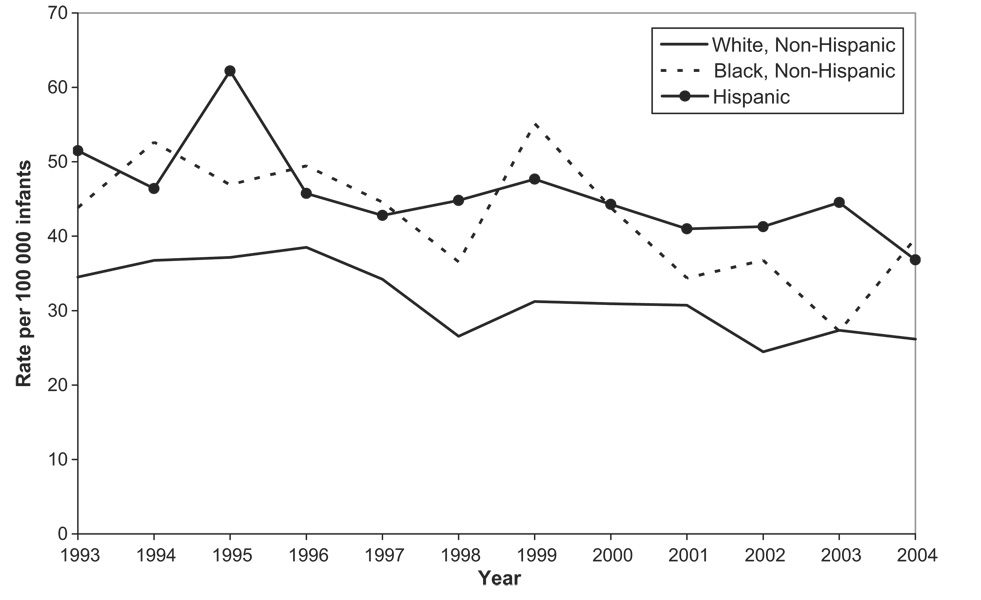
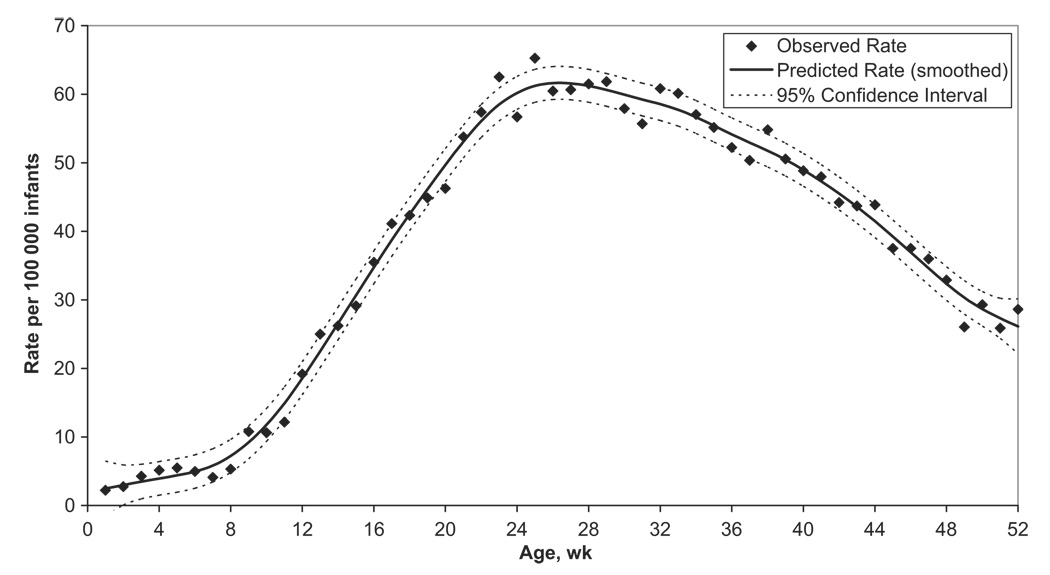
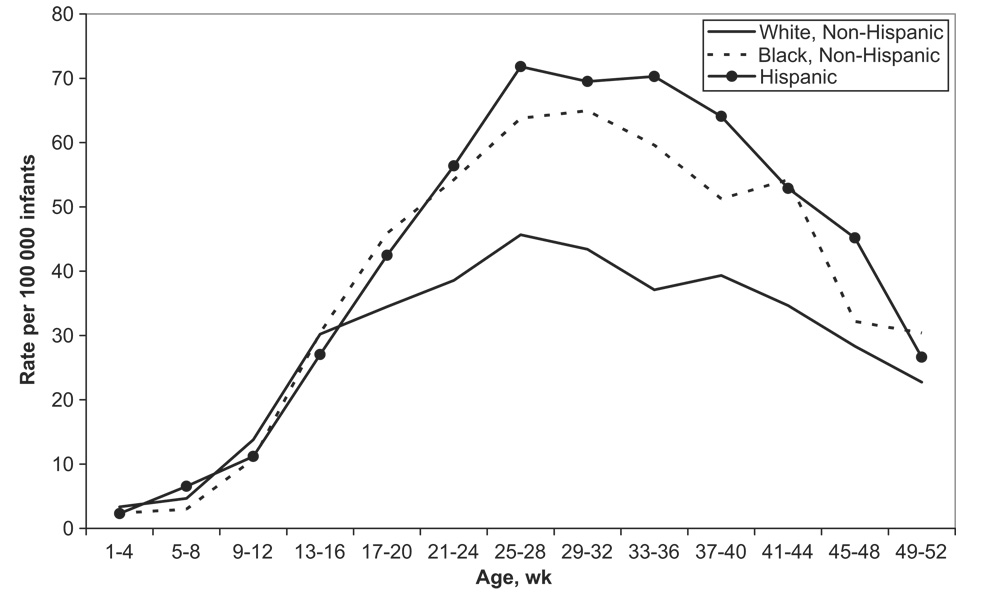
Results: Annual intussusception hospitalization rates declined 25% from 1993 to 2004 but have remained stable at approximately 35 cases per 100,000 infants since 2000. Rates were very low for infants younger than 9 weeks (<5 per 100,000) then increased rapidly, peaking at approximately 62 per 100,000 at 26 to 29 weeks, before declining gradually to 26 per 100,000 at 52 weeks. Compared with rates among non-Hispanic white infants (27 per 100,000), rates were greater among non-Hispanic black infants (37 per 100,000) and Hispanic infants (45 per 100,000); however, rates did not differ by race/ethnicity for infants who were younger than 16 weeks.
Conclusions: This assessment of US hospitalizations provides up-to-date and nationally representative prevaccine rates of intussusception. Because rates varied almost 12-fold by week of age and to a lesser extent by race/ethnicity during the age of vaccination, adjusting baseline rates to reflect the demographics of the vaccinated population will be crucial for assessing risk for intussusception after rotavirus vaccination.
Figures
References
-
- Charles MD, Holman RC, Curns AT, Parashar UD, Glass RI, Bresee JS. Hospitalizations associated with rotavirus gastroenteritis in the United States, 1993–2002. Pediatr Infect Dis J. 2006;25(6):489–493. - PubMed
-
- Jin S, Kilgore PE, Holman RC, Clarke MJ, Gangarosa EJ, Glass RI. Trends in hospitalizations for diarrhea in United States children from 1979 through 1992: estimates of the morbidity associated with rotavirus. Pediatr Infect Dis J. 1996;15(5):397–404. - PubMed
-
- Malek MA, Curns AT, Holman RC, et al. Diarrhea- and rota-virus-associated hospitalizations among children less than 5 years of age: United States, 1997 and 2000. Pediatrics. 2006;117(6):1887–1892. - PubMed
-
- Murphy TV, Gargiullo PM, Massoudi MS, et al. Intussusception among infants given an oral rotavirus vaccine. N Engl J Med. 2001;344(8):564–572. - PubMed
-
- Rotavirus vaccine for the prevention of rotavirus gastroenteritis among children: recommendations of the Advisory Committee on Immunization Practices (ACIP) MMWR Recomm Rep. 1999;48(RR2):1–23. - PubMed
Publication types
MeSH terms
Substances
Grants and funding
LinkOut - more resources
Full Text Sources
