Epigenetic-genetic interactions in the APC/WNT, RAS/RAF, and P53 pathways in colorectal carcinoma
- PMID: 18451217
- PMCID: PMC3544184
- DOI: 10.1158/1078-0432.CCR-07-1802
Epigenetic-genetic interactions in the APC/WNT, RAS/RAF, and P53 pathways in colorectal carcinoma
Abstract
Purpose: Early events in colorectal tumorigenesis include mutation of the adenomatous polyposis coli (APC) gene and epigenetic hypermethylation with transcriptional silencing of the O(6)-methylguanine DNA methyltransferase (MGMT), human mut L homologue 1 (hMLH1), and P16/CDKN2A genes. Epigenetic alterations affect genetic events: Loss of MGMT via hypermethylation reportedly predisposes to guanine-to-adenine or cytosine-to-thymine (G:C-->A:T) transition mutations in KRAS and P53, and silencing of hMLH1 leads to high levels of microsatellite instability (MSI-H)/mutator phenotype, suggesting that epigenetic-genetic subtypes exist.
Experimental design: We evaluated the relationships of aberrant methylation of APC, MGMT, hMLH1, P16, N33, and five MINTs to mutations in APC, KRAS, BRAF, and P53 in 208 colorectal carcinomas.
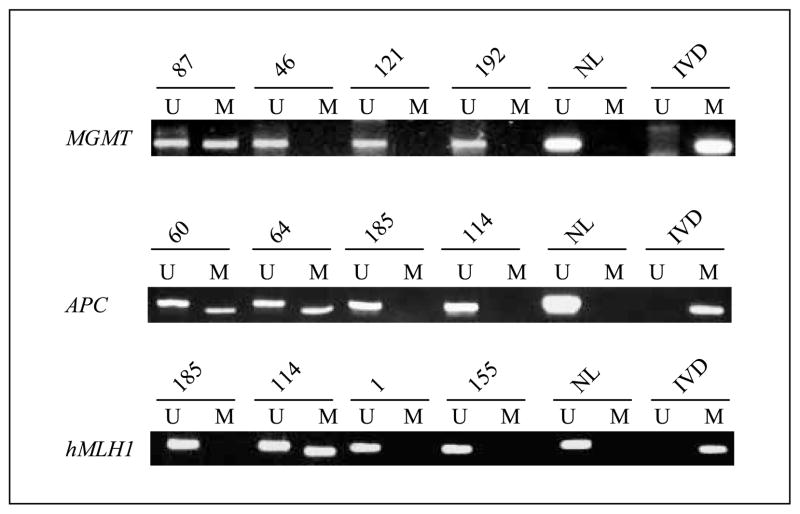
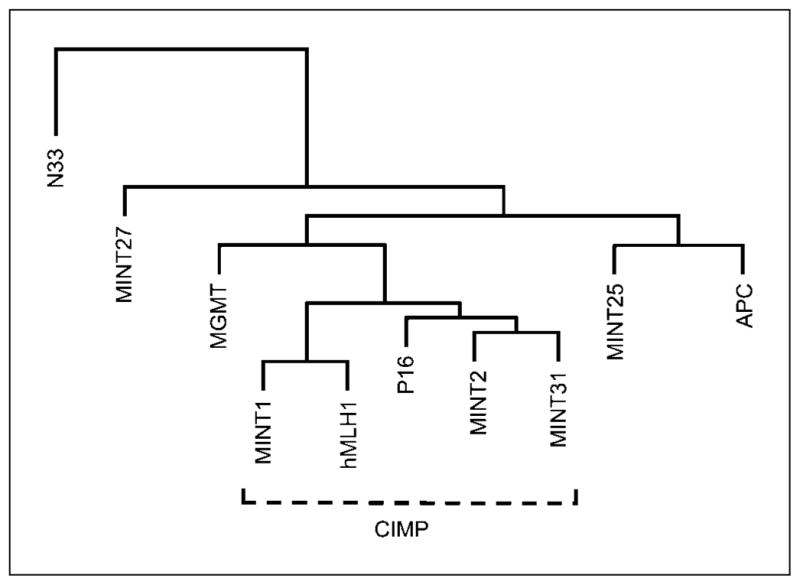
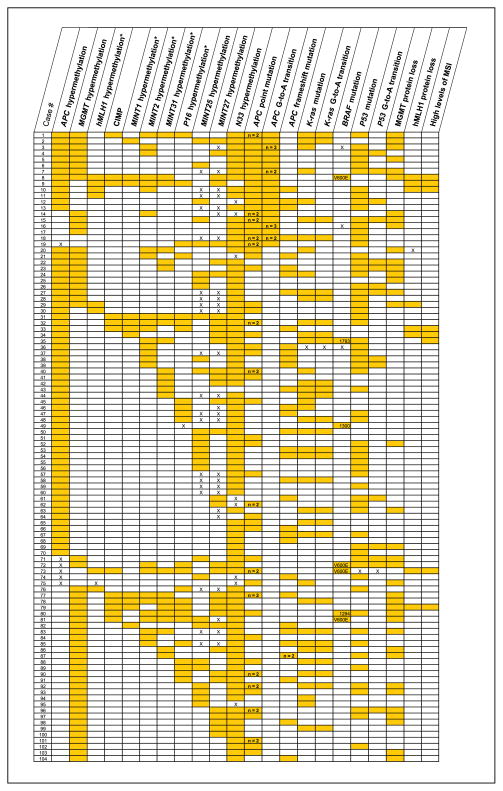
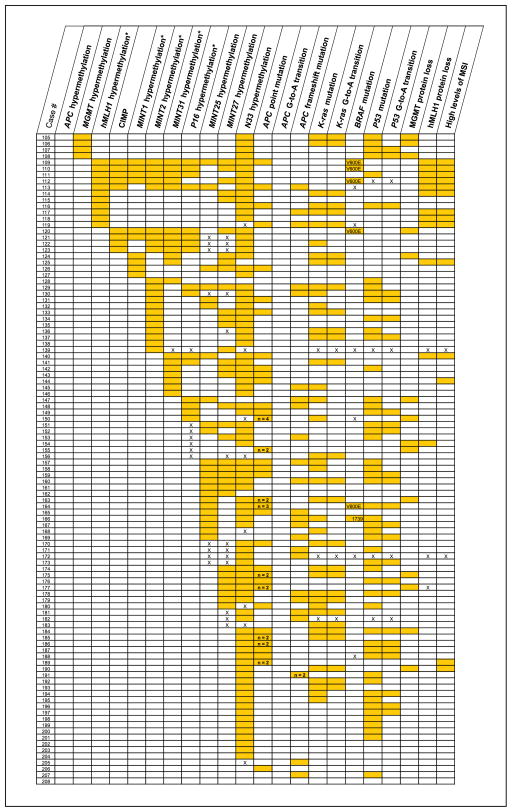
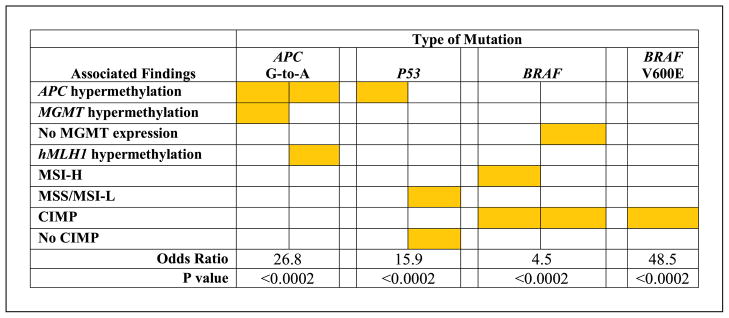
Results: We found that APC hypermethylation was age related (P = 0.04), in contrast to the other genes, and did not cluster with CpG island methylator phenotype (CIMP) markers. Hypermethylation of APC concurrently with either MGMT or hMLH1 was strongly associated with occurrence of G-to-A transitions in APC [odds ratio (OR), 26.8; P < 0.0002 from multivariable logic regression model], but C-to-T transitions had no associations. There was no relationship of hypermethylation of any gene, including MGMT, with G-to-A or C-to-T transitions in KRAS or P53, although APC hypermethylation was associated with P53 mutation (P < 0.0002). CIMP with MSI-H due to hMLH1 hypermethylation, or CIMP with loss of MGMT expression in non-MSI-H tumors, was associated with BRAF mutation (OR, 4.5; P < 0.0002). CIMP was also associated with BRAF V600E T-to-A transversion (OR, 48.5; P < 0.0002).
Conclusions: Our findings suggest that the heterogeneous epigenetic dysregulation of promoter methylation in various genes is interrelated with the occurrence of mutations, as manifested in epigenetic-genetic subgroups of tumors.
Figures
References
-
- Willert K, Jones KA. Wnt signaling: is the party in the nucleus? Genes Dev. 2006;20:1394–404. - PubMed
-
- Behrens J. The role of the Wnt signalling pathway in colorectal tumorigenesis. Biochem Soc Trans. 2005;33:672–5. - PubMed
-
- Jaiswal AS, Balusu R, Narayan S. Involvement of adenomatous polyposis coli in colorectal tumorigenesis. Front Biosci. 2005;10:1118–34. - PubMed
-
- Nathke IS. The adenomatous polyposis coli protein: the Achilles heel of the gut epithelium. Annu Rev Cell Dev Biol. 2004;20:337–66. - PubMed
-
- Esteller M, Sparks A, Toyota M, et al. Analysis of adenomatous polyposis coli promoter hypermethylation in human cancer. Cancer Res. 2000;60:4366–71. - PubMed
Publication types
MeSH terms
Substances
Grants and funding
LinkOut - more resources
Full Text Sources
Medical
Research Materials
Miscellaneous