


HIV-induced changes in T cell signaling pathways
- PMID: 18453567
- PMCID: PMC2648824
- DOI: 10.4049/jimmunol.180.10.6490
HIV-induced changes in T cell signaling pathways
Abstract
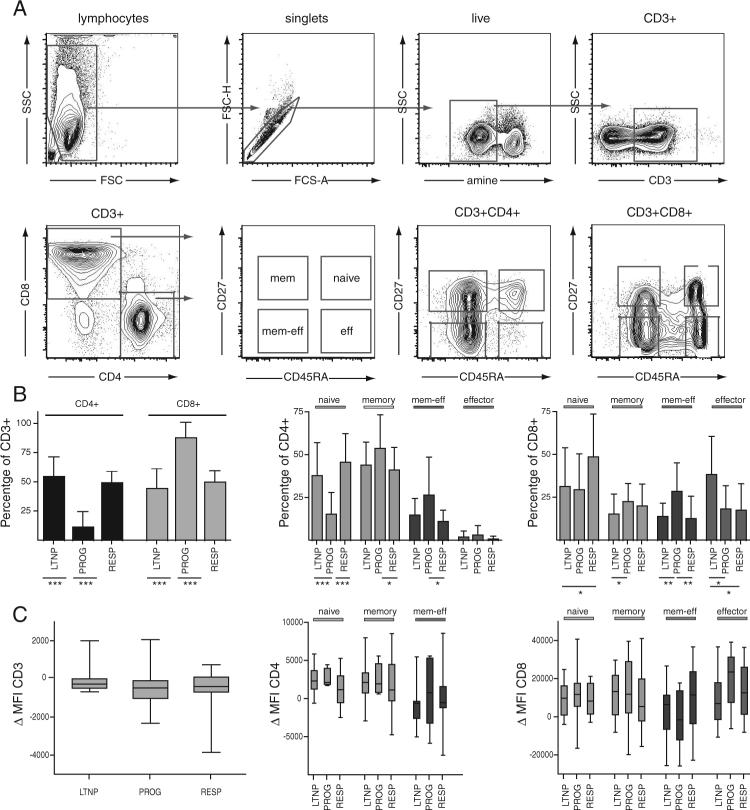
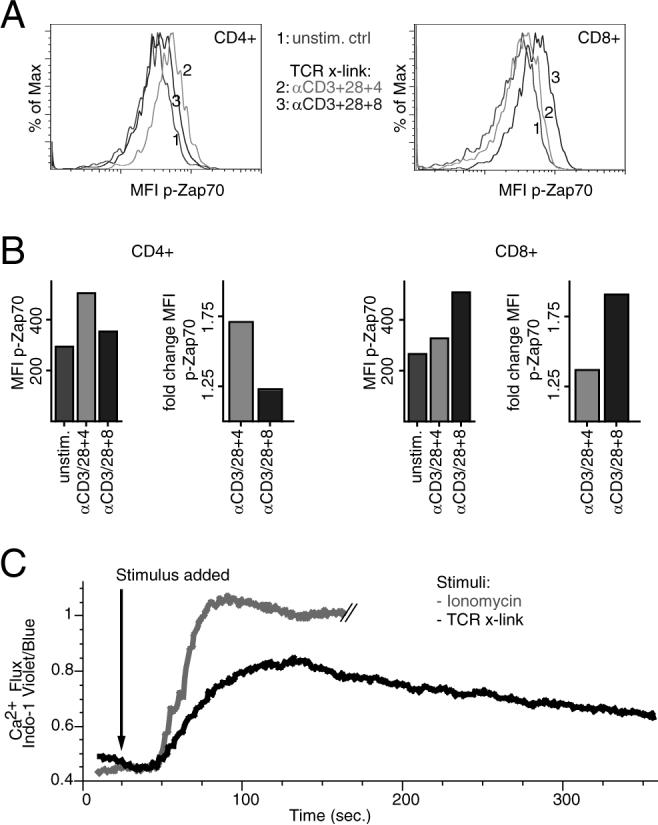
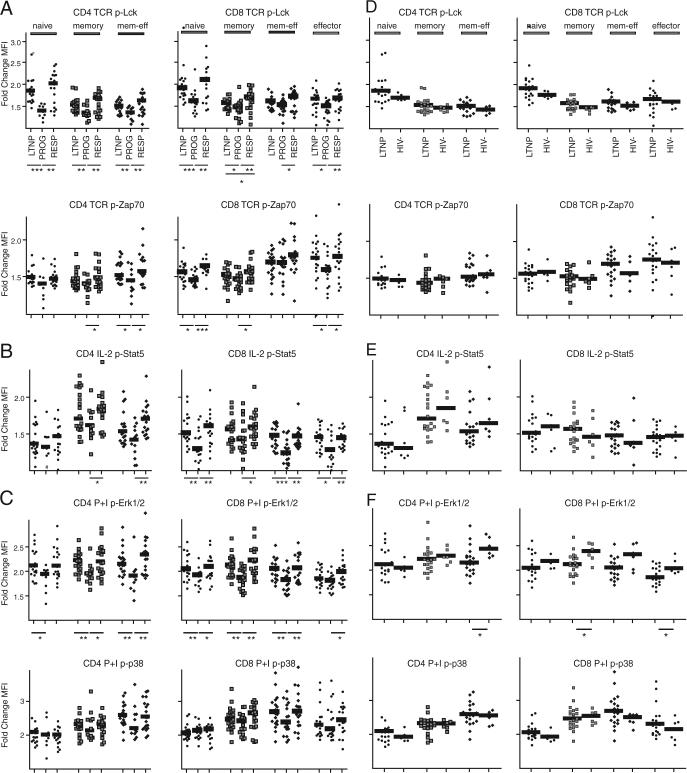
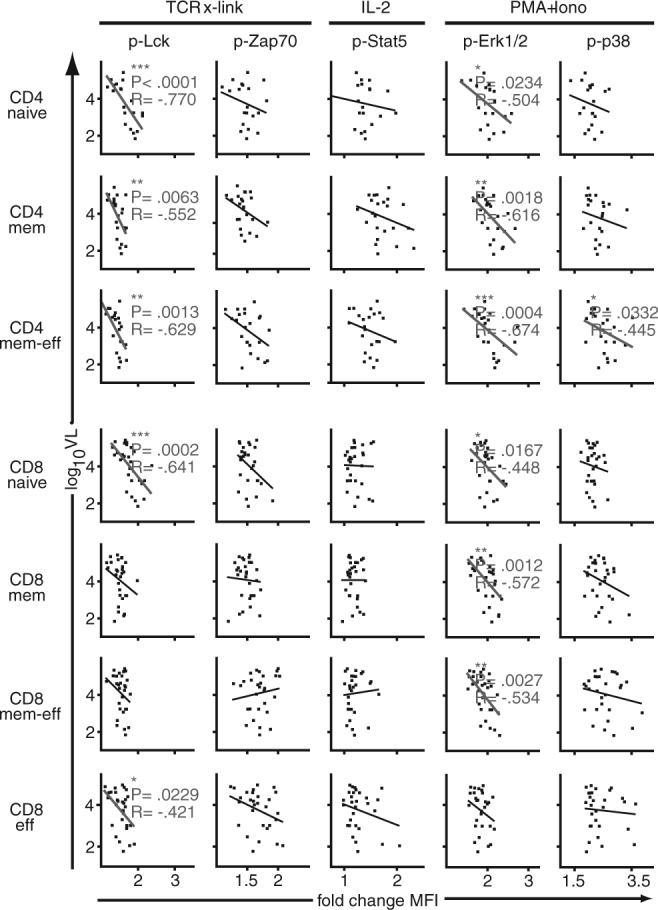
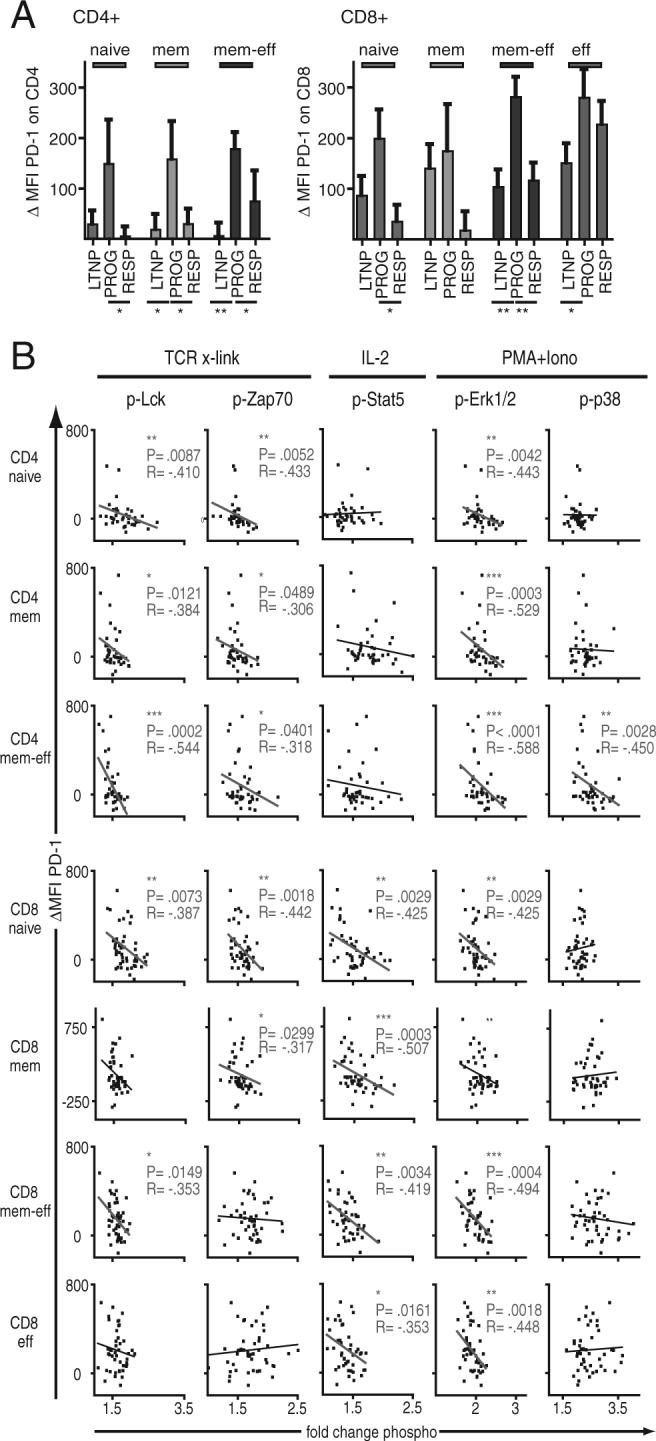
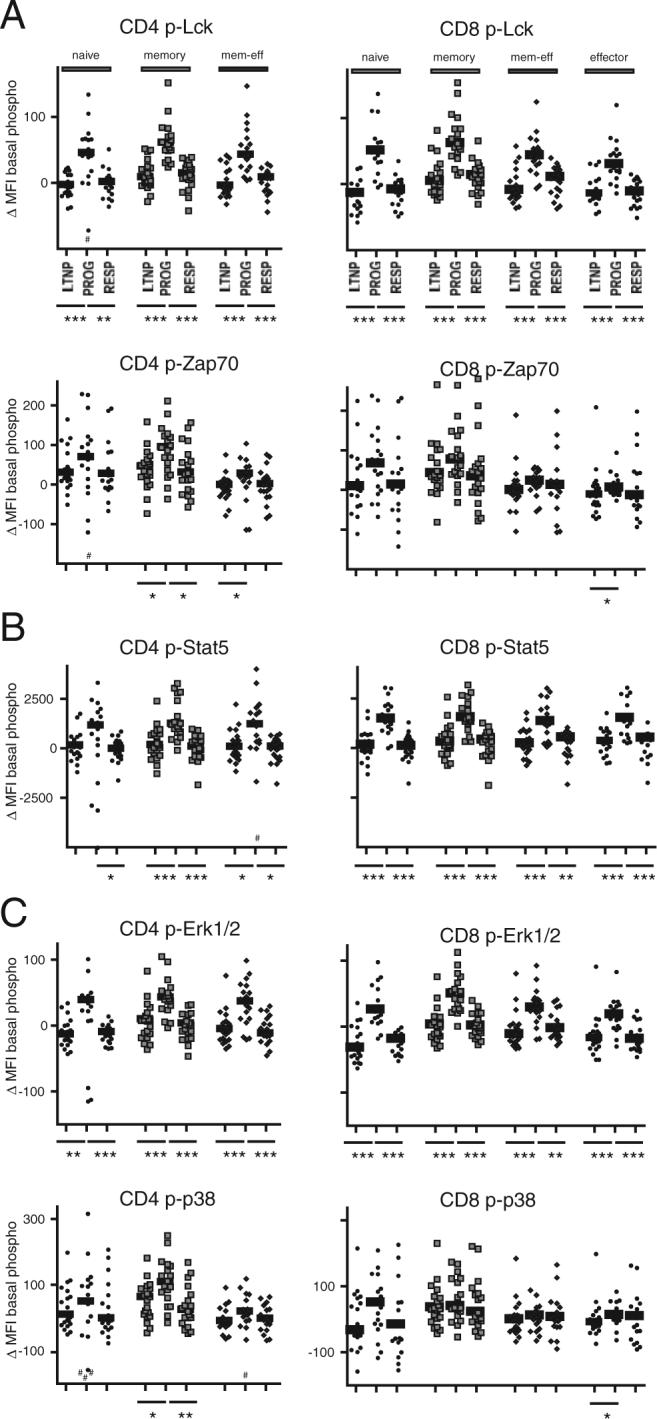
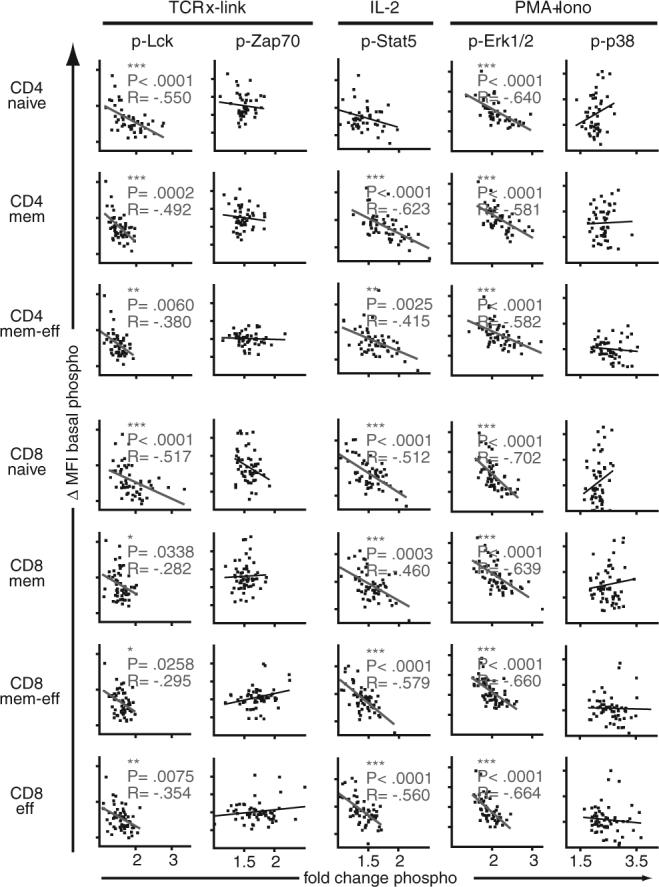
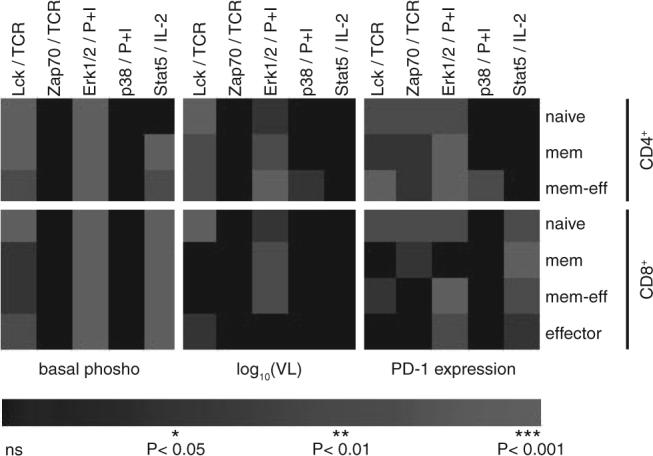
Infection with HIV usually results in chronic activation of the immune system, with profound quantitative and qualitative changes in the T cell compartment. To better understand the mechanistic basis for T cell dysfunction and to discern whether such mechanisms are reversed after effective antiviral treatment, we analyzed changes in signaling pathways of human CD4(+) and CD8(+) T cells from 57 HIV-infected subjects in varying stages of disease progression and treatment, including long-term nonprogressors, progressors, and chronically infected subjects provided effective antiretroviral therapy (responders). A previously described PhosFlow method was adapted and optimized so that protein phosphorylation could be visualized in phenotypically defined subpopulations of CD4(+) and CD8(+) T cells (naive, memory, and effector) by flow cytometry. T cell signaling induced by TCR cross-linking, IL-2, or PMA/ionomycin was found to be blunted within all T cell subpopulations in those with progressive HIV disease compared with long-term nonprogressors and responders. Although alterations in cellular signaling correlated with levels of basal phosphorylation, viral load, and/or expression of programmed death-1, it was the level of basal phosphorylation that appeared to be the factor most dominantly associated with impaired signaling. Notably, provision of effective antiretroviral therapy was associated with a normalization of both basal phosphorylation levels and T cell signaling. These data, in aggregate, suggest that generalized dysfunction of the T cell compartment during progressive HIV disease may be in part dependent upon an increased basal level of phosphorylation, which itself may be due to the heightened state of immune activation found in advanced disease.
Figures
References
-
- Baier M, Werner A, Bannert N, Metzner K, Kurth R. HIV suppression by interleukin-16. Nature. 1995;378:563. - PubMed
-
- Cocchi F, DeVico AL, Garzino-Demo A, Arya SK, Gallo RC, Lusso P. Identification of RANTES, MIP-1 α, and MIP-1 β as the major HIV-suppressive factors produced by CD8+ T cells. Science. 1995;270:1811–1815. - PubMed
-
- Gulzar N, Copeland KF. CD8+ T-cells: function and response to HIV infection. Curr. HIV Res. 2004;2:23–37. - PubMed
Publication types
MeSH terms
Substances
Grants and funding
- AI 52745/AI/NIAID NIH HHS/United States
- UL1 RR 024131/RR/NCRR NIH HHS/United States
- DPI OD 00329/OD/NIH HHS/United States
- K24 AI069994/AI/NIAID NIH HHS/United States
- R01 AI 40312/AI/NIAID NIH HHS/United States
- K24 AI 69994/AI/NIAID NIH HHS/United States
- M01 RR 00083/RR/NCRR NIH HHS/United States
- P30 AI027763/AI/NIAID NIH HHS/United States
- AI 47062/AI/NIAID NIH HHS/United States
- M01 RR000083/RR/NCRR NIH HHS/United States
- R01 AI047062/AI/NIAID NIH HHS/United States
- P30 AI 27763/AI/NIAID NIH HHS/United States
- R01 AI052745/AI/NIAID NIH HHS/United States
- UL1 RR024131/RR/NCRR NIH HHS/United States
- DP1 OD000329/OD/NIH HHS/United States
- R37 AI040312/AI/NIAID NIH HHS/United States
- P30 MH 59037/MH/NIMH NIH HHS/United States
- R01 AI040312/AI/NIAID NIH HHS/United States
LinkOut - more resources
Full Text Sources
Other Literature Sources
Medical
Research Materials
