


What can genome-wide association studies tell us about the genetics of common disease?
- PMID: 18454206
- PMCID: PMC2323402
- DOI: 10.1371/journal.pgen.0040033
What can genome-wide association studies tell us about the genetics of common disease?
Abstract
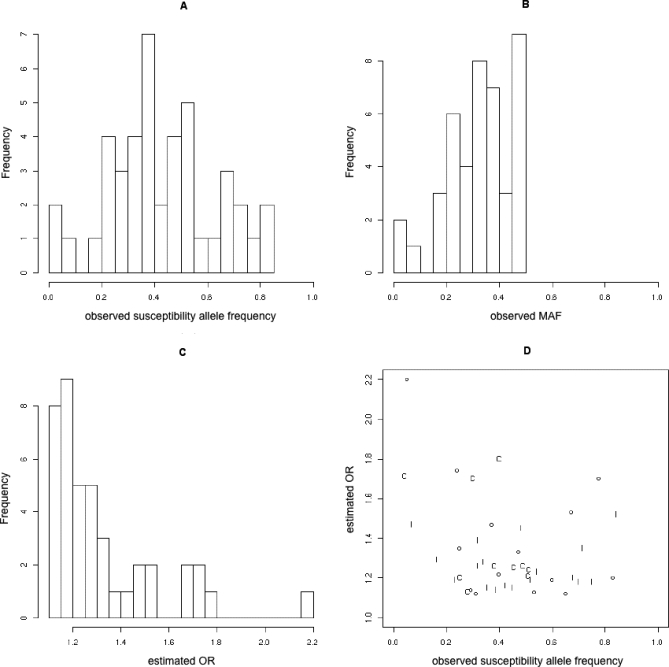
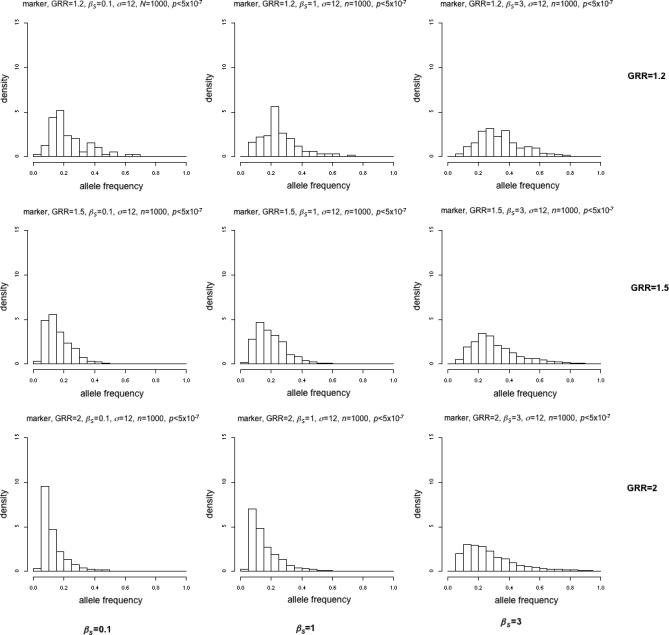
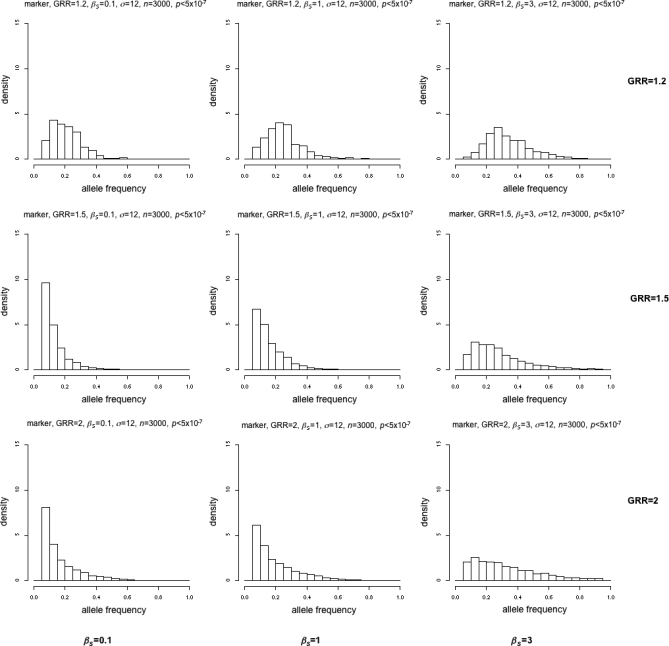
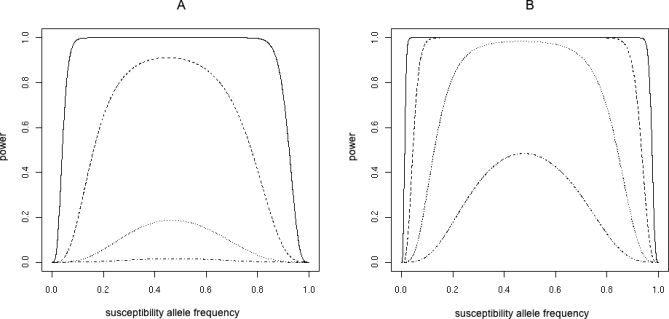
The success of genome-wide association studies relies on much of the risk of common diseases being due to common genetic variants; but evidence for this is inconclusive. The results of published genome-wide association studies are examined to see what can be learnt about the distribution of disease-associated variants and how this might influence future study design. Although replicated disease-associated variants tend to be very common and frequency is inversely correlated with estimated effect size, our simulations suggest that such observations are the result of power. We find that for studies conducted to date, the frequency and effect size of significantly associated alleles are likely to be similar to those of the underlying disease alleles that they represent. Little of the genetic variation of disease has been explained so far, but current studies are only adequately powered to detect very common alleles unless they greatly increase disease risk. Thus, although the truth of the common disease / common variant hypothesis remains undecided, recent successes suggest that there are many more common genetic disease-associated variants, requiring larger studies to be identified.
Conflict of interest statement
Competing interests. The authors have declared that no competing interests exist.
Figures
References
-
- Risch N, Merikangas K. The future of genetic studies of complex human diseases. Science. 1996;273:1516–1517. - PubMed
-
- Lander ES. The new genomics: Global views of biology. Science. 1996;274:536–539. - PubMed
-
- International HapMap Consortium. The International HapMap Project. Nature. 2003;426:789–796. - PubMed
-
- Helgadottir A, Thorleifsson G, Manolescu A, Gretarsdottir S, Blondal T, et al. A common variant on chromosome 9p21 affects the risk of myocardial infarction. Science. 2007;316:1491–1493. - PubMed
Publication types
MeSH terms
Grants and funding
LinkOut - more resources
Full Text Sources
Medical
