


Biomechanical properties of the vaginal wall: effect of pregnancy, elastic fiber deficiency, and pelvic organ prolapse
- PMID: 18455541
- PMCID: PMC2760217
- DOI: 10.1016/j.ajog.2008.02.022
Biomechanical properties of the vaginal wall: effect of pregnancy, elastic fiber deficiency, and pelvic organ prolapse
Abstract
Objective: The purpose of this study was to identify pregnancy-induced changes in biomechanical properties of the vaginal wall and to compare these with fibulin-5 knockout mice (Fbln5(-/-)) with and without prolapse.
Study design: Mid-vaginal segments of nonpregnant and late-pregnant wild-type mice, Fbln5(-/-) with prolapse mice and Fbln5(-/-) mice without prolapse were studied. Tissue length at failure, maximal strain, maximal stress, and tissue stiffness were determined.
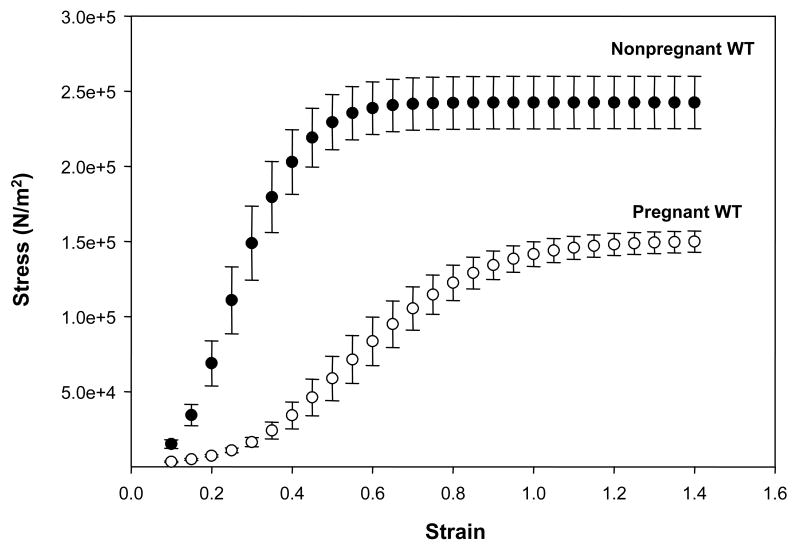
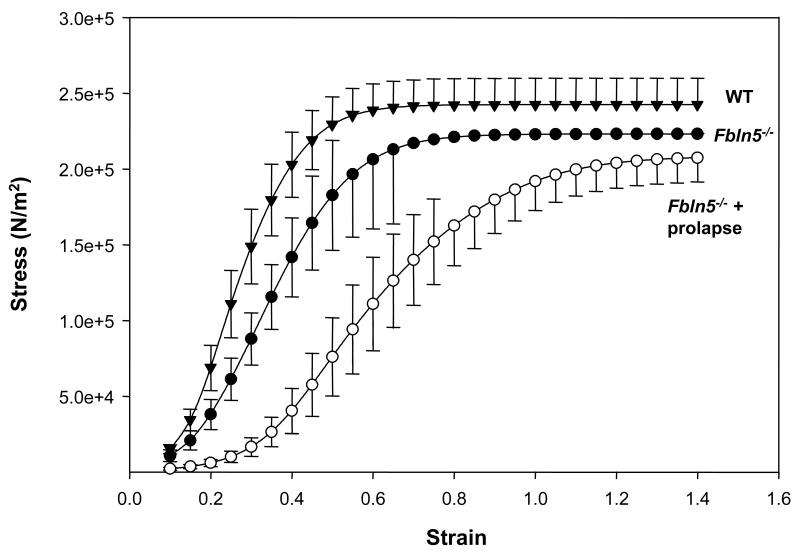
Results: Compared with nonpregnant mice, vaginas of pregnant and Fbln5(-/-) (with prolapse) mice exhibited decreased maximal stress, increased distensibility and strain, and decreased stiffness. Tissues from Fbln5(-/-) mice without prolapse were similar to nonpregnant wild-type animals.
Conclusion: Pregnancy confers remarkable changes in the vaginal wall that include increased distensibility and decreased stiffness and maximal stress. Elastinopathy alone is insufficient to cause significant changes in these properties, but prolapse confers additional alterations in distensibility and stiffness that are similar to those changes that have been observed in pregnancy. These changes may contribute to the poor durability of many restorative surgical procedures for prolapse.
Figures
References
-
- Mant J, Painter R, Vessey M. Epidemiology of genital prolapse: observations from the Oxford Family Planning Association Study. Br J Obstet Gynaecol. 1997;104(5):579–85. - PubMed
-
- Fitzgerald MP, Mollenhauer J, Hale DS, Benson JT, Brubaker L. Urethral collagen morphologic characteristics among women with genuine stress incontinence. Am J Obstet Gynecol. 2000;182:1565–74. - PubMed
-
- Boreham MK, Wai CY, Miller RT, Schaffer JI, Word RA. Morphometric analysis of smooth muscle in the anterior vaginal wall of women with pelvic organ prolapse. Am J Obstet Gynecol. 2002;187(1):56–63. - PubMed
Publication types
MeSH terms
Substances
Grants and funding
LinkOut - more resources
Full Text Sources
Medical
Miscellaneous
