


Molecular survey of beta-lactamases conferring resistance to newer beta-lactams in Enterobacteriaceae isolates from Polish hospitals
- PMID: 18458126
- PMCID: PMC2443902
- DOI: 10.1128/AAC.00043-08
Molecular survey of beta-lactamases conferring resistance to newer beta-lactams in Enterobacteriaceae isolates from Polish hospitals
Abstract
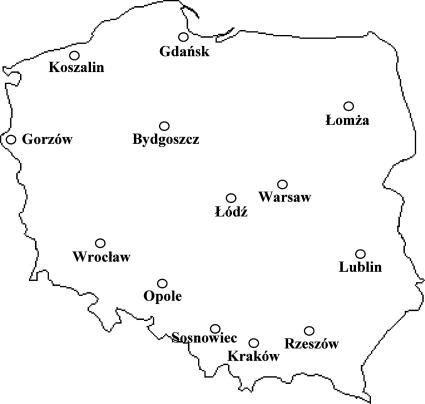
The first national survey of resistance to newer beta-lactams in nosocomial populations of Enterobacteriaceae in Poland was performed. The study covered all nonrepetitive enterobacterial isolates cultured from specimens from inpatients in 13 regional secondary-care hospitals from November 2003 to January 2004. Among 2,388 isolates, the predominant species was Escherichia coli (59.6%), followed by Proteus mirabilis (14.5%) and Klebsiella spp. (8.5%). The frequency of extended-spectrum beta-lactamases (ESBLs) was very high, with ESBLs present in 11.1% of all isolates and 40.4% of Klebsiella pneumoniae isolates, the latter value greatly exceeding that for E. coli (2.5%). The contribution of outbreak isolates was significant, resulting, for example, in a particularly high rate of ESBL producers among Serratia marcescens isolates (70.8%). The pool of ESBL types was overwhelmingly dominated (81.7%) by CTX-M-like beta-lactamases CTX-M-3 (80.6%) and CTX-M-15, with SHV types (17.5%; SHV-2, SHV-5, and SHV-12) and sporadic TEM-like enzymes (0.7%; TEM-19 and TEM-48) being the next most frequent. Acquired AmpC-type cephalosporinases were observed exclusively in P. mirabilis, in 20.5% of the isolates of this species (compared with the frequency of ESBL producers of 11.5% of P. mirabilis isolates). All these cephalosporinases (CMY-12, CMY-15, and a novel variant, CMY-38) originated from Citrobacter freundii. Four isolates of E. coli (two isolates), K. pneumoniae (one isolate), and P. mirabilis (one isolate) produced class A inhibitor-resistant beta-lactamases (TEM-30, TEM-32, TEM-37, and SHV-49), being the first of such producers identified in Poland. The survey documented both specific and more global characteristics of the epidemiology of the beta-lactamase-mediated resistance in enterobacteria from Polish hospitals and demonstrated that the ESBL frequency has reached an alarming level.
Figures
References
-
- Baraniak, A., J. Fiett, W. Hryniewicz, P. Nordmann, and M. Gniadkowski. 2002. Ceftazidime-hydrolyzing CTX-M-15 extended-spectrum β-lactamase (ESBL) in Poland. J. Antimicrob. Chemother. 50:393-396. - PubMed
-
- Bauernfeind, A., H. Grimm, and S. Schweighart. 1990. A new plasmidic cefotaximase in a clinical isolate of Escherichia coli. Infection 18:294-298. - PubMed
-
- Beceiro, A., and G. Bou. 2004. Class C β-lactamases: an increasing problem worldwide. Rev. Med. Microbiol. 15:141-152.
-
- Belaaouaj, A., C. Lapoumeroulie, M. M. Canica, G. Vedel, P. Névot, R. Krishnamoorthy, and G. Paul. 1994. Nucleotide sequences of the genes coding for the TEM-like β-lactamases IRT-1 and IRT-2 (formerly called TRI-1 and TRI-2). FEMS Microbiol. Lett. 120:75-80. - PubMed
Publication types
MeSH terms
Substances
Associated data
- Actions
LinkOut - more resources
Full Text Sources
Other Literature Sources
Medical
Miscellaneous
