


Centrosomal RNA correlates with intron-poor nuclear genes in Spisula oocytes
- PMID: 18458332
- PMCID: PMC2383940
- DOI: 10.1073/pnas.0802293105
Centrosomal RNA correlates with intron-poor nuclear genes in Spisula oocytes
Abstract
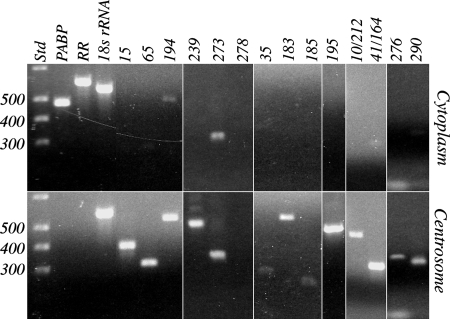
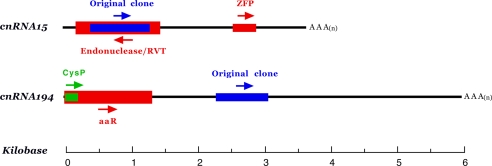
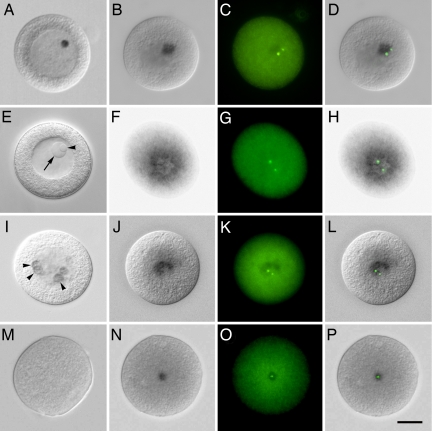
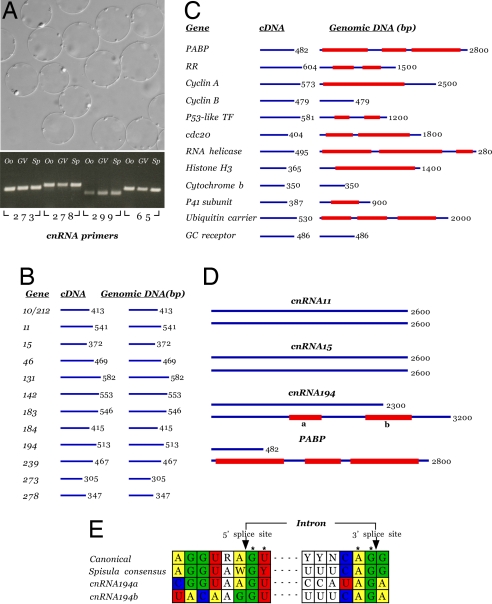
The evolutionary origin of centriole/kinetosomes, centrosomes, and other microtubule organizing centers (MTOCs), whether by direct filiation or symbiogenesis, has been controversial for >50 years. Centrioles, like mitochondria and chloroplasts, duplicate independently of the nucleus and constitute a heritable system independent of chromosomal DNA. Nucleic acids endogenous to the MTOC would support evolutionary origin by symbiogenesis. To date, most reports of centrosome-associated nucleic acids have used generalized reagents such as RNases and nucleic acid dyes. Here, from a library of RNAs extracted from isolated surf clam (Spisula solidissima) centrosomes, we describe a group of centrosome-associated transcripts representing a structurally unique intron-poor collection of nuclear genes skewed toward nucleic acid metabolism. Thus, we resolve the debate over the existence of centrosome-associated RNA (cnRNA). A subset of cnRNAs contain functional domains that are highly conserved across distant taxa, such as nucleotide polymerase motifs. In situ localization of cnRNA65, a molecule with an RNA polymerase domain, showed it is present in the intact oocyte nucleus (germinal vesicle). Its expression, therefore, precedes the appearance of gamma-tubulin-containing centrosomes. At this stage, the in situ signal resembles the nucleolinus, a poorly understood organelle proposed to play a role in spindle formation. After oocyte activation and germinal vesicle breakdown, cnRNA65 persists as a cytoplasmic patch within which gamma-tubulin-stained centrosomes can be seen. These observations provoke the question of whether cnRNAs and the nucleolinus serve as cytological progenitors of the centrosome and may support a symbiogenetic model for its evolution.
Conflict of interest statement
The authors declare no conflict of interest.
Figures
References
-
- Chapman MJ, Dolan MF, Margulis L. Centrioles and kinetosomes: Form, function, and evolution. Q Rev Biol. 2000;75:409–429. - PubMed
-
- Chapman MJ, Alliegro MC. A symbiogenetic basis for the centrosome? Symbiosis. 2007;44:23–32.
-
- Bornens M, Azimzadeh J. Origins and Evolution of Eukaryotic Endomembranes and Cytoskeleton. In: Jekely G, editor. Austin, TX: Landes Bioscience; 2007.
-
- Palazzo RE, Vogel JM. Isolation of centrosomes from Spisula solidissima oocytes. Methods Cell Biol. 1999;61:35–56. - PubMed
-
- Montgomery TH. Comparative cytological studies, with especial regard to the morphology of the nucleolus. J Morph. 1899;15:265.
Publication types
MeSH terms
Substances
Grants and funding
LinkOut - more resources
Full Text Sources
