Individual and societal effects of mental disorders on earnings in the United States: results from the national comorbidity survey replication
- PMID: 18463104
- PMCID: PMC2410028
- DOI: 10.1176/appi.ajp.2008.08010126
Individual and societal effects of mental disorders on earnings in the United States: results from the national comorbidity survey replication
Abstract
Objective: The purpose of this report was to update previous estimates of the association between mental disorders and earnings. Current estimates for 2002 are based on data from the National Comorbidity Survey Replication (NCS-R).
Method: The NCS-R is a nationally representative survey of the U.S. household population that was administered from 2001 to 2003. Following the same basic approach as prior studies, with some modifications to improve model fitting, the authors predicted personal earnings in the 12 months before interview from information about 12-month and lifetime DSM-IV mental disorders among respondents ages 18-64, controlling for sociodemographic variables and substance use disorders. The authors used conventional demographic rate standardization methods to distinguish predictive effects of mental disorders on amount earned by persons with earnings from predictive effects on probability of having any earnings.
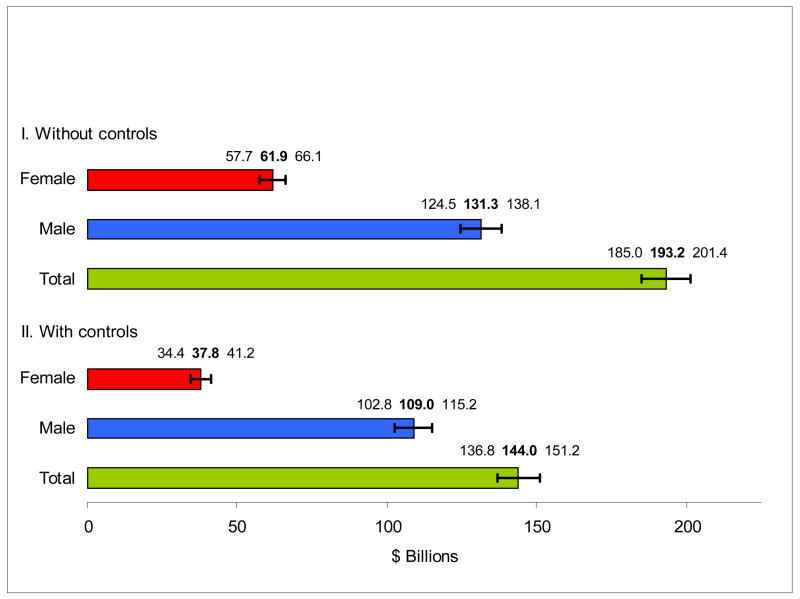
Results: A DSM-IV serious mental illness in the preceding 12 months significantly predicted reduced earnings. Other 12-month and lifetime DSM-IV/CIDI mental disorders did not. Respondents with serious mental illness had 12-month earnings averaging $16,306 less than other respondents with the same values for control variables ($26,435 among men, $9,302 among women), for a societal-level total of $193.2 billion. Of this total, 75.4% was due to reduced earnings among mentally ill persons with any earnings (79.6% men, 69.6% women). The remaining 24.6% was due to reduced probability of having any earnings.
Conclusions: These results add to a growing body of evidence that mental disorders are associated with substantial societal-level impairments that should be taken into consideration when making decisions about the allocation of treatment and research resources.
Figures
Comment in
-
Assessing the economic costs of serious mental illness.Am J Psychiatry. 2008 Jun;165(6):663-5. doi: 10.1176/appi.ajp.2008.08030366. Am J Psychiatry. 2008. PMID: 18519528 No abstract available.
References
-
- Rice DP, Kelman S, Miller LS, Dunmeyer S. The Economic Costs of Alcohol and Drug Abuse and Mental Illness: 1985. Rockville, MD: National Institute on Drug Abuse; 1990.
-
- Robins LN, Regier DA, editors. Psychiatric Disorders in America: The Epidemiologic Catchment Area Study. New York, NY: The Free Press; 1991.
-
- Harwood H, Ameen A, Denmead G, Englert E, Fountain D, Livermore G. Report to National Institute of Mental Health. Falls Church, VA: Lewin Group; 2000. The Economic Cost of Mental Illness, 1992.
-
- Kessler RC, McGonagle KA, Zhao S, Nelson CB, Hughes M, Eshleman S, Wittchen HU, Kendler KS. Lifetime and 12-month prevalence of DSM-III-R psychiatric disorders in the United States. Results from the National Comorbidity Survey. Arch Gen Psychiatry. 1994;51:8–19. - PubMed
Publication types
MeSH terms
Grants and funding
LinkOut - more resources
Full Text Sources
Medical