


Effects of chemotherapeutic agents 5-fluorouracil and methotrexate alone and combined in a mouse model of learning and memory
- PMID: 18463849
- PMCID: PMC3263345
- DOI: 10.1007/s00213-008-1175-y
Effects of chemotherapeutic agents 5-fluorouracil and methotrexate alone and combined in a mouse model of learning and memory
Abstract
Rationale: The concern that adjuvant cancer chemotherapy agents cause cognitive impairment in a significant number of patients has been expressed by patients and healthcare providers, but clinical studies have yielded conflicting results to date.
Objective: We directly tested two commonly used chemotherapeutic agents in a mouse model of learning and memory.
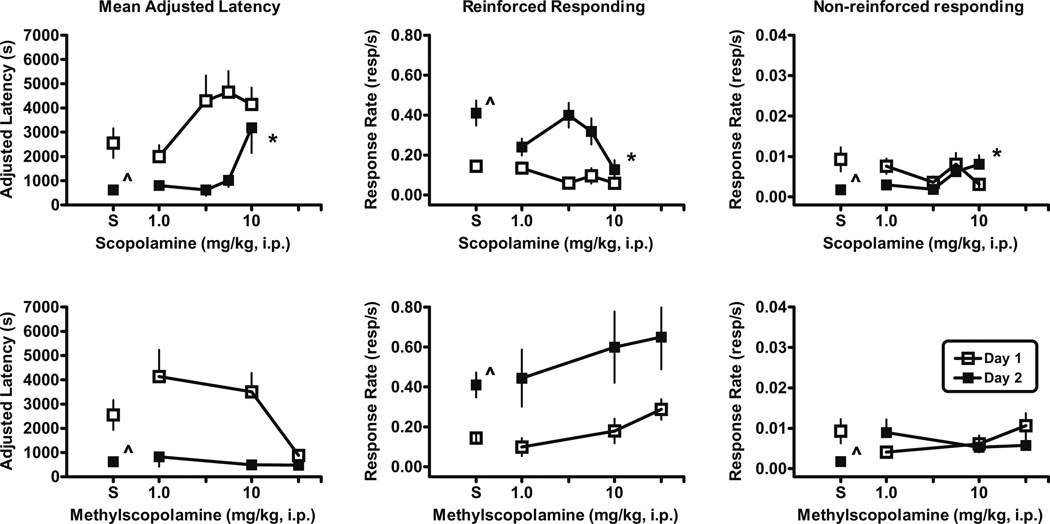
Materials and methods: In the present study, mice were conditioned to respond for a liquid reinforcer (Ensure solution) in the presence of an audible tone on day 1 as a measure of acquisition and were then required to perform the same response on day 2 as a measure of retrieval and retention. Methotrexate and 5-fluorouracil were administered prior to the day 1 session.
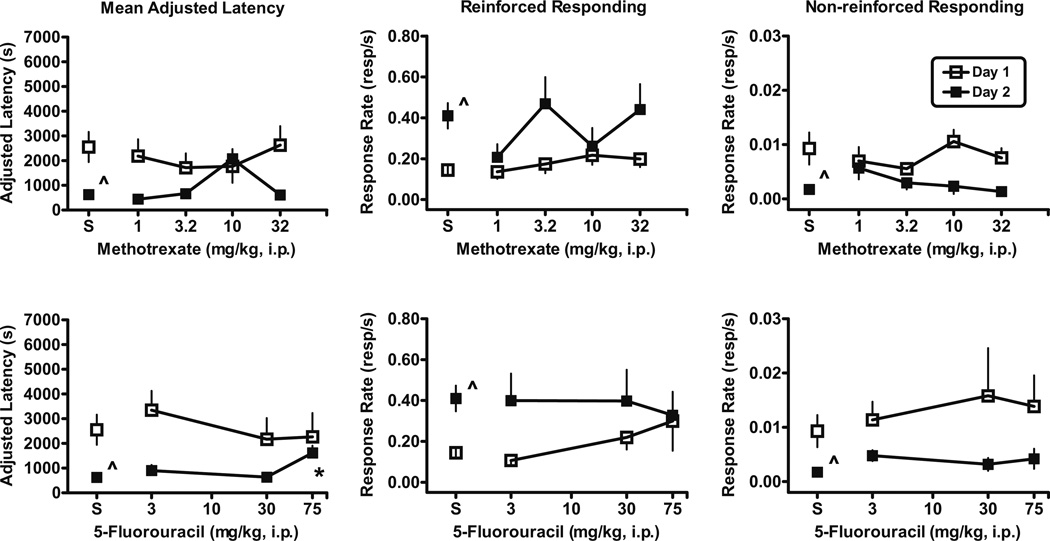
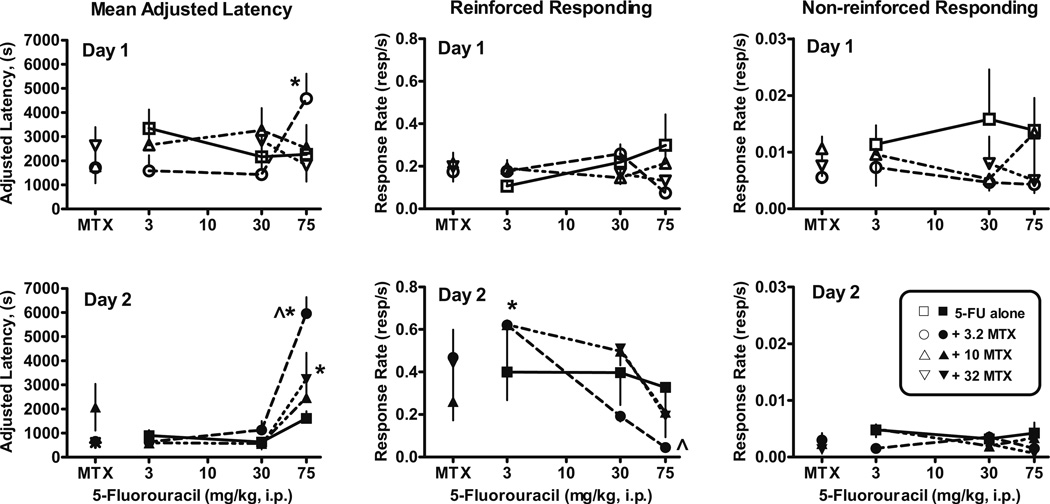
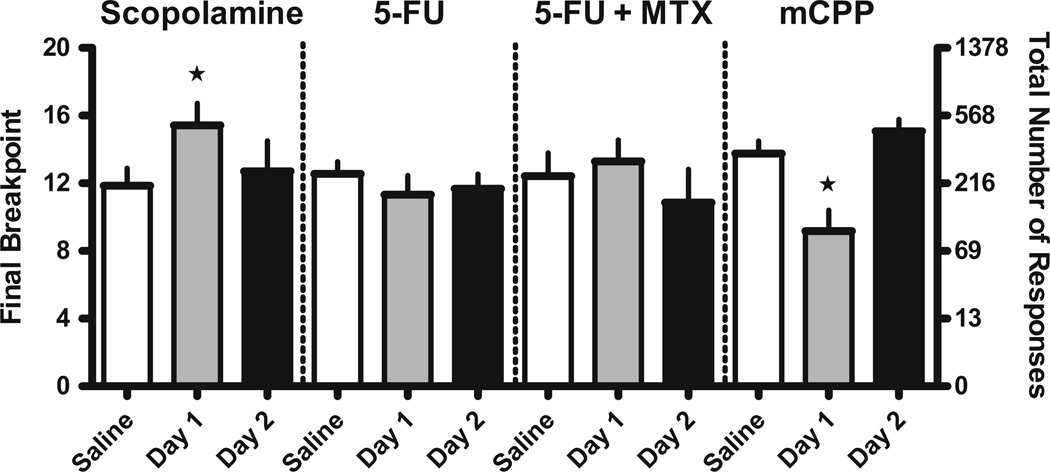
Results: Methotrexate (1.0-32 mg/kg) alone failed to alter mean latency acquisition, retrieval, or reinforced response rates. Similar to scopolamine, a known amnesic in this assay, 5-fluorouracil (3-75 mg/kg) failed to alter response rates or acquisition latency on day 1 but significantly altered latency to retrieve a previously learned response on day 2. In combination, 3.2 mg/kg methotrexate plus 75 mg/kg 5-fluorouracil significantly increased day 1 and day 2 acquisition and retrieval latencies without altering response rates or motivation to respond as measured by progressive ratio responding.
Conclusion: Taken together, these data demonstrate that 5-fluorouracil causes increased latencies for retrieval of previously learned behavioral responses and that combination of chemotherapeutic agents may produce greater delays than either agent alone, including when neither agent alone does so.
Conflict of interest statement
Figures
References
-
- Ahles TA, Saykin AJ. Breast cancer chemotherapy-related cognitive dysfunction. Clin Breast Cancer. 2002;3 Suppl 3:S84–S90. - PubMed
-
- Albritton RL, Coen DM, Golan DE. Principles of combination chemotherapy. In: Golan DE, Tashjian AH, Armstrong EJ, et al., editors. Principles of pharmacology, the pathophysiologic basis of drug therapy. Philadelphia PA: Lippincott Williams & Wilkins; 2005. pp. 603–613.
-
- Barrett JE, Vanover KE. Chapter 8 Assessment of learning and memory using the autoshaping of operant responding in mice. Current Protocols in Neuroscience. 2003 8.5F.1-8.5F. - PubMed
-
- Brezden CB, Phillips KA, Abdolell M, Bunston T, Tannock IF. Cognitive function in breast cancer patients receiving adjuvant chemotherapy. J Clin Oncol. 2000;18:2695–2701. - PubMed
MeSH terms
Substances
Grants and funding
LinkOut - more resources
Full Text Sources
Medical
