


The reorienting system of the human brain: from environment to theory of mind
- PMID: 18466742
- PMCID: PMC2441869
- DOI: 10.1016/j.neuron.2008.04.017
The reorienting system of the human brain: from environment to theory of mind
Abstract
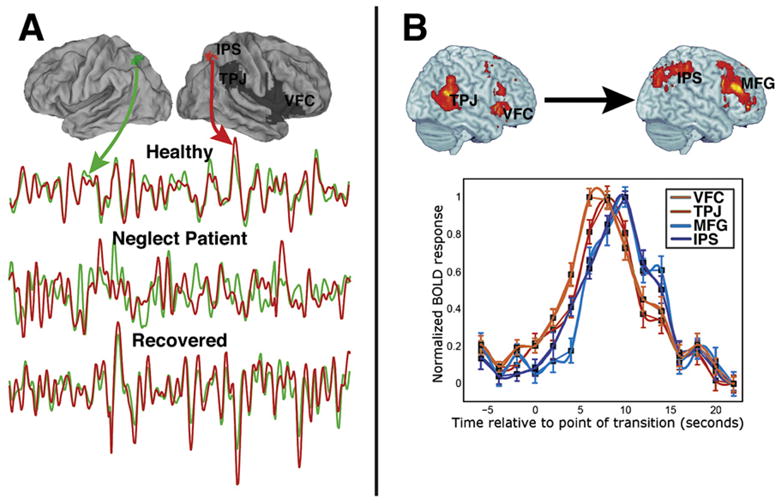
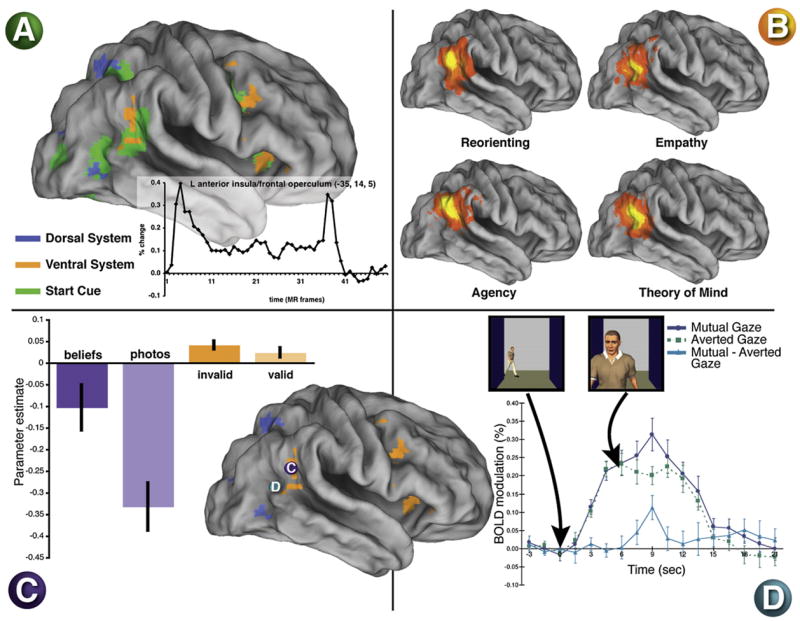
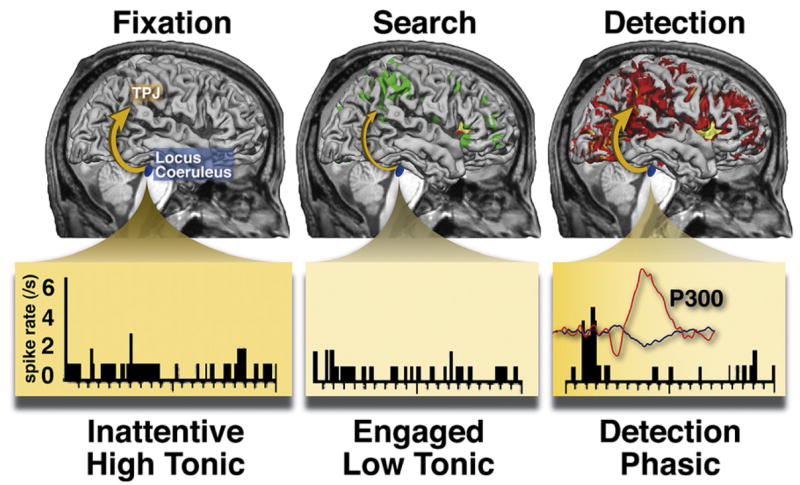
Survival can depend on the ability to change a current course of action to respond to potentially advantageous or threatening stimuli. This "reorienting" response involves the coordinated action of a right hemisphere dominant ventral frontoparietal network that interrupts and resets ongoing activity and a dorsal frontoparietal network specialized for selecting and linking stimuli and responses. At rest, each network is distinct and internally correlated, but when attention is focused, the ventral network is suppressed to prevent reorienting to distracting events. These different patterns of recruitment may reflect inputs to the ventral attention network from the locus coeruleus/norepinephrine system. While originally conceptualized as a system for redirecting attention from one object to another, recent evidence suggests a more general role in switching between networks, which may explain recent evidence of its involvement in functions such as social cognition.
Figures

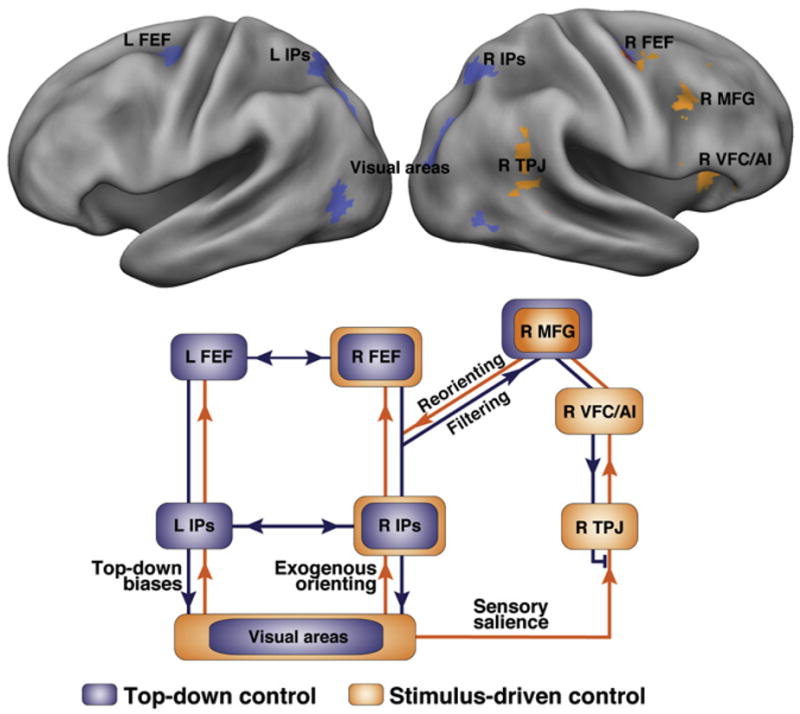
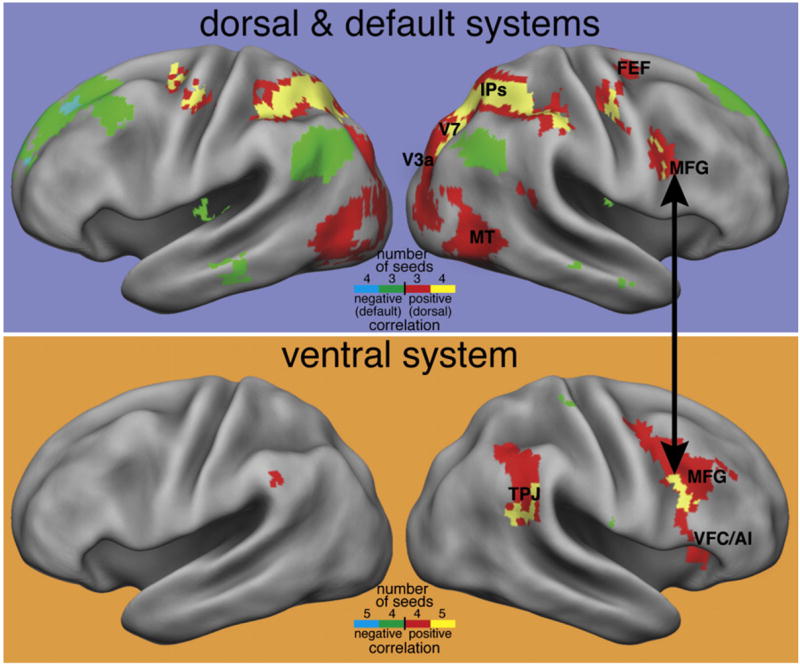
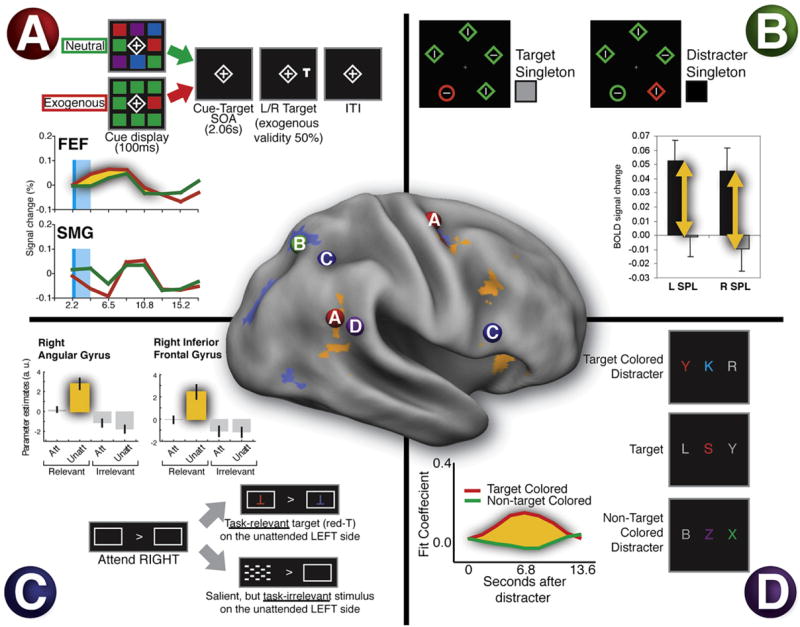
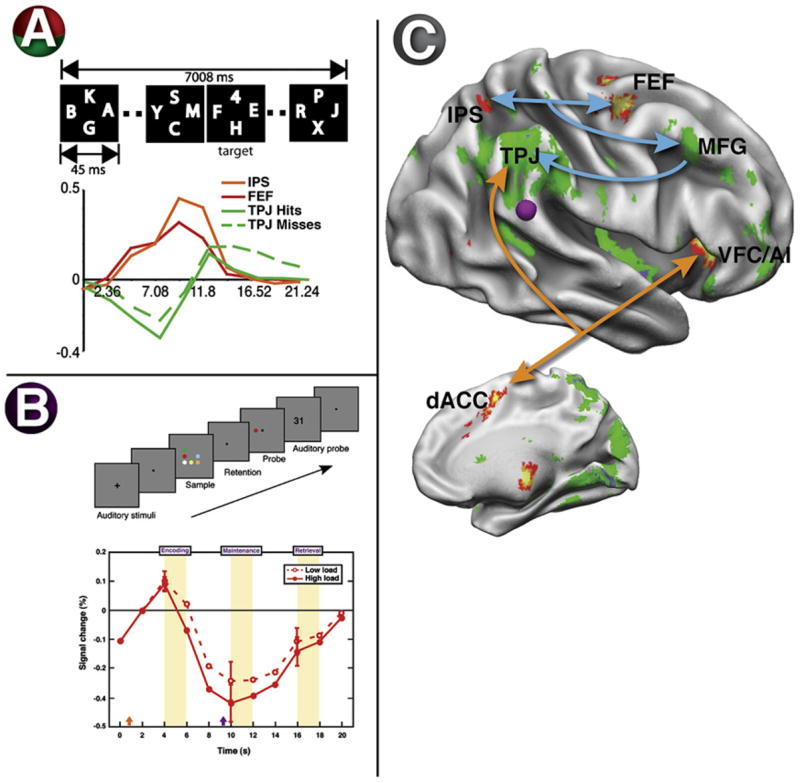
References
-
- Allison T, Puce A, McCarthy G. Social perception from visual cues: role of the STS region. Trends Cogn Sci. 2000;4:267–278. - PubMed
-
- Arrington CM, Carr TH, Mayer AR, Rao SM. Neural mechanisms of visual attention: object-based selection of a region in space. J Cogn Neurosci. 2000;12:106–117. - PubMed
-
- Astafiev SV, Shulman GL, Corbetta M. Visuospatial reorienting signals in the human temporoparietal junction are independent of response selection. Eur J Neurosci. 2006;23:591–596. - PubMed
Publication types
MeSH terms
Grants and funding
LinkOut - more resources
Full Text Sources
Other Literature Sources
Medical
