Insulin and dexamethasone dynamically regulate adipocyte 11beta-hydroxysteroid dehydrogenase type 1
- PMID: 18467433
- PMCID: PMC2488250
- DOI: 10.1210/en.2008-0088
Insulin and dexamethasone dynamically regulate adipocyte 11beta-hydroxysteroid dehydrogenase type 1
Abstract
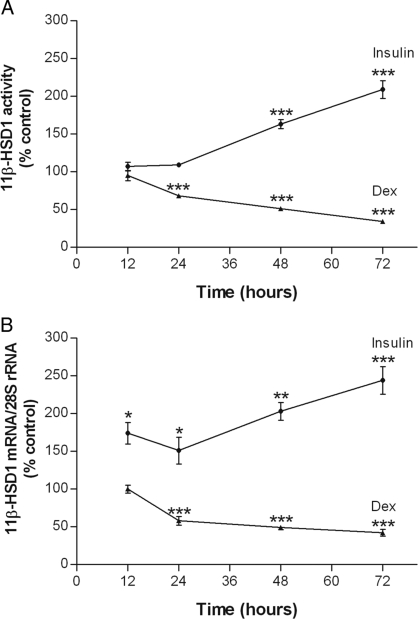
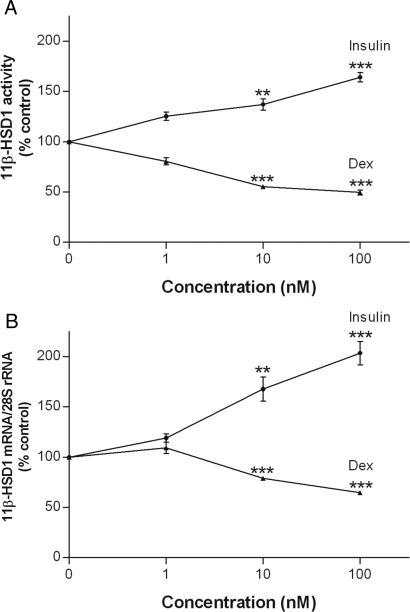
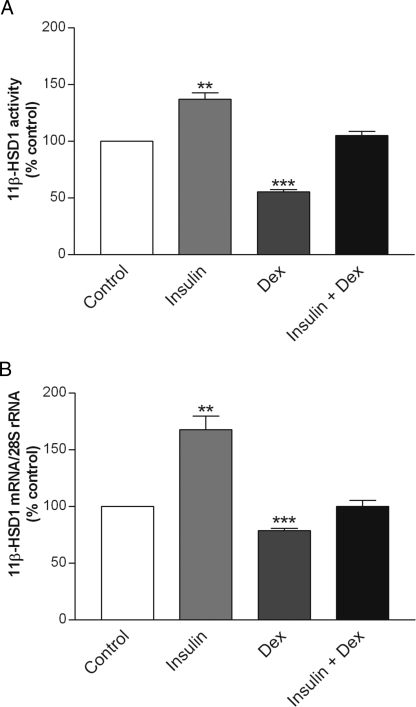
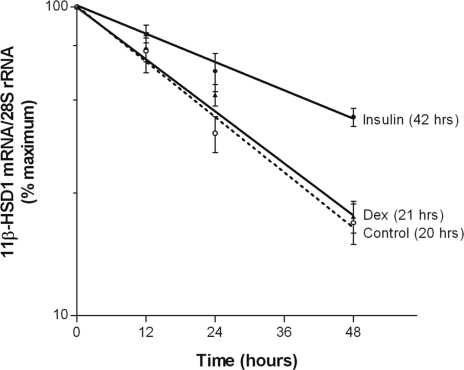
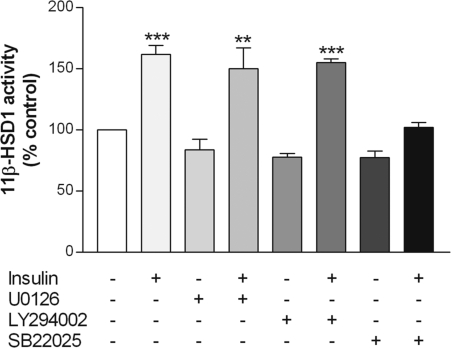
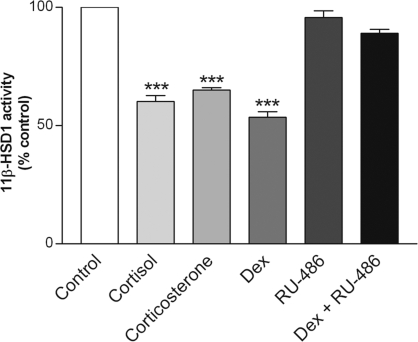
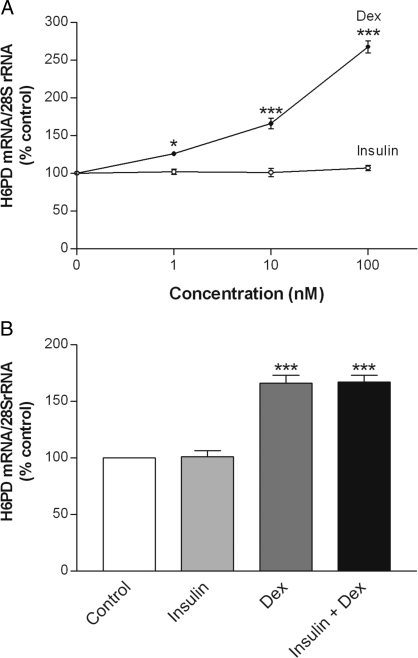
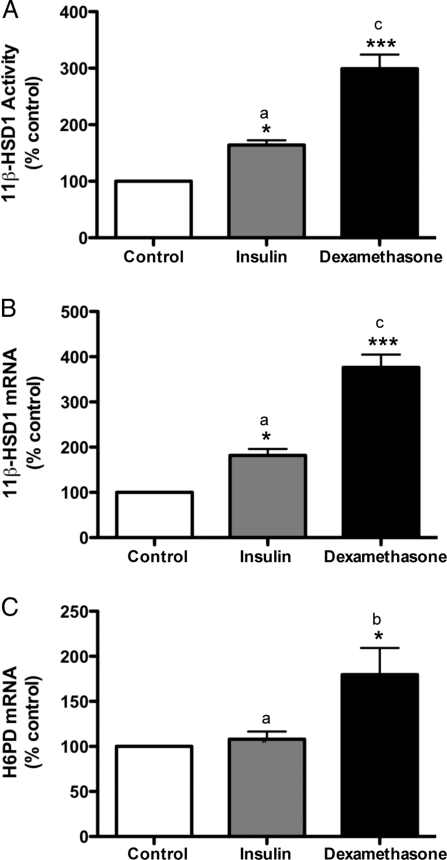
The adipocyte enzyme 11beta-hydroxysteroid dehydrogenase type 1 (11beta-HSD1) amplifies local glucocorticoid action by generating active glucocorticoids from inactive metabolites and has emerged as a key player in the pathogenesis of central obesity and metabolic syndrome. However, the regulation of adipocyte 11beta-HSD1 is incompletely understood. Therefore, the present study was designed to investigate the effects of insulin and glucocorticoid as well as their underlying molecular mechanisms on 11beta-HSD1 activity and expression in 3T3-L1 adipocytes and determine whether the in vitro findings could be confirmed in vivo. Our main in vitro findings are 1) insulin stimulated whereas dexamethasone inhibited 11beta-HSD1 activity and expression in a time- and concentration-dependent manner; 2) the effect of dexamethasone was mimicked by both cortisol and corticosterone but blocked by the glucocorticoid receptor antagonist RU486; 3) the p38 MAPK inhibitor SB220025, but not the ERK inhibitor U0126 or the phosphatidylinositol 3-kinase inhibitor LY294002, prevented insulin stimulation of 11beta-HSD1 activity; and 4) although dexamethasone did not alter the half-life of 11beta-HSD1 mRNA, insulin doubled it. Taken together, these in vitro results demonstrate that insulin stimulates adipocyte 11beta-HSD1 through a posttranscriptional mechanism that involves activation of the p38 MAPK signaling pathway, whereas dexamethasone exerts an opposite effect by a glucocorticoid receptor-mediated transcriptional mechanism. In contrast, both insulin and dexamethasone augmented 11beta-HSD1 activity and expression in rat white adipose tissue in vivo, thus confirming the role of insulin but revealing a fundamental difference regarding the role of dexamethasone in regulating adipocyte 11beta-HSD1 between the two model systems.
Figures
References
-
- Newell-Price J, Bertagna X, Grossman AB, Nieman LK 2006 Cushing’s syndrome. Lancet 367:1605–1617 - PubMed
-
- Raff H, Findling JW 2003 A physiologic approach to diagnosis of the Cushing syndrome. Ann Intern Med 138:980–991 - PubMed
-
- Masuzaki H, Paterson J, Shinyama H, Morton NM, Mullins JJ, Seckl JR, Flier JS 2001 A transgenic model of visceral obesity and the metabolic syndrome. Science 294:2166–2170 - PubMed
-
- Morton NM, Paterson JM, Masuzaki H, Holmes MC, Staels B, Fievet C, Walker BR, Flier JS, Mullins JJ, Seckl JR 2004 Novel adipose tissue-mediated resistance to diet-induced visceral obesity in 11β-hydroxysteroid dehydrogenase type 1-deficient mice. Diabetes 53:931–938 - PubMed
-
- Kotelevtsev Y, Holmes MC, Burchell A, Houston PM, Schmoll D, Jamieson P, Best R, Brown R, Edwards CR, Seckl JR, Mullins JJ 1997 11β-Hydroxysteroid dehydrogenase type 1 knockout mice show attenuated glucocorticoid-inducible responses and resist hyperglycemia on obesity or stress. Proc Natl Acad Sci USA 94:14924–14929 - PMC - PubMed
Publication types
MeSH terms
Substances
LinkOut - more resources
Full Text Sources
Medical
Miscellaneous