


Insulin-like growth factor-II is increased in systemic sclerosis-associated pulmonary fibrosis and contributes to the fibrotic process via Jun N-terminal kinase- and phosphatidylinositol-3 kinase-dependent pathways
- PMID: 18467708
- PMCID: PMC2408418
- DOI: 10.2353/ajpath.2008.071021
Insulin-like growth factor-II is increased in systemic sclerosis-associated pulmonary fibrosis and contributes to the fibrotic process via Jun N-terminal kinase- and phosphatidylinositol-3 kinase-dependent pathways
Abstract
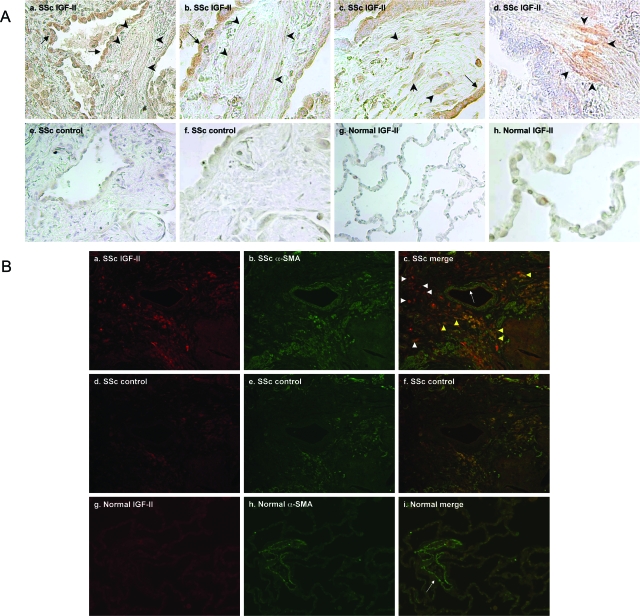
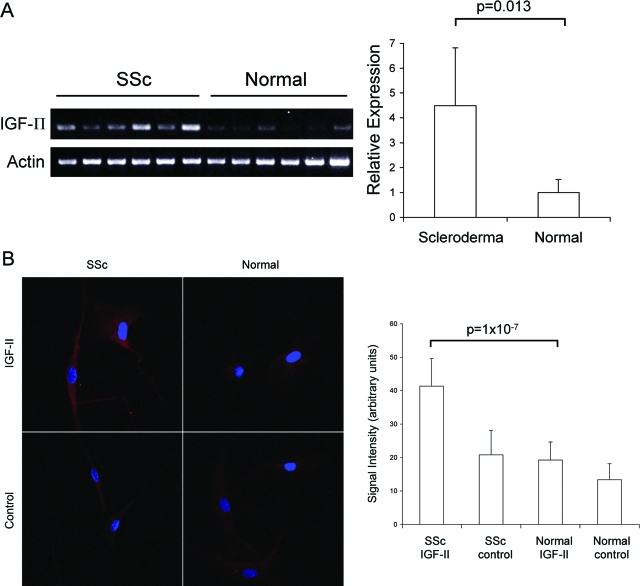
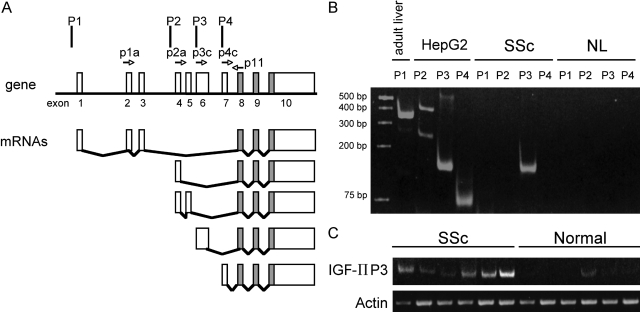
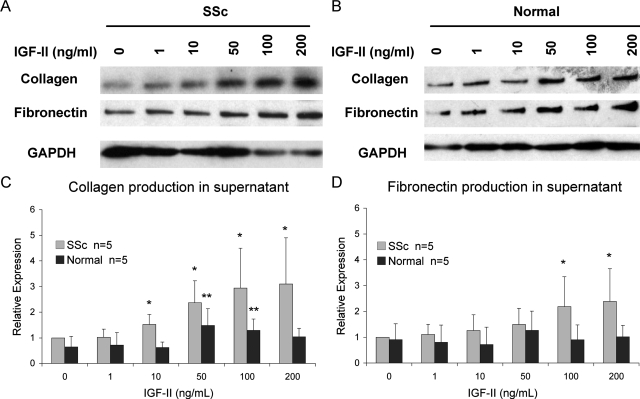
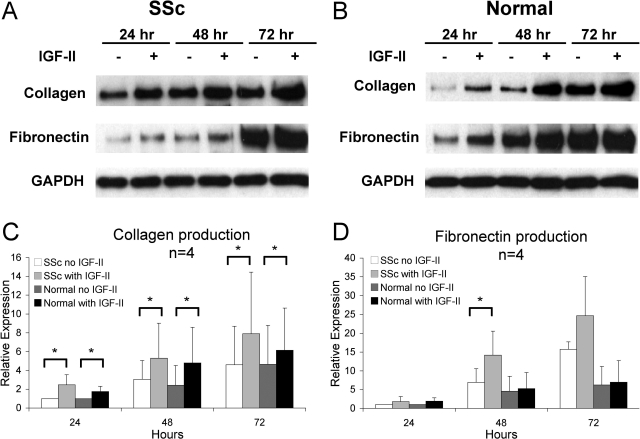
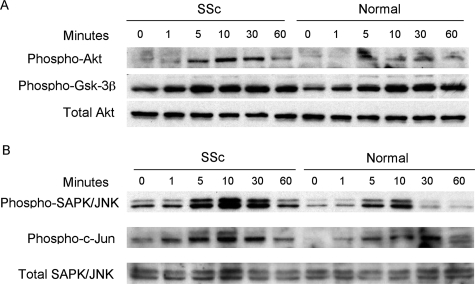
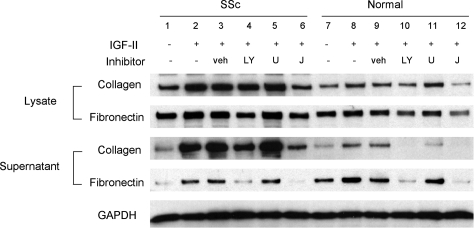
Systemic sclerosis (SSc)-related pulmonary fibrosis, for which there are few effective therapies, is the most common cause of SSc-related mortality. We examined insulin-like growth factor (IGF)-II expression in explanted lung tissues from control and SSc patients to determine its role in the pathogenesis of fibrosis. IGF-II levels in vivo were detected using immunohistochemistry. Primary lung fibroblasts were cultured from lung tissues, and IGF-II mRNA was measured using reverse transcriptase-polymerase chain reaction. Western blot analysis measured extracellular matrix (ECM) production and phosphorylated signaling molecules. Immunostaining revealed increased IGF-II expression in fibroblastic foci of SSc lungs. Furthermore, primary SSc lung fibroblasts had a fourfold increase in IGF-II mRNA and a twofold increase in IGF-II protein compared with normal lung fibroblasts. IGF-II mRNA in SSc lung fibroblasts was expressed primarily from the P3 promoter of the IGF-II gene, and IGF-II induced both a dose- and time-dependent increase in collagen type I and fibronectin production. IGF-II triggered the activation of both phosphatidylinositol-3 kinase and Jun N-terminal kinase signaling cascades, the inhibition of which diminished IGF-II-induced ECM production. Our study demonstrates increased local IGF-II expression in SSc-associated pulmonary fibrosis both in vitro and in vivo as well as IGF-II-induced ECM production through both phosphatidylinositol-3 kinase- and Jun N-terminal kinase-dependent pathways. Our results provide novel insights into the role of IGF-II in the pathogenesis of SSc-associated pulmonary fibrosis.
Figures
References
-
- Harrison NK, Cambrey AD, Myers AR, Southcott AM, Black CM, du Bois RM, Laurent GJ, McAnulty RJ. Insulin-like growth factor-I is partially responsible for fibroblast proliferation induced by bronchoalveolar lavage fluid from patients with systemic sclerosis. Clin Sci (Lond) 1994;86:141–148. - PubMed
-
- Homma S, Nagaoka I, Abe H, Takahashi K, Seyama K, Nukiwa T, Kira S. Localization of platelet-derived growth factor and insulin-like growth factor I in the fibrotic lung. Am J Respir Crit Care Med. 1995;152:2084–2089. - PubMed
-
- Vanhee D, Gosset P, Wallaert B, Voisin C, Tonnel AB. Mechanisms of fibrosis in coal workers’ pneumoconiosis. Increased production of platelet-derived growth factor, insulin-like growth factor type I, and transforming growth factor beta and relationship to disease severity. Am J Respir Crit Care Med. 1994;150:1049–1055. - PubMed
Publication types
MeSH terms
Substances
Grants and funding
LinkOut - more resources
Full Text Sources
Other Literature Sources
Medical
Research Materials
Miscellaneous
