


Twenty-four-hour endocrine and metabolic profiles following consumption of high-fructose corn syrup-, sucrose-, fructose-, and glucose-sweetened beverages with meals
- PMID: 18469239
- PMCID: PMC3037416
- DOI: 10.1093/ajcn/87.5.1194
Twenty-four-hour endocrine and metabolic profiles following consumption of high-fructose corn syrup-, sucrose-, fructose-, and glucose-sweetened beverages with meals
Abstract
Background: We have reported that, compared with glucose-sweetened beverages, consuming fructose-sweetened beverages with meals results in lower 24-h circulating glucose, insulin, and leptin concentrations and elevated triacylglycerol (TG). However, pure fructose and glucose are not commonly used as sweeteners. High-fructose corn syrup (HFCS) has replaced sucrose as the predominant sweetener in beverages in the United States.
Objective: We compared the metabolic/endocrine effects of HFCS with sucrose and, in a subset of subjects, with pure fructose and glucose.
Design: Thirty-four men and women consumed 3 isocaloric meals with either sucrose- or HFCS-sweetened beverages, and blood samples were collected over 24 h. Eight of the male subjects were also studied when fructose- or glucose-sweetened beverages were consumed.
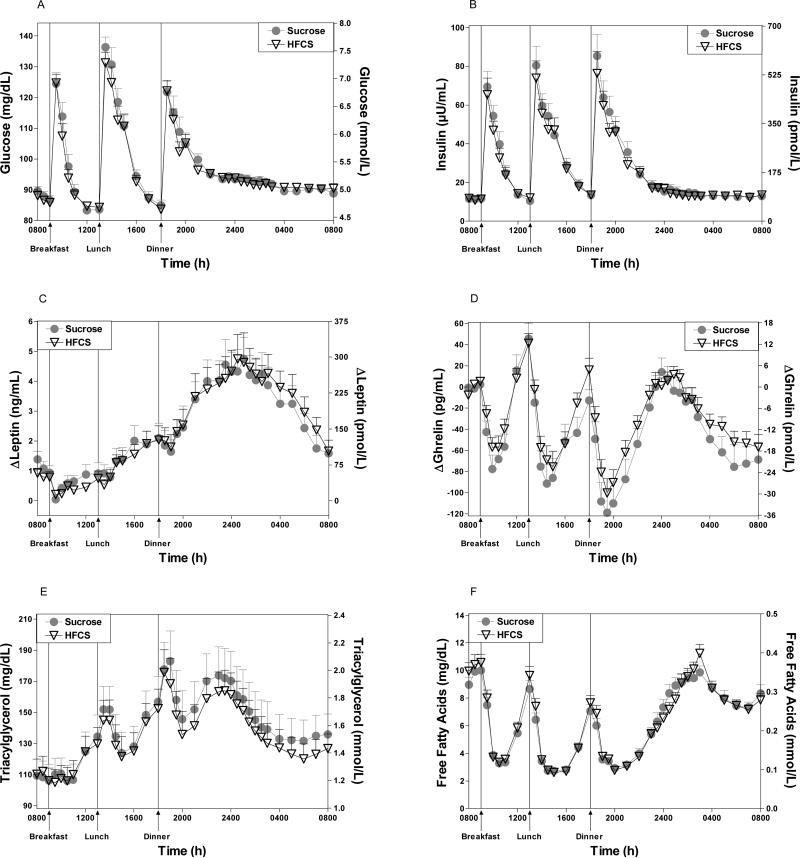
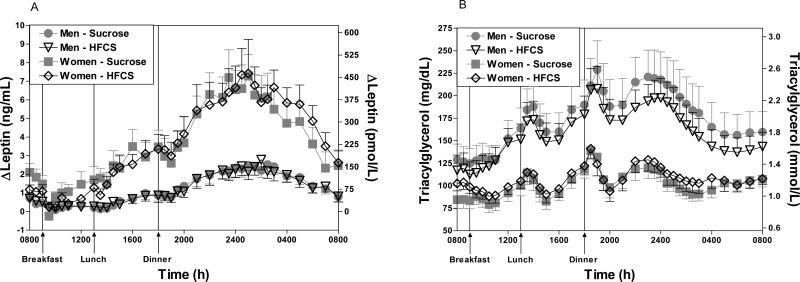
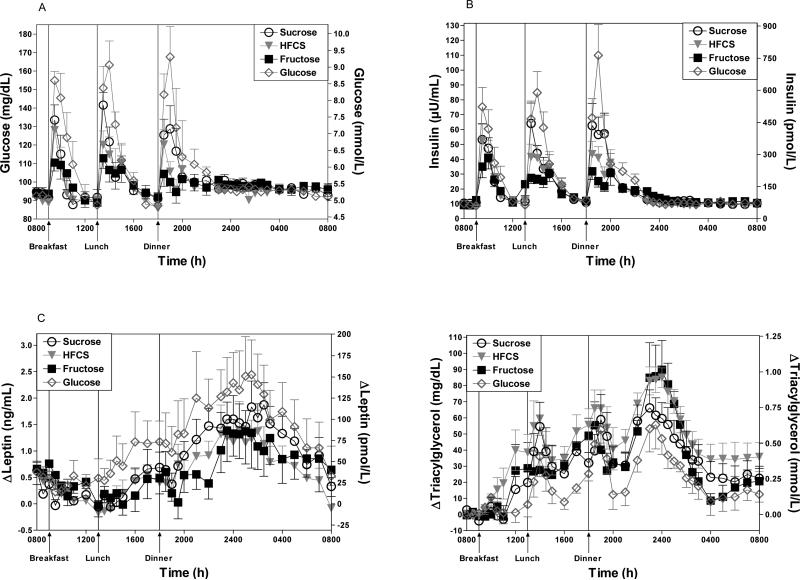
Results: In 34 subjects, 24-h glucose, insulin, leptin, ghrelin, and TG profiles were similar between days that sucrose or HFCS was consumed. Postprandial TG excursions after HFCS or sucrose were larger in men than in women. In the men in whom the effects of 4 sweeteners were compared, the 24-h glucose and insulin responses induced by HFCS and sucrose were intermediate between the lower responses during consumption of fructose and the higher responses during glucose. Unexpectedly, postprandial TG profiles after HFCS or sucrose were not intermediate but comparably high as after pure fructose.
Conclusions: Sucrose and HFCS do not have substantially different short-term endocrine/metabolic effects. In male subjects, short-term consumption of sucrose and HFCS resulted in postprandial TG responses comparable to those induced by fructose.
Figures
References
-
- Bray GA, Nielsen SJ, Popkin BM. Consumption of high-fructose corn syrup in beverages may play a role in the epidemic of obesity. Am J Clin Nutr. 2004;79:537–43. - PubMed
-
- Havel PJ. Dietary fructose: implications for dysregulation of energy homeostasis and lipid/carbohydrate metabolism. Nutr Rev. 2005;63:133–57. - PubMed
-
- Guthrie JF, Morton JF. Food sources of added sweeteners in the diets of Americans. J Am Diet Assoc. 2000;100:43–51. quiz 49-50. - PubMed
-
- Gao X, Qi L, Qiao N, et al. Intake of added sugar and sugar-sweetened drink and serum uric acid concentration in US men and women. Hypertension. 2007;50:306–12. - PubMed
-
- Mundt CA, Baxter-Jones AD, Whiting SJ, Bailey DA, Faulkner RA, Mirwald RL. Relationships of activity and sugar drink intake on fat mass development in youths. Med Sci Sports Exerc. 2006;38:1245–54. - PubMed
Publication types
MeSH terms
Substances
Grants and funding
LinkOut - more resources
Full Text Sources
Medical
Miscellaneous
