. 2008 Jun 19;453(7198):1072-8.
doi: 10.1038/nature07016. Epub 2008 May 11.

PML targeting eradicates quiescent leukaemia-initiating cells

Affiliations

PML targeting eradicates quiescent leukaemia-initiating cells

Keisuke Ito et al. Nature. .

Abstract

The existence of a small population of 'cancer-initiating cells' responsible for tumour maintenance has been firmly demonstrated in leukaemia. This concept is currently being tested in solid tumours. Leukaemia-initiating cells, particularly those that are in a quiescent state, are thought to be resistant to chemotherapy and targeted therapies, resulting in disease relapse. Chronic myeloid leukaemia is a paradigmatic haematopoietic stem cell disease in which the leukaemia-initiating-cell pool is not eradicated by current therapy, leading to disease relapse on drug discontinuation. Here we define the critical role of the promyelocytic leukaemia protein (PML) tumour suppressor in haematopoietic stem cell maintenance, and present a new therapeutic approach for targeting quiescent leukaemia-initiating cells and possibly cancer-initiating cells by pharmacological inhibition of PML.


Figures
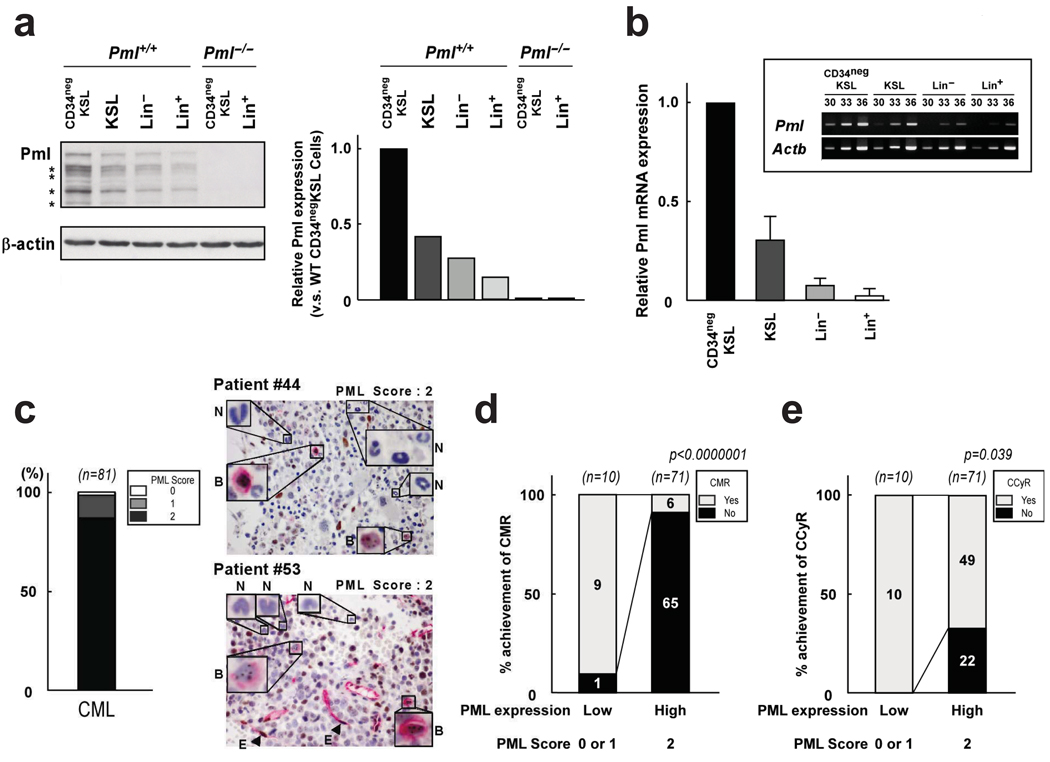
Figure 1
Figure 1
PML is highly expressed in HSCs and CML. a, Fractionated mouse haematopoietic cells were flow-sorted into protein sample buffer and immunoblotted with anti-Pml antibody. Representative blots are shown in the left panel and relative Pml protein level normalized to β-actin are shown in the right panel. Asterisks indicate Pml isoforms. b, Levels of Pml and Actb transcripts were measured by q-RT-PCR in haematopoietic cells. Bar graph represents normalized expression of Pml mRNA. Experiments were performed twice and a representative result is presented. High Pml expression was also confirmed by PCR (inset). c, Bone marrow samples of CML patients in chronic phase (n = 81) were stained with anti-PML antibody (brown) and anti-CD34 (red). The Left graph shows the percentage of PML-positive samples and representative cases are on the right (arrowheads indicate endothelial cells (E) as a positive control). Insets show PML-staining in blasts (B) and differentiated neutrophils (N). d, e, Higher CMR (d) and CCyR (e) were observed in chronic phase CML patients with low PML expression. P-value was generated by a chi-square test. Absolute numbers are also indicated.
Figure 2
Figure 2
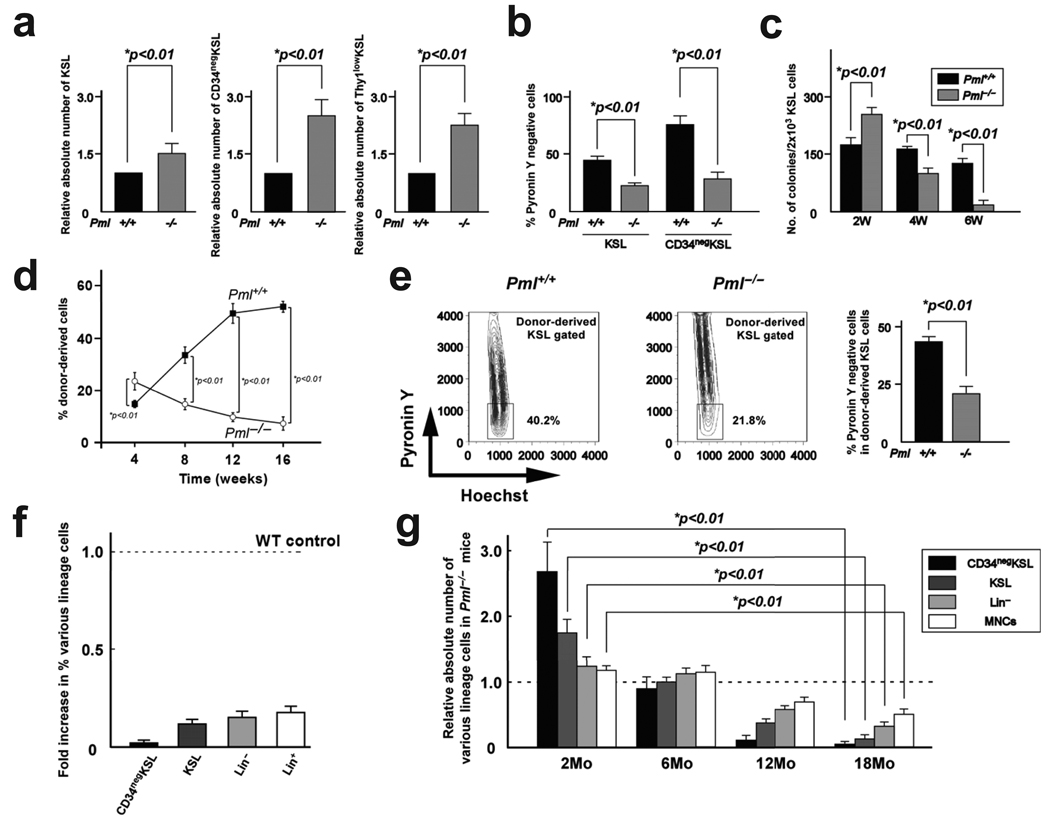
PML is essential for HSC maintenance. a, Relative numbers ± s.d. of KSL (left), CD34negKSL (middle) and Thy1lowKSL (right) cells in Pml−/− BM and Pml+/+ BM at 8 weeks (n = 3). b, Pyronin Y negative cells in KSL cells and CD34negKSL cells of Pml+/+ or Pml−/− mice (n = 3). c, Colony forming ability of WT and Pml−/− KSL cells after long-term culture (n= 3). d, Reconstitution of WT and Pml−/− bone marrow cells after competitive transplantation assay. e, Frequency of WT and Pml−/− quiescent cells in recipient mice. Right: representative flow cytometry data. Left: mean percentages ± s.d. of Pyronin Y negative cells in donor-derived KSL population. f, Relative percentage ± s.d. of donor-derived cells in the bone marrows of recipient mice 4 months after transplantation (n = 3). g, Relative numbers ± s.d. of fractionated haematopoietic cells in Pml−/− mice at the indicated ages normalized over WT mice (n = 3).
Figure 3
Figure 3
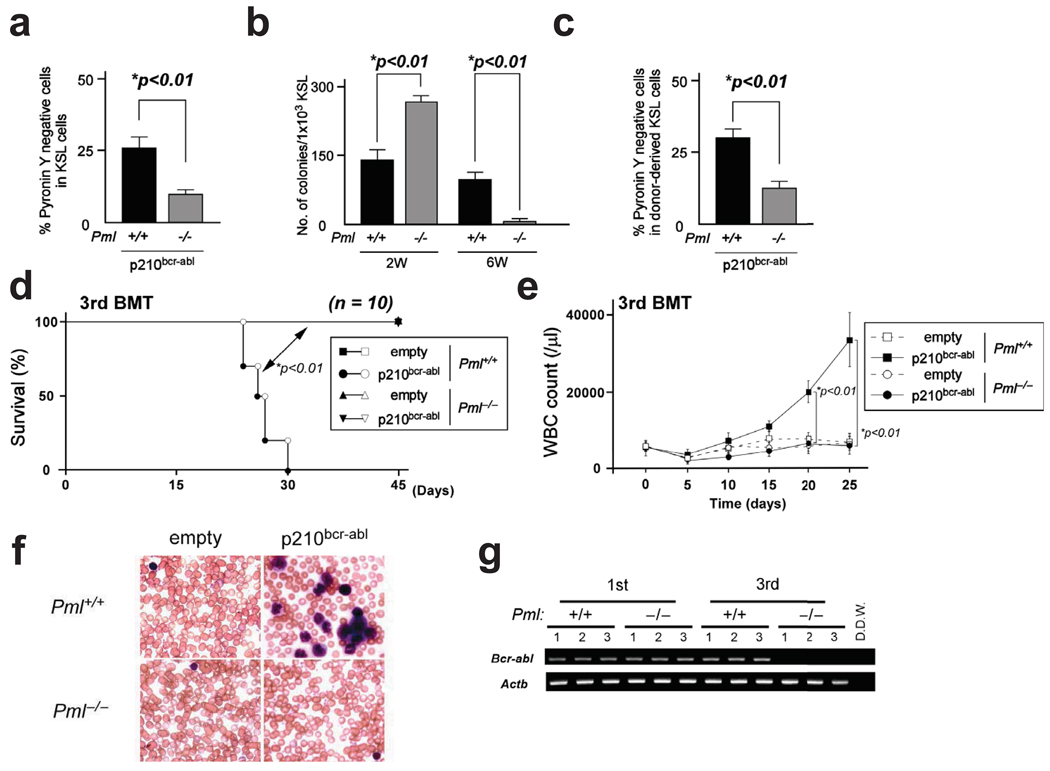
PML is essential for LIC maintenance. a, Pml+/+ or Pml−/− BM cells transduced with p210bcr-abl were co-cultured with stromal cells for two weeks. Data shown are mean percentages ± s.d. of Pyronin Y negative cells in KSL cells. b, Colony formation after long-term culture of p210bcr-abl-transduced BM cells (n = 3). c, Cell cycle status of donor-derived KSL cells transduced with p210bcr-abl 2 weeks after BMT. d, e, Survival of recipient mice receiving transduced BM cells from Pml+/+ or Pml−/− mice in 3rd round BMT (d). Log rank statistical analysis was performed to obtain p. WBC counts at indicated times after BMT are shown (e). f, Smears of PB in 3rd round BMT stained with Wright-Giemsa. g, MRD in 3rd BMT recipient mice with WT or Pml−/− bone marrow cells overexpressing p210bcr-abl was analyzed by nested PCR in 3 randomly selected recipient mice.
Figure 4
Figure 4
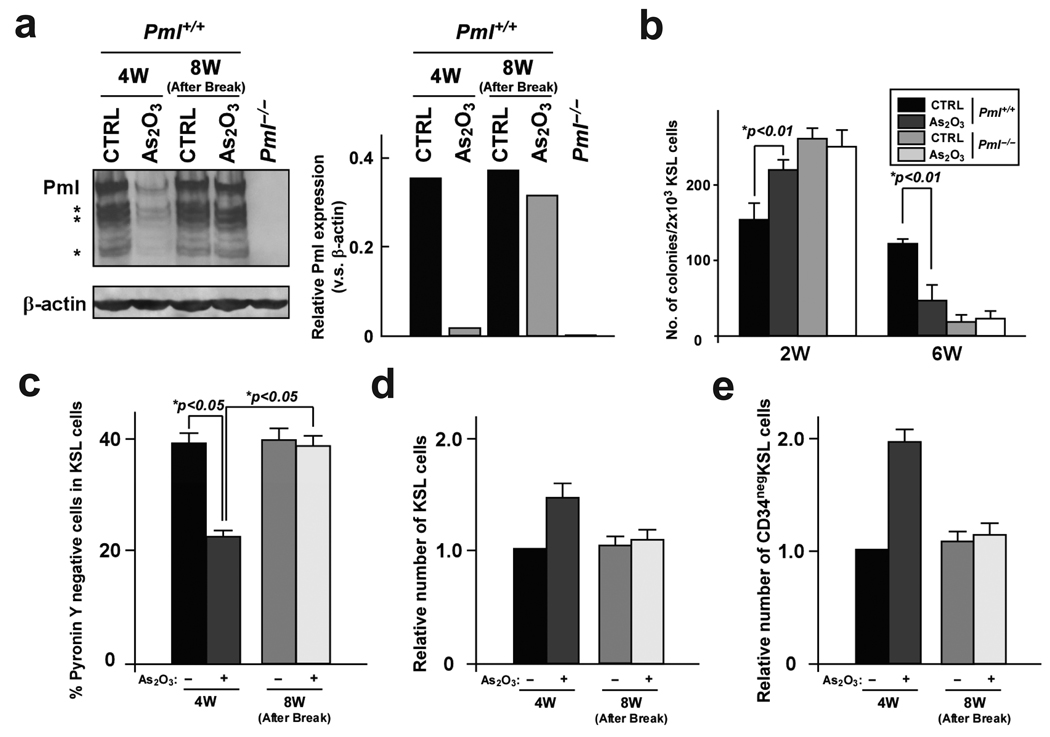
Reduction of PML by As2O3 treatment abrogates maintenance of HSC quiescence. a, KSL cells from 8-week-old mice were sorted and co-cultured with stromal cells and As2O3 for 4 weeks (4W). As2O3 treatment was discontinued and co-culture continued for 4 weeks without treatment (8W; After Break). Proteins from sorted KSL cells were analyzed by Western blot (left). Normalized Pml protein levels v.s. β-actin is shown on the right. b, Pml+/+ and Pml−/− KSL cells were cultured on stromal cells with As2O3 for the indicated weeks (W) and tested for colony formation (n = 3). c–e, As2O3 reversibly inhibits quiescence of normal HSCs in vivo. Mice were treated with As2O3 from 8- to 12-weeks (4W) and left untreated from week 12 to 16 (8W; After Break). Cell cycle status of HSCs was analyzed by Pyronin Y staining (c). Mean numbers ± s.d. of KSL (d) and CD34neg KSL cells (e) are also shown.
Figure 5
Figure 5
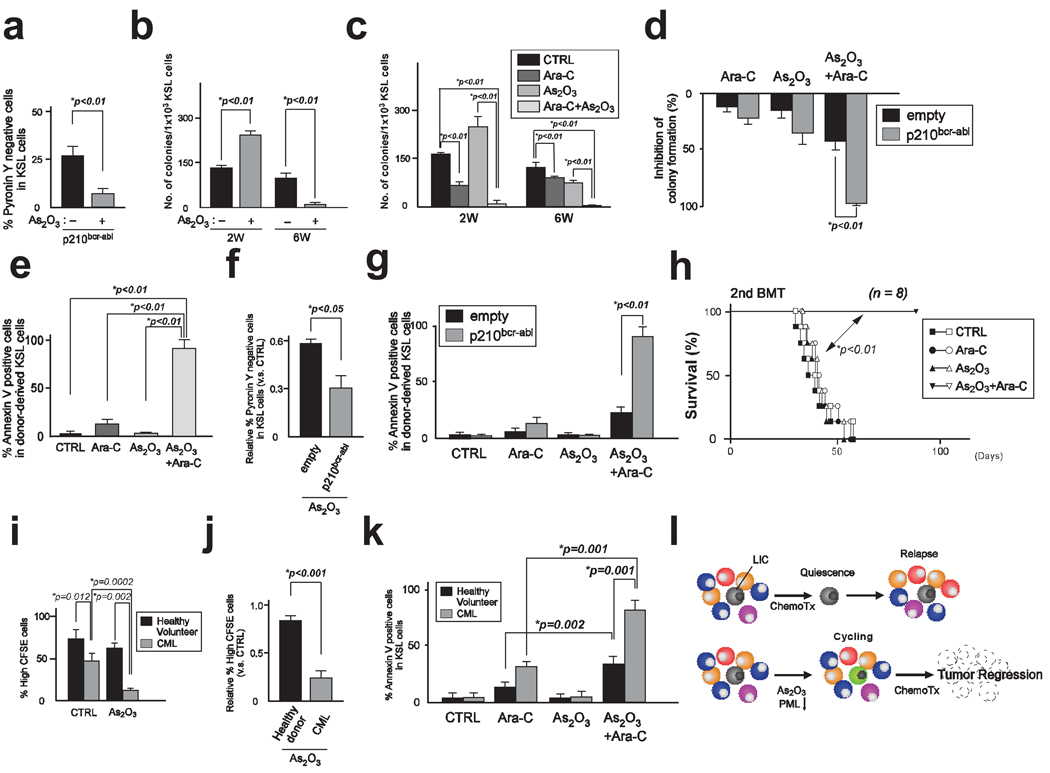
Combination therapy with Ara-C and As2O3 eliminates LICs. a, Cell cycle analysis of BM cells transduced with p210bcr-abl co-cultured with stromal cells and As2O3 for two weeks. b, Colony formation of transduced KSL cells after long-term culture with As2O3 (n = 3). c, Transduced KSL cells co-cultured with stromal cells were treated with As2O3 for 9 days and with As2O3 and Ara-C for 5 days (2W). Treatment was discontinued and co-culture continued for 4 weeks (6W). Results are mean colony numbers ± s.d. (n = 3). d, Colony formation of As2O3 and Ara-C-treated compared to untreated BM cells infected by empty vector or p210bcr-abl in vitro (n = 3). e, Apoptosis in donor-derived transduced KSL cells in recipient mice treated with As2O3 and Ara-C (n = 3). f, Quiescence of KSL cells transduced with empty vector or p210bcr-abl after As2O3 treatment in vivo. g, Annexin V staining of HSC or LIC in recipient mice treated with As2O3 and Ara-C (n = 3). h, Survival of recipient mice transplanted with transduced BM cells at the second round of BMT. p was obtained by log rank statistical analysis. i, Percentage of non-dividing cells in LinCD34+CD38 cells from patients with CML and healthy volunteers cultured for 3 days (n = 3). j, Relative percentages of non-dividing cells in cells treated with As2O3 versus untreated cells. k, Apoptosis in LinCD34+CD38 cells co-cultured with As2O3 and Ara-C (n = 4). l, A model for As2O3-induced sensitization to therapy. Conventional chemotherapy (Chemo Tx) does not affect quiescent LICs. As2O3 abrogates LICs maintenance by reducing PML levels. Combining an anti-leukaemic treatment with As2O3 increases the sensitivity of LICs to chemotherapy and results in tumour regression.

References

    1. Bruce WR, van der Gaag H. A quantitative assay for the number of murine lymphoma cells capable of proliferation in vivo. Nature. 1963;199:79–80. - PubMed
    1. Huntly BJ, Gilliland DG. Leukaemia stem cells and the evolution of cancer-stem-cell research. Nature Rev. Cancer. 2005;5:311–321. - PubMed
    1. Scadden DT. Cancer stem cells refined. Nature Immunol. 2004;5:701–703. - PubMed
    1. Reya T, Morrison SJ, Clarke MF, Weissman IL. Stem cells, cancer, and cancer stem cells. Nature. 2001;414:105–111. - PubMed
    1. Hope KJ, Jin L, Dick JE. Acute myeloid leukemia originates from a hierarchy of leukemic stem cell classes that differ in self-renewal capacity. Nature Immunol. 2004;5:738–743. - PubMed

Publication types

MeSH terms