


Integration options for high energy efficiency and improved economics in a wood-to-ethanol process
- PMID: 18471311
- PMCID: PMC2375869
- DOI: 10.1186/1754-6834-1-4
Integration options for high energy efficiency and improved economics in a wood-to-ethanol process
Abstract
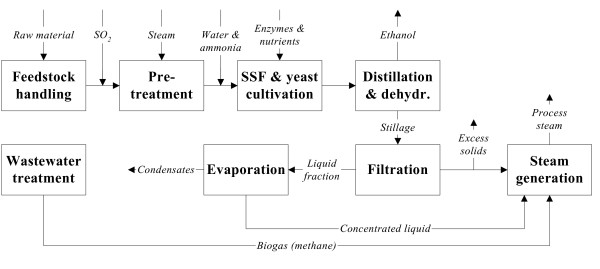
Background: There is currently a steady increase in the use of wood-based fuels for heat and power production in Sweden. A major proportion of these fuels could serve as feedstock for ethanol production. In this study various options for the utilization of the solid residue formed during ethanol production from spruce, such as the production of pellets, electricity and heat for district heating, were compared in terms of overall energy efficiency and production cost. The effects of changes in the process performance, such as variations in the ethanol yield and/or the energy demand, were also studied. The process was based on SO2-catalysed steam pretreatment, which was followed by simultaneous saccharification and fermentation. A model including all the major process steps was implemented in the commercial flow-sheeting program Aspen Plus, the model input was based on data recently obtained on lab scale or in a process development unit.
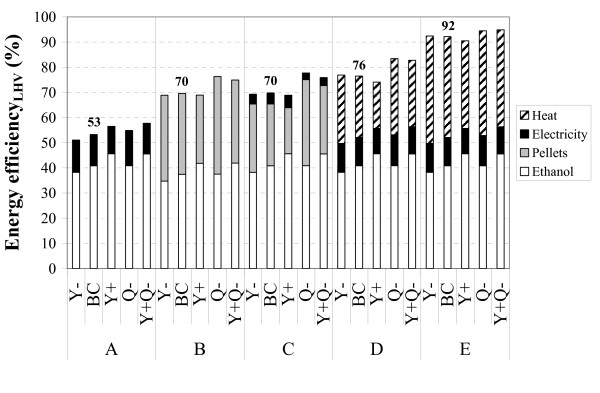
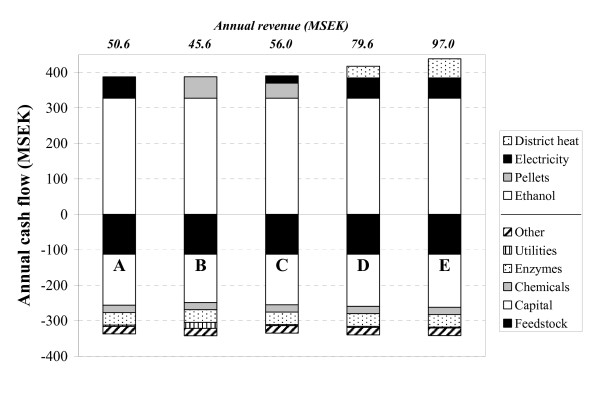
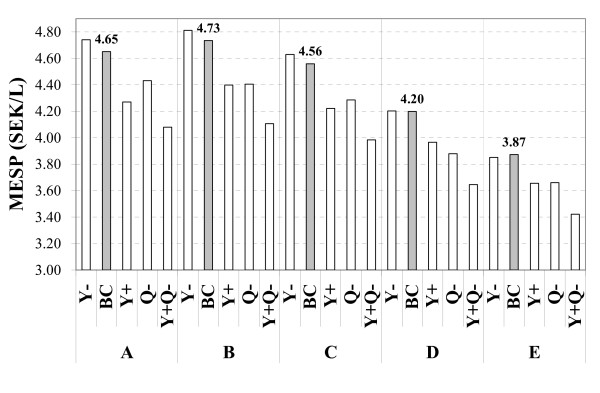
Results: For the five base case scenarios presented in the paper the overall energy efficiency ranged from 53 to 92%, based on the lower heating values, and a minimum ethanol selling price from 3.87 to 4.73 Swedish kronor per litre (0.41-0.50 EUR/L); however, ethanol production was performed in essentially the same way in each base case scenario. (Highly realistic) improvements in the ethanol yield and reductions in the energy demand resulted in significantly lower production costs for all scenarios.
Conclusion: Although ethanol was shown to be the main product, i.e. yielding the major part of the income, the co-product revenue had a considerable effect on the process economics and the importance of good utilization of the entire feedstock was clearly shown. With the assumed prices of the co-products, utilization of the excess solid residue for heat and power production was highly economically favourable. The study also showed that improvements in the ethanol yield and reductions in the energy demand resulted in significant production cost reductions almost independently of each other.
Figures
References
-
- Ethanol plant in Salamanca, Spain (Abengoa Bioenergy, Inc.) http://www.abengoabioenergy.com/about/index.cfm?page=5&lang=1&headline=30
-
- Pilot plant (Iogen Inc.), Ottawa, Canada http://www.iogen.ca/company/facilities/index.html
-
- Pilot plant in Örnsköldsvik, Sweden http://www.sekab.com/default.asp?id=1137&refid=1037
LinkOut - more resources
Full Text Sources
Miscellaneous
