


The aggresome pathway as a target for therapy in hematologic malignancies
- PMID: 18472289
- PMCID: PMC2587432
- DOI: 10.1016/j.ymgme.2008.03.012
The aggresome pathway as a target for therapy in hematologic malignancies
Erratum in
- Mol Genet Metab.2009 Jun;97(2):164
Abstract
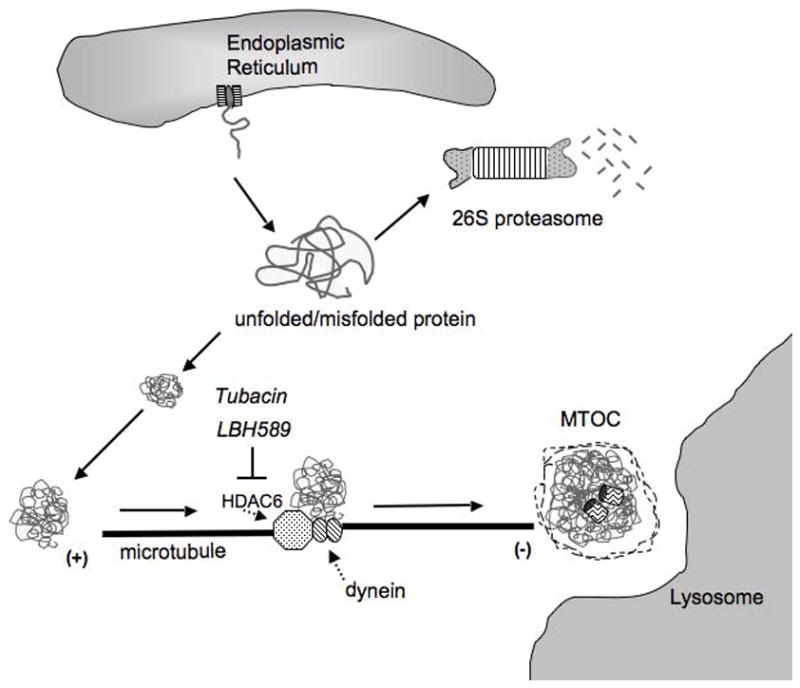
Misfolded or unfolded proteins are often refolded with the help of chaperones or degraded by the 26S proteasome. An alternative fate of these proteins is the aggresome pathway. The microtubule-organizing center (MTOC) transports unfolded proteins to lysosomes and are degraded through autophagy. Histone deacetylase 6 (HDAC6) deacetylates alpha-tubulin, which is thought to be a component of the MTOC. Recently, two small molecule inhibitors of the aggresome pathway and HDAC6 have been described. One inhibitor, tubacin, prevents deacetylation of alpha-tubulin and produces accumulation of polyubiquitinated proteins and apoptosis. Tubacin acts synergistically with the proteasome inhibitor, bortezomib, to induce cytotoxicity in one type of hematologic malignancy, multiple myeloma. The other, LBH589, is a pan HDAC inhibitor and hydroxamic acid derivative that induces apoptosis of multiple myeloma cells resistant to conventional therapies. In this review, we summarize recent reports on targeting the aggresome pathway and HDAC6 in hematologic malignancies.
Figures
References
-
- Garcia-Mata R, Gao YS, Sztul E. Hassles with taking out the garbage: aggravating aggresomes. Traffic. 2002;3:388–96. - PubMed
-
- Wetzel R. Mutations and off-pathway aggregation of proteins. Trends Biotechnol. 1994;12:193–8. - PubMed
-
- Gottesman S, Wickner S, Maurizi MR. Protein quality control: triage by chaperones and proteases. Genes Dev. 1997;11:815–23. - PubMed
Publication types
MeSH terms
Substances
Grants and funding
LinkOut - more resources
Full Text Sources
Other Literature Sources
